Standard Process Betacol Review
Introduction
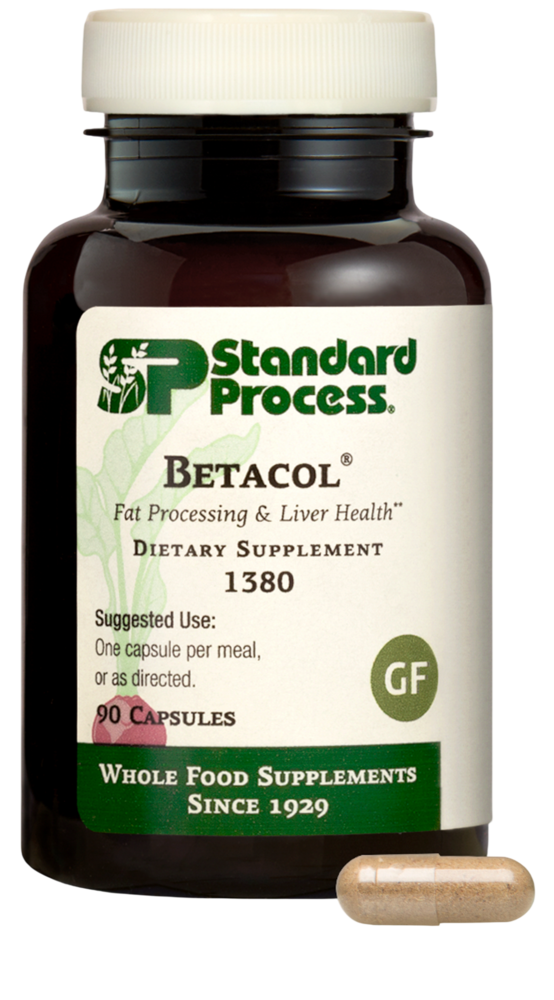
Standard Process Betacol is a targeted whole food formula designed to support two of the most metabolically critical — and frequently under-supported — systems in the body: the liver and the biliary system. The name "Betacol" reflects its two primary nutritional drivers: beet root (a source of betaine and phytonutrients with cholagogue activity) and choline, one of the most important lipotropic nutrients for liver health. Together these two nutritional pillars address the root causes of hepatic fat accumulation, sluggish bile flow, and impaired fat metabolism.
The liver is the body's central metabolic organ, performing over 500 known functions including detoxification of chemicals and metabolic waste, synthesis of bile acids for fat digestion, regulation of blood glucose and lipid levels, storage of glycogen and fat-soluble vitamins, and production of acute phase proteins involved in immune defense. The liver's extraordinary metabolic workload makes it uniquely dependent on a continuous supply of specific nutrients — particularly the lipotropic nutrients (choline, methionine, betaine, and inositol) that enable the liver to process and export fat rather than allowing it to accumulate within hepatic tissue.
Choline deficiency is now recognized as one of the primary nutritional drivers of non-alcoholic fatty liver disease (NAFLD), a condition affecting an estimated 25% of the global adult population. Choline is required for the synthesis of phosphatidylcholine, the primary phospholipid in very low-density lipoprotein (VLDL) particles — the transport vehicle through which the liver exports fat into circulation. Without adequate choline, the liver's ability to export fat is compromised, leading to fat accumulation within hepatic tissue. Despite its critical importance, choline remains one of the most consistently under-consumed essential nutrients in the modern diet, largely because its primary food sources (egg yolks, beef liver, and cruciferous vegetables) are consumed at inadequate levels by most adults.
Betaine (trimethylglycine), derived from beet root, works synergistically with choline through the methylation cycle. Betaine serves as a methyl donor in the BHMT (betaine-homocysteine methyltransferase) pathway, which both recycles homocysteine into methionine and regenerates methionine into SAM (S-adenosylmethionine) — the body's primary methyl group donor. SAM is required for the synthesis of phosphatidylcholine via the PEMT pathway, directly supporting the liver's fat export capacity. This creates a beautifully synergistic nutritional relationship between beet root betaine and choline that Betacol exploits to provide comprehensive hepatic fat metabolism support.
In clinical practice, I see Betacol performing at its best in patients who present with elevated liver enzymes (ALT, AST), right upper quadrant heaviness after meals, difficulty losing weight despite caloric restriction, or ultrasound-confirmed hepatic steatosis. It is also a valuable adjunct for patients undergoing metabolic detox protocols, where liver support is essential for safe and effective toxin clearance. The whole food delivery system ensures that choline and betaine arrive in a biologically complete context that the body can utilize efficiently.
Key Benefits of Betacol
- Hepatic fat metabolism (lipotropic action): Choline and betaine work together as lipotropic nutrients, preventing and reversing fat accumulation in the liver by supporting VLDL synthesis and hepatic fat export. This is the central mechanism by which Betacol addresses non-alcoholic fatty liver tendencies.
- Bile production and flow: Beet root's betaine and phytonutrients support healthy bile acid synthesis and promote bile flow from the liver into the gallbladder and small intestine. Adequate bile flow is essential for fat digestion and the absorption of fat-soluble vitamins A, D, E, and K.
- Homocysteine regulation: Betaine as a methyl donor through the BHMT pathway reduces circulating homocysteine — an independent cardiovascular risk marker that also reflects methylation capacity. Supporting homocysteine metabolism through betaine is one of the most well-evidenced nutritional strategies for cardiovascular protection.
- Liver detoxification support: SAM (S-adenosylmethionine), produced in part through betaine-driven methylation, is required for Phase II liver detoxification reactions including methylation of toxins, heavy metals, and xenobiotic compounds. Betacol supports the metabolic precursors of these critical detox pathways.
- Cell membrane integrity: Phosphatidylcholine, synthesized from dietary choline, is the dominant phospholipid in all cell membranes. Adequate choline intake ensures that liver cells, bile duct epithelium, and intestinal mucosal cells maintain structural integrity and proper membrane fluidity.
- Neurotransmitter precursor support: Choline is the dietary precursor to acetylcholine, the primary neurotransmitter of the parasympathetic nervous system and central to memory and cognitive function. Supporting choline intake with Betacol provides a secondary benefit to neurological health beyond the hepatic applications.
Ingredients
Betacol is formulated with a synergistic combination of whole food concentrates providing its hepatic and lipotropic nutritional profile:
- Choline (from whole food sources): The primary lipotropic nutrient in the formula. Choline is delivered in a whole food matrix that preserves its bioavailability and minimizes the "fishy odor" side effect sometimes reported with isolated choline bitartrate supplements. Whole food choline is structurally incorporated into phospholipid complexes that the body preferentially absorbs and utilizes.
- Organic Beet Root (Beta vulgaris): The source of betaine (trimethylglycine) and the beet root phytonutrients with established cholagogue and hepatoprotective properties. Beet root also provides betalains — the characteristic red-purple pigments with antioxidant and anti-inflammatory activity that protect hepatic tissue from oxidative damage.
- Betaine (Trimethylglycine): Concentrated betaine to supplement the beet root betaine content. Betaine's role as a methyl donor supports homocysteine metabolism, SAM production, and the PEMT pathway for phosphatidylcholine synthesis — directly supporting liver fat export capacity.
- Bovine Liver (Desiccated): The most nutrient-dense natural liver support food. Desiccated liver provides naturally occurring choline, B vitamins (B12, folate, B6, riboflavin), hepatocyte growth factors, and liver-specific enzymes. Glandular liver tissue has been used in naturopathic and chiropractic medicine for liver support for over 75 years.
- Organic Carrot: Provides beta-carotene and natural vitamin A precursors that support liver cell integrity and bile duct health. Carrot's fiber component also supports bile acid binding in the intestine, facilitating cholesterol elimination via the enterohepatic circulation.
- Organic Buckwheat: A source of rutin and quercetin — flavonoids that strengthen hepatic blood vessel walls, reduce oxidative stress in liver tissue, and support the integrity of bile duct epithelium. Rutin's antioxidant activity complements the hepatoprotective functions of the other Betacol ingredients.
Get Betacol Today
Buy this product from our Fullscript store where you get free shipping and returns.
Potential Side Effects & Precautions
Betacol is well tolerated by most patients when used as directed. The following considerations apply:
- Beet root is a natural source of oxalates. Individuals with a history of calcium oxalate kidney stones should use caution and consult their physician before using beet-containing supplements regularly.
- Beet root can cause pink or red discoloration of urine and stool (beeturia) in some individuals — this is a harmless and normal response to beet pigments (betalains) and not cause for concern.
- High betaine intake may increase LDL cholesterol levels in some individuals, particularly those with a genetic predisposition to dyslipidemia. Patients with known lipid metabolism concerns should discuss betaine supplementation with their physician.
- Betacol contains bovine liver and is not suitable for vegans or vegetarians.
- Individuals with active liver disease (hepatitis, cirrhosis) or who are taking hepatically-metabolized medications should consult their healthcare provider before beginning liver-support supplementation.
- Pregnant or breastfeeding women should confirm supplement use with their obstetric provider, particularly regarding choline intake levels.
Dr. Bell's Verdict
Standard Process Betacol occupies an important place in my clinical practice as a hepatic lipotropic formula that addresses two of the most prevalent and clinically significant nutritional deficiencies in modern patients: choline and betaine. Both nutrients are foundational to liver fat metabolism, and their combined presence in a whole food supplement makes Betacol particularly effective for supporting liver function in patients with steatotic tendencies, elevated liver enzymes, or sluggish bile flow.
What distinguishes Betacol from simpler beet root or choline supplements is the thoughtful integration of glandular liver tissue alongside the lipotropic nutrients. Desiccated liver provides an entirely different class of hepatic support — direct nutritional substrate for liver cell function — that complements the metabolic mechanisms of choline and betaine. This combination addresses liver health from multiple angles simultaneously: structural cell support through glandular tissue factors, lipotropic fat metabolism support through choline, and methylation and bile flow support through betaine.
I use Betacol most frequently as part of metabolic detox protocols, in patients with subclinical NAFLD identified through liver enzyme elevation or imaging, in individuals following high-fat dietary protocols (particularly ketogenic diets) where choline demands are elevated, and in patients with right upper quadrant heaviness or discomfort suggesting gallbladder congestion. For these presentations, it is a highly effective and well-tolerated whole food supplement that delivers consistent clinical results.
Frequently Asked Questions
What does "lipotropic" mean and why is it relevant to liver health?
Lipotropic literally means "fat-moving" — it describes nutrients that facilitate the transport and metabolism of fat in the liver, preventing its abnormal accumulation. Choline and betaine are the two most clinically important lipotropic nutrients. They support the liver's ability to package fat into VLDL particles for export into circulation, preventing the fat from being stored within hepatic tissue (which leads to fatty liver disease). Betacol is specifically formulated around these lipotropic mechanisms, making it a targeted approach to liver fat metabolism support.
Is Betacol appropriate for someone with non-alcoholic fatty liver disease (NAFLD)?
Betacol is commonly used in functional and integrative clinical settings as nutritional support for individuals with NAFLD. Choline deficiency is now recognized as a primary nutritional driver of NAFLD, and betaine supplementation has been studied in clinical trials for its liver-protective effects in hepatic steatosis. However, NAFLD is a diagnosed medical condition, and any supplementation protocol should be supervised by a qualified healthcare provider who can monitor liver enzyme levels and assess clinical response over time.
How does Betacol differ from Standard Process A-F Betafood?
Both products support liver and bile function, but with different primary mechanisms. A-F Betafood focuses primarily on bile thinning, bile flow stimulation, and gallbladder health through beet root betaine and vitamin A. Betacol adds choline as a primary lipotropic nutrient, making it more specifically targeted at hepatic fat metabolism and fatty liver prevention. Betacol is the more appropriate choice when the primary concern is liver fat accumulation, elevated liver enzymes, or choline insufficiency. A-F Betafood is more appropriate when gallbladder congestion and bile flow are the primary concerns.
Can I take Betacol while following a ketogenic or high-fat diet?
Yes — and it is particularly relevant in this context. Ketogenic diets dramatically increase the liver's workload for processing dietary fat and ketone body production. Choline demand increases significantly on high-fat diets because more phosphatidylcholine is required to package the increased fat load for export from the liver. Research has suggested that ketogenic diet adherents who consume inadequate choline may be at elevated risk for liver fat accumulation despite the metabolic benefits of ketosis. Betacol provides the lipotropic support that makes high-fat dietary protocols safer from a hepatic standpoint.
Where to Buy Betacol
Buy this product from our Fullscript store where you get free shipping and returns.