Standard Process Betaine Hydrochloride Review
Introduction
Standard Process Betaine Hydrochloride addresses one of the most misunderstood and clinically underdiagnosed digestive conditions in integrative practice: hypochlorhydria, or insufficient stomach acid production. In an era when proton pump inhibitors (PPIs) and H2 receptor blockers are among the most widely prescribed and over-the-counter medications in the world, the idea that low stomach acid — rather than excess stomach acid — is the true culprit behind many digestive complaints is paradigm-shifting for most patients. Yet the clinical and research evidence strongly supports this reframing.
The stomach is designed to produce hydrochloric acid (HCl) at a pH of approximately 1.5 to 3.5 — highly acidic by any standard. This extreme acidity is not a digestive accident; it is a precisely engineered biological necessity. Adequate gastric acid is required for the activation of pepsinogen into the enzyme pepsin, which initiates protein digestion by cleaving peptide bonds. Without sufficient HCl, proteins pass through the stomach insufficiently digested, reaching the small intestine as large polypeptide fragments that overwhelm the intestine's digestive capacity, producing bloating, gas, and discomfort. This is the pattern seen in hypochlorhydria — a pattern that is often mistaken for "excess acid" because the fermentation and gas production that follows undigested protein in the gut can cause symptoms reminiscent of acid reflux.
Beyond protein digestion, adequate gastric acid is essential for the absorption of critical micronutrients including iron, calcium, magnesium, zinc, and vitamin B12. Hydrochloric acid ionizes these minerals from their food-bound forms into their absorbable ionic states. Studies show that long-term use of proton pump inhibitors — which essentially eliminate gastric acid production — is associated with significant deficiencies in all of these nutrients, with particular concern for the neurological consequences of B12 depletion and the bone health consequences of impaired calcium absorption. Betaine HCl supplementation is the most direct nutritional strategy for restoring adequate gastric acidity in individuals with documented or suspected hypochlorhydria.
A third critical function of stomach acid is antimicrobial defense. The extreme acidity of the stomach is one of the body's primary barriers against ingested pathogens — most bacteria and parasites cannot survive pH levels below 3.0. When gastric acid is reduced, this antimicrobial barrier is compromised, increasing vulnerability to small intestinal bacterial overgrowth (SIBO), Helicobacter pylori colonization, and enteric infections. There is a well-documented epidemiological association between PPI use and increased rates of Clostridioides difficile (C. diff) infection, precisely because of this acid-suppression-related loss of antimicrobial defense.
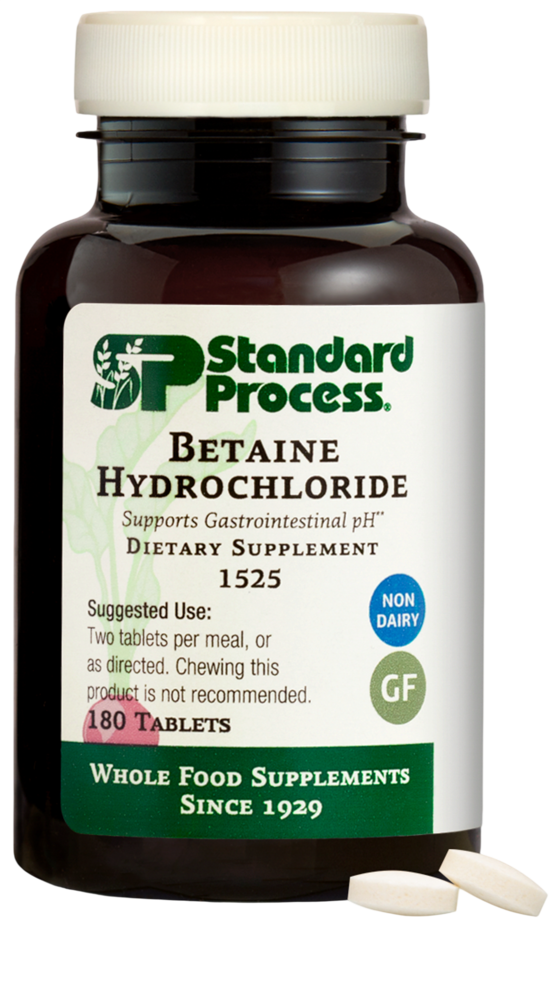
Standard Process Betaine Hydrochloride provides a straightforward, clinician-trusted solution to these digestive challenges. Its simplicity is a virtue — the formula provides betaine HCl, which dissociates in the stomach to release hydrochloric acid and betaine, temporarily acidifying the gastric environment and supporting the full range of acid-dependent digestive functions. In my clinical experience, the response to betaine HCl supplementation in hypochlorhydric patients is often dramatic and rapid — improved digestion within the first few meals, reduced bloating, better tolerance of protein-rich foods, and often a noticeable improvement in energy levels as nutrient absorption normalizes.
Key Benefits of Betaine Hydrochloride
- Gastric acid restoration: Betaine HCl dissociates in the stomach to temporarily lower gastric pH, restoring the acidic environment required for pepsin activation and protein digestion. This directly addresses the root cause of hypochlorhydria-related digestive symptoms.
- Protein digestion support: Adequate gastric acidity is prerequisite for pepsinogen activation into pepsin, the primary protease responsible for breaking down dietary protein. Improved protein digestion reduces the fermentation-related bloating and gas that commonly results from incompletely digested protein reaching the colon.
- Mineral absorption enhancement: Hydrochloric acid ionizes food-bound minerals — particularly iron, calcium, magnesium, and zinc — into their absorbable forms. Correcting gastric hypochlorhydria with betaine HCl can meaningfully improve the absorption and serum levels of these critical minerals, with downstream benefits for energy, bone density, immune function, and enzymatic activity throughout the body.
- Vitamin B12 absorption: Gastric acid is required to cleave vitamin B12 from its food-bound protein complexes and to stimulate the production of intrinsic factor, the glycoprotein that enables B12 absorption in the terminal ileum. Hypochlorhydria is one of the most common (and overlooked) causes of functional B12 deficiency, particularly in older adults whose gastric acid production naturally declines with age.
- Antimicrobial gastric defense: Restoring gastric acidity with betaine HCl supports the stomach's natural antimicrobial barrier function, reducing vulnerability to SIBO, Helicobacter pylori overgrowth, and enteric infections that thrive in an insufficiently acidic gastric environment.
- Secondary betaine (methylation) support: As betaine HCl dissociates, it releases free betaine — the trimethylglycine molecule that serves as a methyl donor in the homocysteine methylation pathway. This provides the secondary nutritional benefit of supporting liver methylation and homocysteine management alongside the primary digestive HCl action.
Ingredients
Standard Process Betaine Hydrochloride is a focused formula with a purposefully simple ingredient profile:
- Betaine Hydrochloride: The primary active ingredient. Betaine HCl is the HCl salt of betaine (trimethylglycine). When ingested with food, it dissociates in the stomach, releasing hydrochloric acid to temporarily lower gastric pH and activate pepsinogen into active pepsin. The betaine molecule itself then provides secondary methylation support as described above.
- Pepsin (Porcine Derived): Standard Process Betaine Hydrochloride contains porcine-derived pepsin to complement the HCl-activation of endogenous pepsinogen. Providing exogenous pepsin alongside HCl ensures proteolytic enzyme activity even in individuals with significantly compromised gastric chief cell function, where pepsinogen secretion itself may be reduced.
- Calcium Stearate: A pharmaceutical excipient used as a tablet lubricant, ensuring consistent tablet manufacturing quality. This compound is inert at the doses present in supplements and does not affect the digestive activity of the formula.
The intentional simplicity of this formula is one of its strengths. Betaine HCl with pepsin is the classic, time-tested combination used in clinical nutrition for decades, and Standard Process delivers it without unnecessary additives, fillers, or proprietary blends that obscure the actual HCl dose the patient is receiving.
Get Betaine Hydrochloride Today
Buy this product from our Fullscript store where you get free shipping and returns.
Potential Side Effects & Precautions
Betaine Hydrochloride is a potent digestive supplement and must be used with care. The following precautions are important:
- Do not use if you have active peptic ulcer disease, gastritis, or esophagitis. Adding exogenous HCl to an already inflamed gastric lining can cause significant discomfort and worsen the condition. Betaine HCl should only be used when hypochlorhydria (low acid) — not hyperchlorhydria (excess acid) or mucosal damage — has been confirmed or is strongly suspected.
- Do not take with NSAIDs (ibuprofen, naproxen, aspirin) or corticosteroids, as these medications already compromise gastric mucosal integrity and adding HCl increases the risk of gastric irritation or ulceration.
- A "HCl Challenge Test" is commonly used to assess the appropriate dose — starting with one capsule per meal and gradually increasing until a warm or burning sensation is felt in the stomach (indicating sufficient acid), then reducing by one capsule. This clinical approach should ideally be supervised by a practitioner.
- This product contains pepsin derived from porcine (pork) sources and is not appropriate for individuals with pork restrictions for religious, ethical, or medical reasons.
- Do not use while taking proton pump inhibitors or H2 blockers simultaneously, as the pharmacological acid suppression and the HCl supplementation work at cross-purposes and combined use is clinically counterproductive.
- Pregnant women should consult their healthcare provider before using HCl supplementation, as the impact on gastric physiology during pregnancy requires individualized assessment.
Dr. Bell's Verdict
Standard Process Betaine Hydrochloride is one of the most frequently used and clinically impactful supplements in my practice, and it addresses a condition — hypochlorhydria — that I believe is dramatically underdiagnosed in conventional medicine. The conventional medical model has spent decades focused almost exclusively on excess acid as the enemy of digestive health, while the functional and integrative medicine evidence increasingly points to inadequate acid production as a far more prevalent and consequential digestive insufficiency.
The patients who benefit most from this product are those who have been told their digestive complaints are due to "too much acid" but who actually improve when they increase their stomach acid rather than suppress it — something I confirm through the clinical HCl challenge protocol. I also use it routinely in patients who have been on long-term PPI therapy and are being weaned off the medication, as HCl supplementation helps restore the gastric environment while the parietal cells recover their acid-secreting capacity. Additionally, older patients — in whom gastric acid production declines naturally with age (a process called atrophic gastritis) — frequently respond exceptionally well.
The inclusion of pepsin alongside the betaine HCl adds meaningful clinical value to this formula. Many patients with hypochlorhydria also have reduced pepsinogen secretion from gastric chief cells, meaning simply restoring HCl is not always sufficient to optimize protein digestion. The exogenous pepsin component fills this gap, ensuring complete proteolytic activity regardless of the patient's intrinsic pepsinogen secretory capacity. For patients with chronic digestive complaints, poor protein utilization, or nutrient malabsorption patterns, Betaine Hydrochloride from Standard Process is a foundational intervention I recommend with confidence.
Frequently Asked Questions
How do I know if I have low stomach acid (hypochlorhydria)?
Common signs of hypochlorhydria include: bloating, belching, or gas shortly after eating; a sensation of fullness or heaviness after meals; undigested food in stools; reflux or heartburn (counterintuitively, low acid can cause reflux by slowing gastric emptying and weakening the lower esophageal sphincter); frequent burping during meals; deficiencies in iron, B12, calcium, or zinc despite adequate dietary intake; and poor response to protein-containing meals. A clinical HCl challenge test — taking betaine HCl with a protein-containing meal and monitoring for a warm sensation — can help assess whether additional acid improves or worsens your symptoms. This test should ideally be performed under practitioner supervision.
Isn't reflux caused by too much acid? Why would I take more acid?
This is one of the most important misconceptions I address in clinical practice. Gastroesophageal reflux disease (GERD) symptoms are caused by acid contacting the esophageal lining — but insufficient gastric acid can cause reflux through a different mechanism. Low stomach acid slows gastric emptying (because adequate acid is required to open the pyloric sphincter), causing food to remain in the stomach longer, increasing intra-gastric pressure, and forcing stomach contents (even at a higher-than-normal pH) back into the esophagus. Additionally, gastric acid is required for the lower esophageal sphincter (LES) to receive the hormonal signal to close. In many functional reflux patients, restoring appropriate gastric acidity resolves the reflux entirely.
Can I take Betaine Hydrochloride to help transition off proton pump inhibitors?
Betaine HCl is commonly used as part of a supervised weaning protocol from PPIs, but this must be done carefully and with professional guidance. Long-term PPI use causes rebound hypersecretion of gastric acid when the medication is stopped abruptly — a phenomenon called acid hypersecretion rebound. A gradual taper of the PPI is typically required before HCl supplementation is introduced. Your prescribing physician and a functional nutrition practitioner should coordinate this transition to ensure safety and optimal outcomes.
Why does gastric acid production decline with age?
The age-related decline in gastric acid production is called atrophic gastritis — a progressive thinning and functional deterioration of the gastric mucosa that reduces the density of acid-secreting parietal cells. It is estimated that up to 30-40% of adults over 60 have some degree of reduced gastric acid production. Helicobacter pylori infection, which is very common and often asymptomatic, also damages parietal cells and accelerates this decline. Chronic NSAID use, stress, and autoimmune processes targeting parietal cells (pernicious anemia) are additional contributors. This is why B12 deficiency, iron deficiency anemia, and osteoporosis become increasingly common in older adults — many of these nutrient deficiencies trace back to declining gastric acid production.
Where to Buy Betaine Hydrochloride
Buy this product from our Fullscript store where you get free shipping and returns.