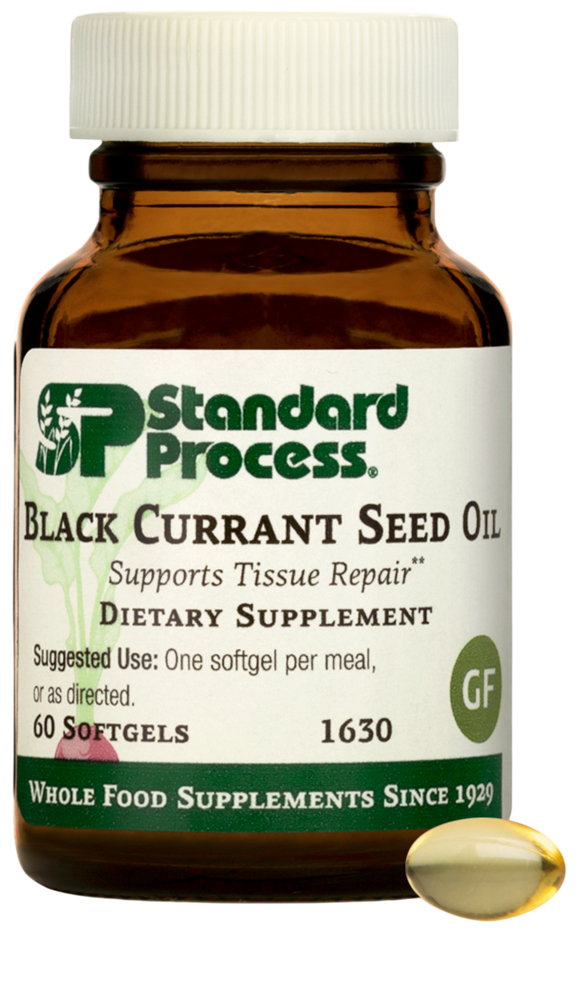
Standard Process Black Currant Seed Oil Review
Introduction
Standard Process Black Currant Seed Oil stands out in the crowded essential fatty acid supplement market because of its unusually diverse fatty acid composition. While most omega supplements focus exclusively on EPA and DHA from fish oil or ALA from flaxseed, black currant seed oil delivers a trifecta of beneficial fatty acids: gamma-linolenic acid (GLA), alpha-linolenic acid (ALA), and stearidonic acid (SDA).
This combination makes it particularly valuable for patients who need anti-inflammatory fatty acid support but have limited conversion capacity from ALA to EPA. SDA bypasses the rate-limiting desaturation step in omega-3 metabolism, making it a more efficient plant-based route to downstream EPA production.
Clinically, I find black currant seed oil most useful for patients dealing with inflammatory skin conditions, immune dysregulation, PMS-related hormonal symptoms, and general essential fatty acid insufficiency. It fills a distinct niche that fish oil alone does not cover.
Key Benefits of Black Currant Seed Oil
- Anti-inflammatory GLA: Gamma-linolenic acid supports the production of series-1 prostaglandins that modulate inflammation, making it useful for chronic inflammatory conditions.
- Skin barrier and hydration support: GLA is a structural component of the skin's lipid barrier. Supplementation helps reduce transepidermal water loss and supports skin conditions like eczema and psoriasis.
- Immune regulation: The fatty acid profile in black currant seed oil supports T-regulatory cell function and balanced immune signaling.
- Hormonal balance: GLA supports healthy prostaglandin E1 production, which is involved in regulating hormone-related symptoms including PMS and breast tenderness.
- Plant-based omega-3 pathway support: SDA provides a more efficient conversion pathway to EPA than ALA, making this a valuable option for plant-based patients or those with impaired fatty acid desaturation.
Ingredients
Standard Process Black Currant Seed Oil provides its benefits through a single, concentrated whole food oil source:
- Black Currant Seed Oil (Ribes nigrum): Cold-pressed oil from black currant seeds, standardized to provide GLA (approximately 15-20%), ALA (approximately 12-14%), and SDA (approximately 2-4%). This is the richest combined GLA/SDA source available in plant-based oils.
- Tocopherols (Vitamin E): Added as a natural antioxidant to preserve the polyunsaturated fatty acids in the oil from oxidation, ensuring potency and freshness.
Get Black Currant Seed Oil Today
Don't overpay on Amazon! Buy Black Currant Seed Oil directly from Dr. Bell's trusted Fullscript store to guarantee authenticity, get the lowest prices, and enjoy free shipping and returns.
Potential Side Effects & Precautions
- High doses of GLA can theoretically promote arachidonic acid production in some individuals. Use at recommended doses and in the context of a balanced omega-3 intake.
- May have mild blood-thinning properties. Use with caution if taking anticoagulant medications.
- Some individuals experience mild GI upset when first starting oil-based supplements. Take with food to minimize discomfort.
- Not recommended during pregnancy without physician guidance, particularly in the first trimester.
- Store in a cool, dark place to preserve fatty acid integrity.
Dr. Bell's Verdict
Black Currant Seed Oil offers a uniquely balanced omega fatty acid profile that I find particularly valuable for patients dealing with inflammatory skin conditions, immune dysregulation, and hormonal imbalances tied to fatty acid deficiency. It is not a replacement for fish oil — it is a complement to it.
What sets Standard Process's version apart is the quality control and the complementary vitamin E content that protects these fragile polyunsaturated fats from oxidation. Rancid fish or seed oils are unfortunately common on the supplement market, so the sourcing and preservation standards matter enormously.
I recommend Black Currant Seed Oil to patients with eczema, psoriasis, PMS, or chronic low-grade inflammation who want a plant-based essential fatty acid option with better metabolic versatility than standard flaxseed oil.
Frequently Asked Questions
What is GLA and why is it important?
GLA (gamma-linolenic acid) is an omega-6 fatty acid with potent anti-inflammatory properties. Unlike most omega-6 fats found in vegetable oils (which promote inflammation when consumed in excess), GLA supports the production of series-1 prostaglandins that actively reduce inflammation. This makes it clinically valuable for inflammatory and autoimmune-related conditions.
Is Black Currant Seed Oil better than evening primrose oil?
Black Currant Seed Oil contains both GLA and SDA, giving it a broader fatty acid profile than evening primrose oil, which provides primarily GLA. SDA converts more efficiently to EPA than ALA, making black currant seed oil particularly valuable for those who can't efficiently convert plant omega-3s or who want added metabolic flexibility.
Can Black Currant Seed Oil help with skin conditions?
Yes. GLA-rich oils like black currant seed oil have well-documented roles in supporting skin barrier function and reducing inflammatory skin conditions such as eczema. GLA is a structural component of healthy skin lipids, and deficiency contributes to dry, reactive, and inflamed skin.
How long should I take Black Currant Seed Oil?
For meaningful results with inflammatory or skin conditions, I typically recommend a minimum of 8 to 12 weeks of consistent use. Fatty acid metabolism and tissue incorporation take time. Some patients benefit from ongoing supplementation as a core component of their fatty acid protocol.
Where to Buy Black Currant Seed Oil
Don't overpay on Amazon! Buy Black Currant Seed Oil directly from Dr. Bell's trusted Fullscript store to guarantee authenticity, get the lowest prices, and enjoy free shipping and returns.