Cataplex A Review
Introduction
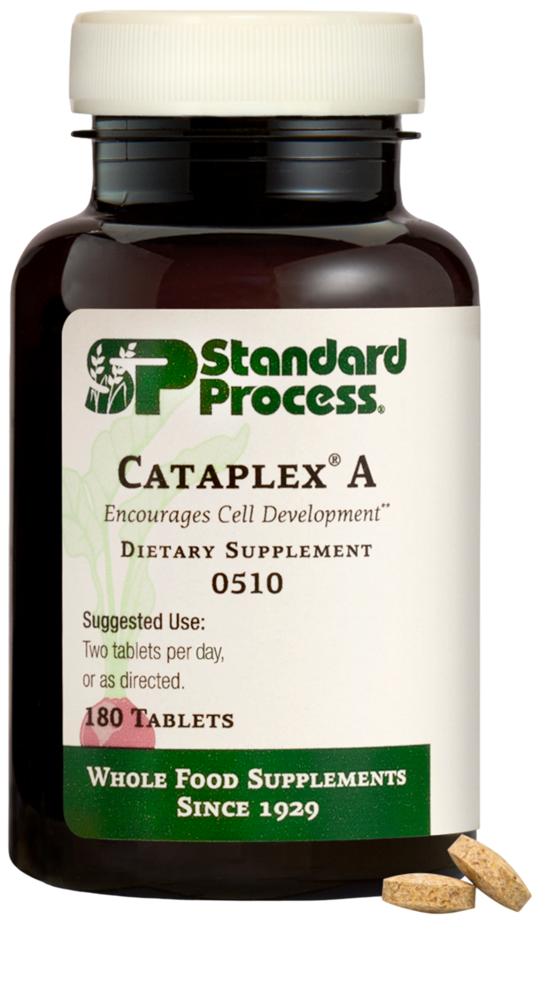
As a chiropractor and nutritional specialist with over a decade of clinical experience using whole-food supplementation, I have found Cataplex A by Standard Process to be one of the more thoughtfully formulated fat-soluble vitamin complexes available in the practitioner market. Where most commercial vitamin A supplements rely on isolated retinyl palmitate or beta-carotene, Cataplex A is built around a synergistic matrix of whole-food concentrates designed to deliver vitamin A activity alongside the naturally occurring cofactors your body expects to see alongside it.
The foundational philosophy behind Cataplex A reflects the nutritional science legacy of Dr. Royal Lee, who founded Standard Process in 1929 with the conviction that nutrients work in concert rather than in isolation. This product is formulated to supply what Standard Process calls the 'vitamin A complex,' which includes not only preformed vitamin A activity from bovine liver but also carotenoid precursors from carrot root concentrate and the essential fatty acid fraction known as vitamin F — linoleic and linolenic acids — which are required for proper fat-soluble vitamin transport and utilization.
In my clinical practice, I reach for Cataplex A most frequently when patients present with recurring upper respiratory infections, dry or hyperkeratotic skin, poor wound healing, compromised mucosal barriers, or a history of low-fat dieting that may have impaired fat-soluble vitamin absorption. It is also a valuable adjunct in patients recovering from gut dysbiosis or fat malabsorption syndromes where dietary vitamin A intake may be chronically insufficient despite reasonable dietary habits.
Key Benefits of Cataplex A
- Epithelial and Mucosal Barrier Integrity: Vitamin A is indispensable for the maintenance and differentiation of epithelial cells throughout the body, including those lining the respiratory tract, GI mucosa, urinary tract, and skin. Cataplex A provides preformed retinol activity that directly supports mucin production and goblet cell function, reinforcing the body's first line of physical defense against pathogens.
- Immune System Regulation: Retinoic acid, the active metabolite of vitamin A, plays a central regulatory role in both innate and adaptive immunity — influencing the differentiation of T-helper cells, natural killer cell activity, and the production of secretory IgA in mucosal tissues. Clinically, I have observed meaningful improvement in infection frequency and severity in patients who were subclinically vitamin A insufficient and supplemented with Cataplex A for 60 to 90 days.
- Vision and Retinal Health: Retinol is the direct precursor to 11-cis-retinal, the chromophore embedded in rod photoreceptors responsible for low-light and night vision. Patients with early-stage night blindness or difficulty with dark adaptation are among those I consider most immediately for Cataplex A, as this is one of the earliest and most sensitive clinical signs of vitamin A insufficiency.
- Skin Health and Dermal Repair: Vitamin A regulates keratinocyte proliferation and differentiation, making it essential for normal skin turnover, sebaceous gland function, and wound healing. Patients with follicular hyperkeratosis ('chicken skin' or keratosis pilaris), acne, or chronically slow-healing skin often show clinical improvement when underlying vitamin A insufficiency is addressed through whole-food supplementation.
- Essential Fatty Acid Synergy and Absorption Support: The inclusion of vitamin F — the essential fatty acid fraction containing linoleic and alpha-linolenic acid — is one of the distinguishing features of Cataplex A compared to isolated vitamin A products. Essential fatty acids are required for micellar formation and lymphatic transport of fat-soluble vitamins, meaning their co-delivery with vitamin A activity directly enhances bioavailability and cellular uptake.
Ingredients
Cataplex A is built on a focused whole food ingredient base:
- Bovine Liver (Whole Food Concentrate): Provides naturally occurring preformed vitamin A (retinol) in a whole-food matrix alongside heme iron, B12, and other hepatic cofactors. Retinol from animal liver is the most bioavailable form of vitamin A and does not require the conversion step necessary for plant-derived carotenoids, making it particularly valuable for patients with thyroid insufficiency or genetic polymorphisms affecting beta-carotene conversion.
- Carrot Root Concentrate: Supplies provitamin A carotenoids, primarily alpha- and beta-carotene, which the intestinal mucosa can enzymatically cleave into retinaldehyde and subsequently retinol as needed. The body's ability to self-regulate this conversion adds a safety margin against toxicity and provides antioxidant carotenoid activity independent of vitamin A function.
- Vitamin F (Essential Fatty Acid Complex): Standard Process designates the essential polyunsaturated fatty acids — linoleic acid (omega-6) and alpha-linolenic acid (omega-3) — as 'vitamin F,' following Dr. Lee's original classification. These fatty acids are critical for bile salt-dependent fat-soluble vitamin emulsification, prostaglandin biosynthesis, and maintaining cell membrane fluidity necessary for retinol receptor signaling.
- Defatted Wheat Germ: Provides naturally occurring vitamin E tocopherols, B vitamins, and trace minerals that serve as antioxidant protectants for the fat-soluble vitamin A fraction, preventing oxidative degradation both in the tablet and within lipid-rich tissues post-absorption. Vitamin E and vitamin A have a well-documented synergistic relationship in maintaining retinol stores within the liver.
Get Cataplex A Today
Don't overpay on Amazon! Buy Cataplex A directly from Dr. Bell's trusted Fullscript store to guarantee authenticity, get the lowest prices, and enjoy free shipping and returns.
Potential Side Effects & Precautions
Cataplex A is generally well tolerated, but consider the following:
- Cataplex A is generally very well tolerated at the recommended dosage of 3 to 6 tablets per day, and because it relies on a whole-food matrix with both preformed retinol and provitamin A carotenoids, it carries a substantially lower risk of toxicity compared to high-dose isolated retinyl palmitate supplements. However, patients with pre-existing hypervitaminosis A, liver disease, or those taking isotretinoin (Accutane) or other retinoid medications should not use this product without direct medical supervision.
- Pregnant patients require special consideration, as excessive preformed vitamin A intake above 10,000 IU daily has been associated with teratogenic risk. Cataplex A at standard doses is unlikely to approach toxic thresholds, but I always recommend that pregnant patients disclose all supplements to their OB or midwife, and I do not prescribe doses above the label recommendation during the first trimester without confirmed deficiency via laboratory testing.
- Some patients with compromised fat digestion — including those with gallbladder removal, exocrine pancreatic insufficiency, or Crohn's disease affecting the terminal ileum — may paradoxically absorb fat-soluble vitamins poorly regardless of supplementation. In these cases, I may recommend pairing Cataplex A with a bile acid support product or digestive enzyme complex to optimize absorption, and clinical monitoring of vitamin A status through serum retinol testing is appropriate.
- Carotenodermia — a benign yellowing of the skin, particularly on the palms and soles — can occasionally occur with high intake of carotenoid-rich supplements over extended periods. This is harmless and reversible upon dose reduction, but I mention it to patients proactively to prevent unnecessary alarm. It should not be confused with jaundice, which involves scleral yellowing and warrants urgent evaluation.
The Science Behind It
Peer-reviewed research on key ingredients and mechanisms relevant to Cataplex A:
Vitamin A and immunity: Essential roles in mucosal immunity and immune regulation
This review details the critical roles of retinoic acid in regulating T-cell differentiation, mucosal IgA production, and innate immune responses, providing mechanistic support for vitamin A supplementation in patients with compromised mucosal immunity. The findings are directly relevant to Cataplex A's clinical application for recurrent respiratory and GI infections.
Vitamin A deficiency and the skin: A review of the current evidence
This study examined the relationship between vitamin A status and epithelial integrity, demonstrating that retinol is required for normal keratinocyte differentiation and that deficiency manifests as follicular hyperkeratosis, impaired wound healing, and increased susceptibility to skin infection. These findings support the use of whole-food vitamin A complexes like Cataplex A for dermatological indications.
Beta-carotene and other carotenoids as antioxidants
This foundational paper characterized the antioxidant mechanisms of carotenoids including beta-carotene, demonstrating their role in quenching singlet oxygen and free radicals within lipid-rich tissue compartments. The findings support the rationale for including carrot-derived carotenoids alongside preformed retinol in a comprehensive vitamin A complex.
Essential fatty acids and the skin
This clinical study investigated the role of essential fatty acids — linoleic and alpha-linolenic acid — in maintaining skin barrier function and supporting fat-soluble vitamin transport, demonstrating that deficiency produces skin pathology similar to vitamin A deficiency. This provides direct mechanistic justification for the inclusion of vitamin F in Cataplex A to enhance retinol absorption and tissue delivery.
Dr. Bell's Verdict
Cataplex A stands out in the crowded vitamin A supplement market precisely because it does not try to reduce nutrition to a single isolated compound. In my clinical experience, the synergistic combination of preformed retinol from bovine liver, provitamin A carotenoids from carrot, and essential fatty acids for transport and receptor signaling produces more reliable and sustainable clinical outcomes than isolated retinol or beta-carotene products — particularly in patients with chronic immune challenges, mucosal barrier dysfunction, or fat absorption issues.
I rate Cataplex A highly as a practitioner-grade product and use it regularly in my own clinical protocols for immune support, skin health, and epithelial restoration. It is not an over-the-counter megadose vitamin A supplement, and its conservative whole-food dosing makes it appropriate for longer-term use with a favorable safety profile. For patients seeking evidence-informed, whole-food-based vitamin A support under the guidance of a qualified clinician, Cataplex A represents one of the most intelligently formulated options available.
Frequently Asked Questions
How does Cataplex A differ from a standard vitamin A supplement?
Standard vitamin A supplements typically contain isolated retinyl palmitate or synthetic beta-carotene as a single ingredient. Cataplex A delivers vitamin A activity through a whole-food concentrate matrix that includes bovine liver (preformed retinol), carrot root (provitamin A carotenoids), and essential fatty acids (vitamin F) — mimicking the nutritional complexity found in whole foods and supporting superior absorption and utilization compared to isolated compounds.
Can Cataplex A cause vitamin A toxicity?
At recommended doses, the risk of vitamin A toxicity with Cataplex A is very low. The product combines both preformed retinol (which carries dose-dependent toxicity risk at very high intakes) and provitamin A carotenoids (which the body converts to retinol only as needed, providing a built-in regulatory mechanism). Patients with liver disease, those who are pregnant, or those taking retinoid medications should consult their physician before use.
Who would benefit most from Cataplex A in a clinical setting?
My primary candidates for Cataplex A include patients with frequent upper respiratory infections, dry or hyperkeratotic skin conditions (keratosis pilaris, eczema), chronic sinusitis or mucosal congestion, poor wound healing, night vision difficulties, or a history of low-fat dieting, malabsorption syndromes, or gut dysbiosis that may impair dietary vitamin A absorption. It is also useful as part of an immune support protocol during high-stress periods or seasonal illness peaks.
How long does it typically take to see results with Cataplex A?
Clinical response time varies depending on the depth of insufficiency and the condition being addressed. In my experience, patients with skin-related manifestations of vitamin A insufficiency often notice improvement in texture and moisture within 4 to 6 weeks. Immune-related benefits — such as reduced frequency of upper respiratory infections — are best assessed over a 90-day trial period. Serum retinol testing at baseline and follow-up provides the most objective measure of response.
Where to Buy Cataplex A
Don't overpay on Amazon! Buy Cataplex A directly from Dr. Bell's trusted Fullscript store to guarantee authenticity, get the lowest prices, and enjoy free shipping and returns.