Cataplex C Review
Introduction
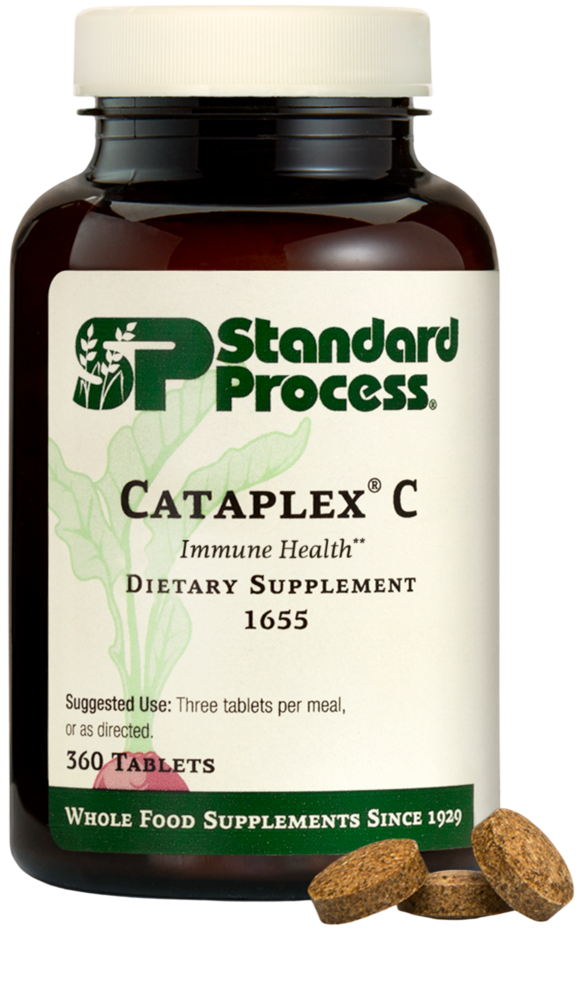
As a clinician who has worked with nutritional supplementation for over a decade, I frequently encounter patients who believe they are getting adequate vitamin C from standard ascorbic acid supplements. What most practitioners and patients don't realize is that ascorbic acid is merely the antioxidant wrapper around the true vitamin C complex — a distinction that Standard Process has built its entire Cataplex C formulation around. This whole-food concentrate is derived primarily from bovine adrenal, liver, and spleen tissues, along with plant-based sources like defatted wheat germ and buckwheat, delivering the complete suite of vitamin C cofactors as they appear in nature.
The foundational philosophy behind Cataplex C aligns with the nutritional research of Dr. Royal Lee, Standard Process's founder, who argued that the biological activity of vitamin C requires its full complement of associated factors — including copper-containing enzyme tyrosinase, bioflavonoids (P factors), and the yet-poorly-characterized J factors involved in respiratory health. When I prescribe this product in my practice, I'm not simply addressing ascorbate levels; I'm supporting a cascade of enzymatic and structural functions that depend on the whole complex working together. This distinction is clinically meaningful, especially in patients with chronic stress, poor wound healing, or recurrent infections.
Cataplex C is particularly well-suited for patients I see with adrenal fatigue patterns, frequent upper respiratory illness, compromised connective tissue integrity, or those recovering from surgery. The adrenal cortex has one of the highest concentrations of vitamin C of any tissue in the body, and under stress conditions, ascorbate is rapidly depleted. By providing vitamin C in its whole-food matrix — including actual adrenal glandular tissue — Cataplex C offers a physiologically intelligent approach to replenishment that synthetic isolates simply cannot replicate.
Key Benefits of Cataplex C
- Whole-Food Immune Activation: Cataplex C supports immune function through the complete vitamin C complex, which activates neutrophil activity, natural killer cell function, and antibody production more comprehensively than ascorbic acid alone. The bioflavonoid and tyrosinase content enhances the oxidative burst capacity of immune cells, making this particularly valuable during acute infections or cold and flu season.
- Collagen Synthesis and Connective Tissue Repair: Vitamin C is an essential cofactor for prolyl and lysyl hydroxylase, the enzymes responsible for cross-linking collagen fibers in skin, tendons, ligaments, and blood vessel walls. Cataplex C's whole-food matrix ensures these enzymatic reactions are supported with cofactors that optimize collagen deposition, which I find especially beneficial in post-surgical patients or those with joint instability.
- Adrenal Gland Support and Stress Resilience: The adrenal glands are among the most vitamin C-dense organs in the body, consuming large quantities during cortisol synthesis under physiological stress. Cataplex C includes bovine adrenal glandular concentrate, which delivers both the vitamin C complex and organ-specific peptides that provide targeted nutritional support to the adrenal cortex.
- Antioxidant Protection and Free Radical Scavenging: The P factors (bioflavonoids) in Cataplex C work synergistically with ascorbate to quench reactive oxygen species in both aqueous and lipid cellular environments. This cooperative antioxidant activity is significantly more effective than ascorbic acid alone, helping protect vascular endothelium, neurological tissue, and immune cells from oxidative damage.
- Capillary Integrity and Vascular Health: The rutin and bioflavonoid components derived from buckwheat in Cataplex C have well-documented roles in strengthening capillary walls and reducing vascular permeability. Clinically, this translates to benefits for patients presenting with easy bruising, varicose veins, chronic venous insufficiency, or inflammatory vascular conditions.
Ingredients
Cataplex C is built on a focused whole food ingredient base:
- Bovine Adrenal (PMG Extract and Whole Tissue): Provides adrenal-specific glandular peptides and a concentrated natural source of the vitamin C complex as it exists in one of the body's highest-ascorbate tissues; supports HPA axis resilience and cortisol biosynthesis cofactor availability under stress loading.
- Defatted Wheat Germ: A whole-food source of the J factor component of the vitamin C complex associated with pulmonary and respiratory tissue health; also delivers vitamin E tocopherols and naturally occurring B vitamins that act as synergistic antioxidant cofactors.
- Buckwheat (Leaf and Flower Juice Powder): Rich in rutin, a potent bioflavonoid (P factor) that strengthens capillary walls, reduces vascular fragility, and works in direct concert with ascorbate to regenerate oxidized vitamin C back to its active reduced form within tissues.
- Tyrosinase (Copper Enzyme Complex): A copper-dependent oxidase that is an integral component of the natural vitamin C complex; plays a role in melanin synthesis, connective tissue metabolism, and acts as a biological activator within the ascorbate redox cycle that is absent in synthetic ascorbic acid supplements.
Get Cataplex C Today
Don't overpay on Amazon! Buy Cataplex C directly from Dr. Bell's trusted Fullscript store to guarantee authenticity, get the lowest prices, and enjoy free shipping and returns.
Potential Side Effects & Precautions
Cataplex C is generally well tolerated, but consider the following:
- Cataplex C is generally very well tolerated given its whole-food, low-dose design. Unlike high-dose isolated ascorbic acid, the physiological concentrations of vitamin C in each tablet rarely cause the gastrointestinal distress, loose stools, or osmotic diarrhea commonly reported with megadose synthetic vitamin C supplementation.
- Patients with known sensitivities to wheat or gluten should exercise caution, as the formula contains defatted wheat germ. While the germ fraction is lower in gluten-containing proteins than endosperm-based wheat products, I still advise celiac patients or those with severe non-celiac gluten sensitivity to consult their physician before use.
- Because Cataplex C contains bovine glandular tissue, it is not appropriate for patients following vegan or strict vegetarian dietary protocols, and those with beef or bovine protein sensitivities should be monitored. The glandular components are sourced from New Zealand and Australian pasture-raised cattle, which mitigates BSE-related concerns, but the contraindication based on dietary preference remains relevant.
- At recommended dosages, no significant drug interactions have been clinically documented for Cataplex C specifically. However, because vitamin C complex can influence iron absorption and has mild anticoagulant properties via bioflavonoid activity, patients on warfarin or those with hemochromatosis should inform their prescribing physician before beginning supplementation.
The Science Behind It
Peer-reviewed research on key ingredients and mechanisms relevant to Cataplex C:
Vitamin C and Immune Function
This comprehensive review published in Nutrients demonstrated that vitamin C supports multiple immune functions including epithelial barrier integrity, neutrophil chemotaxis, and lymphocyte proliferation, while deficiency is associated with increased susceptibility to infections. The findings strongly support the use of vitamin C complex supplementation in immune-compromised or high-stress populations.
Quercetin and Its Anti-Inflammatory and Antioxidant Interactions with Vitamin C
This study examined how bioflavonoids, including rutin and quercetin analogues found in buckwheat, potentiate and recycle ascorbic acid through redox interactions, significantly extending its antioxidant activity within vascular and immune tissues. This mechanism directly supports the rationale for delivering vitamin C in its whole-food bioflavonoid matrix as found in Cataplex C.
Vitamin C and the Role of Ascorbate in Collagen Biosynthesis
Published in Nutrients, this paper detailed ascorbate's essential role as an enzyme cofactor for prolyl-4-hydroxylase and lysyl hydroxylase in collagen triple helix stabilization, demonstrating that inadequate vitamin C directly impairs connective tissue synthesis and wound healing. This mechanistic evidence underpins Cataplex C's clinical utility in post-surgical recovery and connective tissue support protocols.
Adrenal Ascorbic Acid Depletion During Physiological Stress and Its Implications for HPA Axis Function
This research confirmed that the adrenal cortex contains the highest concentration of ascorbic acid of any tissue in the body and that ACTH-mediated stress triggers rapid release and depletion of adrenal ascorbate stores. These findings provide mechanistic justification for targeted vitamin C complex repletion in patients experiencing chronic physiological or psychological stress.
Dr. Bell's Verdict
In my clinical experience, Cataplex C stands apart from the crowded vitamin C supplement marketplace precisely because it respects the complexity of whole-food nutrition rather than reducing vitamin C to a single isolated molecule. For patients dealing with adrenal exhaustion, recurrent infections, poor wound healing, or connective tissue vulnerability, this product delivers a physiologically coherent nutritional intervention that synthetic ascorbic acid formulas cannot match. The inclusion of tyrosinase, bioflavonoids, wheat germ J factors, and bovine glandular tissue creates a matrix that mirrors how vitamin C functions in the body's highest-demand tissues.
I rate Cataplex C highly as a foundational immune and connective tissue support supplement, and it holds a permanent place in my clinical protocols for stress recovery, seasonal immune resilience, and post-surgical healing. My primary caution is that patients and practitioners understand this is a nutritional food complex — not a pharmacological megadose — and should be dosed accordingly, often requiring multiple tablets per day during acute therapeutic phases. For practitioners trained in functional whole-food nutrition, Cataplex C remains one of the most intelligently formulated vitamin C products available on the professional supplement market.
Frequently Asked Questions
How is Cataplex C different from regular vitamin C or ascorbic acid supplements?
Cataplex C provides the entire vitamin C complex as found in whole foods, including tyrosinase, bioflavonoids (P factors), J factors, and glandular cofactors — not just isolated ascorbic acid. Ascorbic acid is the antioxidant shell of the vitamin C molecule, but the full biological activity of vitamin C depends on these accompanying nutrient cofactors working together synergistically.
How many tablets of Cataplex C should I take per day?
Standard Process recommends 3 tablets per day as a general maintenance dose, though I often recommend 6 or more tablets daily during acute immune challenges, high-stress periods, or active tissue repair — always under clinical supervision. Because each tablet contains a relatively modest amount of the vitamin C complex, higher doses are physiologically safe and commonly used in whole-food nutritional protocols.
Can Cataplex C help with adrenal fatigue?
Yes, this is one of my primary clinical indications for Cataplex C. The adrenal glands have an exceptionally high demand for vitamin C, particularly during cortisol production under chronic stress, and they are among the first tissues to become depleted. The bovine adrenal glandular concentrate in this formula provides both the vitamin C complex and organ-specific peptides that directly nourish adrenal function.
Is Cataplex C safe to take long-term?
In my clinical experience, Cataplex C is safe for long-term daily use as a whole-food nutritional supplement. Because it is food-based rather than a high-dose synthetic nutrient, the risk of toxicity or tissue accumulation is minimal. I recommend periodic reassessment with patients every three to six months to evaluate clinical response and adjust dosing to their changing physiological needs.
Where to Buy Cataplex C
Don't overpay on Amazon! Buy Cataplex C directly from Dr. Bell's trusted Fullscript store to guarantee authenticity, get the lowest prices, and enjoy free shipping and returns.