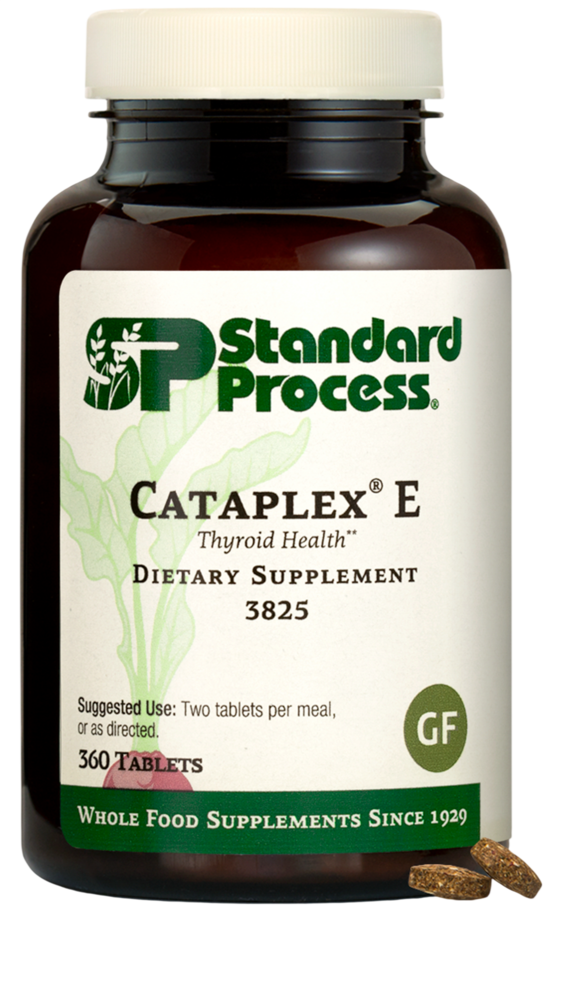
Cataplex E Review
Introduction
In my clinical practice, I consistently distinguish between isolated, synthetic vitamins and whole-food concentrates, and nowhere is that distinction more important than with vitamin E. Cataplex E, produced by Standard Process, is a whole-food-based vitamin E supplement designed to deliver the complete vitamin E complex — including tocopherols and their natural synergists — rather than the isolated alpha-tocopherol fraction found in most commercial products. This matters enormously because vitamin E in nature does not function as a single molecule but as a coordinated system of compounds working together.
The product was developed within Standard Process's foundational whole-food philosophy, which holds that nutrients stripped from their natural matrix lose much of their biological activity. Cataplex E provides vitamin E activity alongside selenium, a critical cofactor in glutathione peroxidase activity, and organic complexes derived from wheat germ and other whole-food sources. These co-factors allow the vitamin E complex to function as it does in food — bioavailable, synergistic, and metabolically active at the cellular level.
From a clinical standpoint, I reach for Cataplex E when patients present with concerns related to cardiovascular health, poor peripheral circulation, reproductive tissue integrity, or chronic oxidative stress. The formula's emphasis on the full E complex rather than a single tocopherol fraction makes it particularly valuable for long-term nutritional support, and its safety profile is well-suited for both short-term therapeutic protocols and ongoing maintenance use.
Key Benefits of Cataplex E
- Cardiovascular and Circulatory Support: The tocopherol complex in Cataplex E supports healthy platelet aggregation and vascular endothelial function, reducing oxidative damage to LDL particles — a key driver of atherosclerotic plaque formation. Selenium works in concert to maintain glutathione peroxidase activity, providing a second layer of antioxidant protection within cardiac and vascular tissue.
- Whole-Food Antioxidant Defense: Unlike synthetic alpha-tocopherol, the complete tocopherol and tocotrienol fractions in whole-food E complexes provide broader free-radical quenching across lipid membranes throughout the body. This broad-spectrum antioxidant activity is particularly relevant for patients with elevated inflammatory markers or chronic oxidative burden.
- Muscle Tissue Integrity and Recovery: Vitamin E has been well-studied for its role in protecting muscle cell membranes from peroxidative damage, especially during periods of physical exertion or recovery from injury. I frequently recommend Cataplex E as part of musculoskeletal rehabilitation protocols for this reason.
- Reproductive and Hormonal Tissue Health: Historically, vitamin E earned its original name — tocopherol, derived from the Greek for 'to bear children' — because of its foundational role in reproductive tissue health. Cataplex E supports healthy uterine, ovarian, and testicular tissue through its antioxidant and membrane-stabilizing properties.
- Selenium-Mediated Thyroid and Immune Support: Selenium is an essential cofactor for deiodinase enzymes that convert inactive T4 thyroid hormone to active T3, making it a critical nutrient for thyroid and metabolic function. The inclusion of selenium in Cataplex E also supports robust immune surveillance by sustaining glutathione peroxidase and thioredoxin reductase activity.
Ingredients
Cataplex E is built on a focused whole food ingredient base:
- Vitamin E (as d-alpha tocopherol from whole-food complex): Delivers naturally occurring alpha-tocopherol within a whole-food matrix, preserving its synergistic relationship with other tocopherols and membrane phospholipids; acts as a lipid-soluble chain-breaking antioxidant that protects polyunsaturated fatty acids in cell membranes from peroxidative damage.
- Selenium (as selenium yeast): An essential trace mineral that serves as the catalytic center of glutathione peroxidase enzymes, which neutralize hydrogen peroxide and lipid hydroperoxides within cells; also critical for selenoprotein synthesis involved in thyroid hormone metabolism and immune function.
- Wheat Germ (whole-food E complex source): One of the most concentrated naturally occurring sources of vitamin E in the food supply, wheat germ provides tocopherols within their native phospholipid and protein matrix, enhancing bioavailability and delivering naturally occurring octacosanol, which has been studied for cardiovascular and neurological benefits.
- Bovine Orchic and Ovarian PMG Extract: Standard Process's proprietary protomorphogen (PMG) extracts from bovine orchic and ovarian tissue provide nucleoprotein complexes that are theorized to support organ-specific tissue integrity and recovery through cell signaling mechanisms, consistent with the company's foundational glandular nutrition philosophy.
Get Cataplex E Today
Don't overpay on Amazon! Buy Cataplex E directly from Dr. Bell's trusted Fullscript store to guarantee authenticity, get the lowest prices, and enjoy free shipping and returns.
Potential Side Effects & Precautions
Cataplex E is generally well tolerated, but consider the following:
- Cataplex E is generally well-tolerated at recommended dosages, and adverse effects are uncommon when used as directed. Because it is derived from whole-food concentrates rather than isolated synthetic fractions, the risk of toxicity associated with high-dose isolated alpha-tocopherol — such as interference with gamma-tocopherol activity — is significantly reduced.
- Patients on anticoagulant medications such as warfarin or high-dose aspirin therapy should use caution with any vitamin E supplement, as tocopherols can inhibit platelet aggregation and may modestly potentiate anticoagulant effects at higher doses. I always recommend coordinating with the prescribing physician in these cases.
- Individuals with wheat allergies or gluten sensitivity should be aware that the formula contains wheat germ and should consult their clinician before use. Although the wheat germ fraction is typically processed in a way that reduces gluten content, it is not certified gluten-free.
- As with any fat-soluble vitamin, vitamin E is stored in adipose tissue, and prolonged use at excessively high dosages can theoretically accumulate. However, at Standard Process's recommended serving sizes, this remains a theoretical rather than commonly observed clinical concern, and regular practitioner oversight addresses this appropriately.
The Science Behind It
Peer-reviewed research on key ingredients and mechanisms relevant to Cataplex E:
Vitamin E and cardiovascular disease: observations from the Cambridge Heart Antioxidant Study (CHAOS)
This landmark randomized controlled trial found that supplementation with natural-source alpha-tocopherol significantly reduced the risk of non-fatal myocardial infarction in patients with angiographically confirmed coronary atherosclerosis. The findings are directly relevant to the cardiovascular antioxidant rationale underlying Cataplex E's clinical application.
Selenium and vitamin E supplementation and risk of prostate cancer: the Selenium and Vitamin E Cancer Prevention Trial (SELECT)
This large-scale trial examined selenium and vitamin E individually and in combination, providing important insights into how these nutrients interact and the importance of dosing and form when combining them clinically. The findings underscore the relevance of synergistic whole-food formulations like Cataplex E over isolated high-dose supplementation.
Selenium status and cardiovascular disease risk: systematic review and meta-analysis
This meta-analysis demonstrated a significant inverse association between selenium status and risk of coronary heart disease, supporting the inclusion of selenium as a key cardiovascular-protective cofactor. These findings validate the clinical logic of combining selenium with vitamin E in a cardiovascular-focused supplement like Cataplex E.
Gamma-tocopherol, the major form of vitamin E in the US diet, deserves more attention
This review by Jiang, Christen, and Bhattacharya highlights that gamma-tocopherol — abundant in whole-food E sources but absent in most synthetic supplements — has unique anti-inflammatory and detoxification properties distinct from alpha-tocopherol alone. This provides strong mechanistic support for the whole-food approach to vitamin E supplementation embodied in Cataplex E.
Dr. Bell's Verdict
In my clinical assessment, Cataplex E stands out as one of the more thoughtfully formulated vitamin E supplements available through practitioner channels. The combination of whole-food tocopherol complexes with selenium — a nutrient that is frequently deficient in modern diets — creates a synergistic antioxidant and cardiovascular support formula that outperforms single-ingredient synthetic vitamin E products in terms of both physiological relevance and likely clinical impact.
I recommend Cataplex E with confidence for patients seeking cardiovascular antioxidant support, reproductive tissue health, muscle recovery, and selenium repletion, and it earns a strong place in my clinical toolkit particularly when combined with other whole-food concentrates in targeted therapeutic protocols. As with all practitioner-grade supplements, individual needs vary and dosing should be guided by a qualified healthcare provider familiar with the patient's complete clinical picture.
Frequently Asked Questions
How is Cataplex E different from a standard vitamin E supplement from a grocery store?
Most commercial vitamin E supplements contain isolated synthetic alpha-tocopherol (often listed as dl-alpha tocopherol), which represents only one of the eight naturally occurring tocopherol and tocotrienol compounds that make up the full vitamin E complex. Cataplex E delivers vitamin E within a whole-food matrix that preserves the synergistic relationship between these compounds and their natural cofactors, more closely mimicking how vitamin E functions in whole foods.
Who is the ideal candidate for Cataplex E in a clinical setting?
I most commonly recommend Cataplex E for patients with cardiovascular risk factors, poor peripheral circulation, muscle soreness or recovery challenges, reproductive health concerns, or documented selenium insufficiency. It is also useful as part of a broader antioxidant protocol for patients with chronic inflammatory conditions or high oxidative stress markers on lab work.
Can Cataplex E be taken long-term?
Yes, in most patients Cataplex E is appropriate for long-term use at recommended dosages, particularly as a maintenance cardiovascular and antioxidant supplement. Because vitamin E is fat-soluble, I do recommend periodic reassessment to ensure dosing remains appropriate, especially if other vitamin E-containing supplements or foods are part of the patient's daily regimen.
Does Cataplex E contain any animal-derived ingredients?
Yes, Cataplex E contains bovine orchic (testicular) and ovarian protomorphogen extracts as part of Standard Process's glandular nutrition philosophy. This makes it unsuitable for vegetarian or vegan patients, and those with ethical or religious dietary restrictions should discuss alternative formulations with their practitioner.
Where to Buy Cataplex E
Don't overpay on Amazon! Buy Cataplex E directly from Dr. Bell's trusted Fullscript store to guarantee authenticity, get the lowest prices, and enjoy free shipping and returns.