Chlorophyll Complex™ Review
Introduction
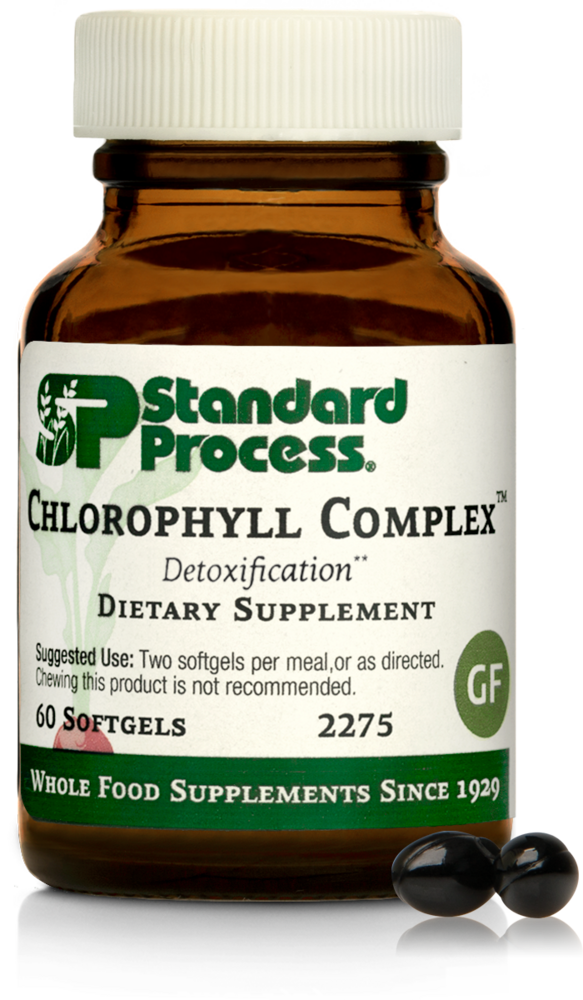
As a clinician who works extensively with detoxification protocols and nutritional biochemistry, I frequently evaluate green-pigment formulas for their therapeutic legitimacy. Chlorophyll Complex™ stands out because it goes beyond a simple liquid chlorophyll supplement and instead combines standardized sodium copper chlorophyllin with whole-food green concentrates to deliver synergistic phytonutrient activity. This layered approach addresses detoxification, oxidative stress, and systemic inflammation simultaneously.
Chlorophyll, the magnesium-centered porphyrin molecule responsible for photosynthesis, shares a striking structural similarity to human heme — the iron-centered compound in hemoglobin. This molecular mimicry underlies many of chlorophyll's proposed clinical benefits, including its ability to bind pro-carcinogenic heterocyclic amines and aflatoxins in the gastrointestinal tract before they can be absorbed. Sodium copper chlorophyllin, the semi-synthetic water-soluble derivative used in most clinical applications, has demonstrated measurable bioavailability advantages over native plant chlorophyll.
Chlorophyll Complex™ appears best suited for patients dealing with environmental toxic load, sluggish hepatic phase II detoxification, chronic body malodor, or those transitioning through aggressive dietary cleanses. In my clinical practice, I often recommend chlorophyllin-based supplements as part of a structured liver-support protocol alongside brassica-derived glucosinolates and milk thistle. The formula's breadth of ingredients makes it a versatile tool that I am comfortable recommending across a wide patient demographic.
Key Benefits of Chlorophyll Complex™
- Gastrointestinal Toxin Binding: Sodium copper chlorophyllin forms tight molecular complexes with dietary mutagens, aflatoxins, and heterocyclic amines in the gut lumen, physically intercepting them before enterohepatic absorption. This mechanism has been validated in human intervention trials, making it one of the most evidence-supported functions of any nutraceutical compound.
- Internal Deodorization: Chlorophyllin has a well-documented history in clinical settings as an internal deodorant, reducing trimethylamine and other volatile amine compounds produced by bacterial metabolism in the colon. Patients with trimethylaminuria or those following high-protein diets often report meaningful reductions in body and breath odor within one to two weeks of consistent use.
- Hepatic Phase II Detoxification Support: The alfalfa and green concentrate components of this formula supply flavonoids and chlorogenic acid derivatives that upregulate glutathione S-transferase and quinone reductase, two critical Phase II detoxification enzymes in the liver. This enzyme induction accelerates the conjugation and elimination of xenobiotics, reducing recirculation of harmful metabolites.
- Antioxidant and Anti-Inflammatory Activity: Chlorophyllin functions as a potent free-radical scavenger, quenching reactive oxygen species that drive chronic low-grade inflammation and accelerate cellular aging. When combined with the carotenoids and vitamin K precursors naturally present in alfalfa leaf, the overall antioxidant capacity of this formula is meaningfully amplified beyond chlorophyllin alone.
- Wound Healing and Tissue Regeneration Support: Topical chlorophyllin preparations have been used in clinical wound care for decades, but emerging evidence suggests that oral chlorophyllin also supports tissue repair by promoting fibroblast activity and reducing inflammatory cytokine signaling. This makes Chlorophyll Complex™ a reasonable adjunct for post-surgical patients or those with chronic inflammatory skin conditions.
Ingredients
Chlorophyll Complex™ is built on a focused whole food ingredient base:
- Sodium Copper Chlorophyllin: The water-soluble, semi-synthetic derivative of plant chlorophyll in which the central magnesium ion is replaced by copper and the phytol tail is cleaved. This modification dramatically improves gastrointestinal stability and systemic bioavailability, and it is the form used in virtually all peer-reviewed human intervention trials. Its primary clinical roles include mutagen sequestration in the gut, free-radical scavenging, and internal deodorization.
- Alfalfa (Medicago sativa) Aerial Parts: Alfalfa is one of the most nutrient-dense land plants available, supplying chlorophyll, beta-carotene, vitamins K1 and K2, saponins, and isoflavones. In the context of this formula, alfalfa contributes native chlorophyll alongside phytosterols that modestly support cholesterol homeostasis and alkaloid compounds with mild diuretic and anti-inflammatory properties. Its saponin content also enhances the emulsification of lipid-soluble toxins in the gut.
- Barley Grass (Hordeum vulgare) Juice Powder: Young barley grass is exceptionally rich in superoxide dismutase (SOD), a primary antioxidant enzyme that neutralizes superoxide radicals at the mitochondrial level. Barley grass juice powder also contains 2-O-glycosylisovitexin (saponarin), a flavonoid with demonstrated anti-inflammatory and hepatoprotective activity. Its alkalizing mineral profile — particularly potassium, magnesium, and calcium — supports the slightly alkaline terrain that favors optimal enzymatic detoxification.
- Buckwheat (Fagopyrum esculentum) Leaf and Flower: Buckwheat aerial parts are among the most concentrated dietary sources of rutin, a bioflavonoid glycoside that strengthens capillary integrity, inhibits platelet aggregation, and exhibits significant antioxidant activity against lipid peroxidation. Rutin also serves as a quercetin precursor upon gut biotransformation, extending the formula's anti-inflammatory reach into the systemic circulation. This ingredient bridges the gap between green-food detox support and cardiovascular micronutrient therapy.
Get Chlorophyll Complex™ Today
Don't overpay on Amazon! Buy Chlorophyll Complex™ directly from Dr. Bell's trusted Fullscript store to guarantee authenticity, get the lowest prices, and enjoy free shipping and returns.
Potential Side Effects & Precautions
Chlorophyll Complex™ is generally well tolerated, but consider the following:
- The most commonly reported side effect of sodium copper chlorophyllin is a harmless green discoloration of the stool and, in higher doses, the urine. I always counsel patients in advance about this expected change to avoid unnecessary alarm, as it is purely cosmetic and reflects normal excretion of the pigment complex.
- A subset of patients — particularly those with sensitive gastrointestinal tracts or pre-existing dysbiosis — may experience mild nausea, loose stools, or transient cramping during the first five to seven days of use. These symptoms are generally self-limiting and can be mitigated by starting at half the recommended dose and titrating upward over two weeks.
- Individuals with known allergies to members of the Fabaceae family should approach the alfalfa component with caution, as cross-reactivity is theoretically possible, though clinically uncommon. Additionally, alfalfa's moderate vitamin K content warrants monitoring in patients taking warfarin or other vitamin K-antagonist anticoagulants, and I recommend checking INR levels at baseline and four weeks into supplementation.
- There are no established contraindications for chlorophyllin during pregnancy or lactation based on current evidence; however, due to limited safety data in these populations, I advise my pregnant patients to defer use until after delivery or to consult their OB-GYN before beginning supplementation. Patients with photosensitivity disorders should also be aware that rare case reports have linked high-dose oral chlorophyllin to mild photosensitization reactions.
The Science Behind It
Peer-reviewed research on key ingredients and mechanisms relevant to Chlorophyll Complex™:
Chlorophyllin intervention reduces aflatoxin-DNA adducts in individuals at high risk for liver cancer
This randomized, placebo-controlled trial conducted in Qidong, China demonstrated that 100 mg of chlorophyllin taken three times daily with meals reduced urinary aflatoxin-DNA adduct biomarkers by 55% compared to placebo. The findings provide the strongest human clinical evidence that chlorophyllin functions as an effective chemopreventive agent by intercepting dietary carcinogens before systemic absorption.
Pilot study of oral sodium copper chlorophyllin complex as a modulator of inflammatory mediators in patients with chronic wounds
This pilot clinical study investigated oral chlorophyllin supplementation in patients with non-healing chronic wounds and found reductions in pro-inflammatory cytokines alongside improvements in wound closure rates. The results suggest a systemic anti-inflammatory mechanism that extends beyond the gastrointestinal tract, supporting use of chlorophyllin as a tissue-repair adjunct.
Antioxidant and anti-inflammatory activities of young barley leaves extract and its main constituent, saponarin
This in vitro and in vivo study characterized barley grass extract's antioxidant capacity and identified saponarin (2-O-glycosylisovitexin) as the primary bioactive flavonoid responsible for its anti-inflammatory effects, including inhibition of COX-2-mediated prostaglandin synthesis. The findings support the inclusion of barley grass juice powder in detoxification and anti-inflammatory supplement formulas.
Rutin: A review of its pharmacological activities and therapeutic applications
This comprehensive review summarized the clinical and preclinical evidence for rutin, the primary bioactive in buckwheat aerial parts, demonstrating significant antioxidant, anti-inflammatory, capillary-protective, and hepatoprotective activities across multiple organ systems. The review confirms rutin's mechanistic relevance as a complementary ingredient in a liver-support and detoxification-oriented formula.
Dr. Bell's Verdict
After thorough evaluation of the formulation, ingredient quality, and available clinical evidence, I regard Chlorophyll Complex™ as one of the more well-constructed green-pigment supplements on the market. The decision to anchor the formula with pharmaceutical-grade sodium copper chlorophyllin rather than relying solely on unstable native plant chlorophyll demonstrates a sophisticated understanding of bioavailability, and the complementary inclusion of barley grass SOD and buckwheat rutin meaningfully extends the formula's antioxidant reach.
I would place this supplement in my top-tier recommendations for patients undergoing structured detoxification programs, those with documented hepatic toxic burden, or individuals seeking evidence-based internal deodorization support. It is not a standalone therapeutic intervention for serious hepatotoxicity or environmental illness, but as part of a comprehensive nutritional protocol — alongside fiber, hydration, and phase II liver support nutrients — Chlorophyll Complex™ earns a strong clinical endorsement.
Frequently Asked Questions
How long does it take to notice results from Chlorophyll Complex™?
In my clinical experience, patients typically report improvements in body and breath odor within seven to fourteen days of consistent use. Detoxification-related benefits, such as improved energy and clearer skin, generally become apparent after three to four weeks as hepatic enzyme activity and toxin clearance accumulate. I recommend a minimum 60-day trial for a fair assessment of the formula's full impact.
Should I take Chlorophyll Complex™ with or without food?
For toxin-binding purposes — particularly if you regularly consume grilled meats, processed foods, or are concerned about aflatoxin exposure — taking the supplement with or immediately before meals maximizes its opportunity to intercept dietary mutagens in the gut lumen. For general antioxidant and detox support, timing is less critical, though taking it with food typically reduces any risk of mild nausea.
Is Chlorophyll Complex™ safe to take long-term?
Based on the available safety literature, sodium copper chlorophyllin has an excellent long-term safety profile at standard dietary supplement doses, with no evidence of cumulative toxicity in human studies conducted over several months. The botanical ingredients — alfalfa, barley grass, and buckwheat — are all classified as food-grade and have centuries of safe use in human nutrition. I typically recommend cycling the formula — twelve weeks on, two to four weeks off — not for safety reasons, but to prevent physiological complacency and allow reassessment of ongoing need.
Can Chlorophyll Complex™ replace eating green vegetables?
Absolutely not, and I want to be direct about this distinction. While this formula delivers meaningful concentrations of chlorophyllin and complementary phytonutrients, it cannot replicate the full matrix of fiber, prebiotic compounds, micronutrients, and phytochemicals present in whole cruciferous and leafy vegetables. I view Chlorophyll Complex™ as a targeted therapeutic adjunct that supplements — never substitutes — a diet rich in diverse whole plant foods.
Where to Buy Chlorophyll Complex™
Don't overpay on Amazon! Buy Chlorophyll Complex™ directly from Dr. Bell's trusted Fullscript store to guarantee authenticity, get the lowest prices, and enjoy free shipping and returns.