Cruciferous Complete™ Review
Introduction
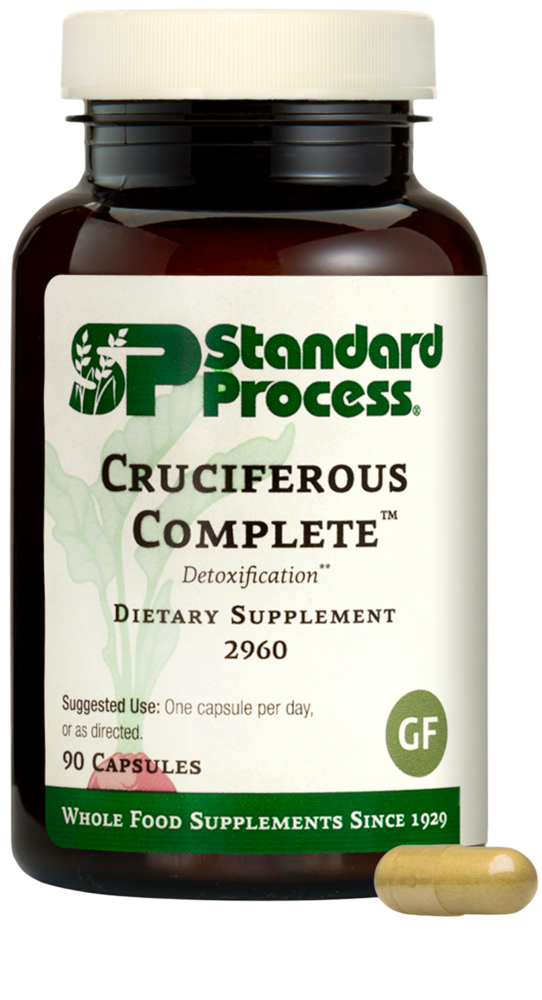
Cruciferous Complete™ is a Standard Process formulation built around two of the most clinically studied cruciferous vegetables — kale and Brussels sprouts — delivered in a whole-food, desiccated concentrate rather than as isolated extracts. This distinction matters enormously in my clinical practice, because whole-food concentrates preserve the synergistic matrix of glucosinolates, myrosinase enzyme cofactors, flavonoids, and fat-soluble vitamins that work together in ways that isolated sulforaphane supplements simply cannot replicate.
When I evaluate a supplement for use with my patients, I look first at ingredient quality and mechanism of action. Cruciferous Complete™ earns high marks on both counts — the glucosinolates found in kale and Brussels sprouts are well-documented precursors to sulforaphane and indole-3-carbinol (I3C), two of the most researched phytonutrients in the areas of detoxification support, antioxidant induction via the Nrf2 pathway, and estrogen metabolism. These are not theoretical mechanisms; they are supported by decades of published research in both animal models and human clinical trials.
I typically recommend this product to patients presenting with signs of impaired hepatic detoxification, hormone-related complaints such as PMS or fibrocystic breast tissue, elevated inflammatory markers, or simply a dietary pattern that lacks adequate vegetable diversity. Cruciferous Complete™ provides a reliable, food-based bridge for these individuals while we work on longer-term dietary change, and it stacks well with complementary protocols targeting the liver, endocrine system, and gut microbiome.
Key Benefits of Cruciferous Complete™
- Phase II Liver Detoxification Support: The glucosinolate compounds in kale and Brussels sprouts are converted enzymatically to sulforaphane and I3C, both of which upregulate Phase II detoxification enzymes — including glutathione S-transferase and quinone reductase — in hepatic tissue. This enhanced enzymatic activity accelerates the conjugation and excretion of environmental toxins, carcinogens, and metabolic byproducts.
- Estrogen Metabolism and Hormonal Balance: Indole-3-carbinol and its gut-derived metabolite DIM (diindolylmethane) favorably shift estrogen metabolism toward the less proliferative 2-hydroxyestrone pathway and away from the more problematic 16α-hydroxyestrone pathway. Clinically, this translates to meaningful support for patients with estrogen dominance, PMS, endometriosis, or fibrocystic breast changes.
- Nrf2 Pathway Activation and Antioxidant Defense: Sulforaphane is one of the most potent known dietary activators of the Nrf2 transcription factor, which governs the expression of over 200 cytoprotective genes including heme oxygenase-1 and superoxide dismutase. This mechanism provides a sustained, endogenous antioxidant response that far exceeds what exogenous antioxidant supplementation alone can offer.
- Cardiovascular and Lipid Health: Kale is a concentrated source of vitamin K1 and lutein, both of which contribute to arterial integrity and the prevention of vascular calcification. Epidemiological and interventional data consistently associate higher cruciferous vegetable intake with reduced risk of cardiovascular events, likely through multiple overlapping mechanisms including inflammation reduction and improved endothelial function.
- Anti-Inflammatory and Cellular Protective Effects: The combination of glucosinolate-derived compounds, vitamin C, and chlorophyll-associated nutrients in this formula exerts broad anti-inflammatory activity by modulating NF-κB signaling and reducing pro-inflammatory cytokine production. This makes Cruciferous Complete™ a useful adjunct in protocols addressing chronic low-grade inflammation, which underlies a wide spectrum of modern chronic diseases.
Ingredients
Cruciferous Complete™ is built on a focused whole food ingredient base:
- Kale (Brassica oleracea) — Whole Food Concentrate: Kale is exceptionally rich in glucosinolates (particularly glucoraphanin and glucobrassicin), vitamin K1, vitamin C, and carotenoids. In its desiccated whole-food form, the myrosinase enzyme is preserved, enabling endogenous conversion of glucosinolates to active isothiocyanates and indoles within the gastrointestinal tract, maximizing bioavailability of the active phytonutrient compounds.
- Brussels Sprouts (Brassica oleracea var. gemmifera) — Whole Food Concentrate: Brussels sprouts contain among the highest concentrations of glucosinolates of any commonly consumed vegetable, with sinigrin and gluconapin as primary precursors to allyl isothiocyanate and other bioactive sulfur compounds. These compounds are particularly well-studied for their role in Phase II enzyme induction, apoptosis modulation in aberrant cells, and gut microbiome-mediated anti-inflammatory effects.
- Sulforaphane Precursors (Glucoraphanin): Glucoraphanin, the predominant glucosinolate in kale, is the direct biochemical precursor to sulforaphane — the compound responsible for the majority of cruciferous vegetables' well-documented cytoprotective and detoxification-enhancing effects. Sulforaphane's potency as an Nrf2 activator is estimated to be orders of magnitude greater than most other dietary phytonutrients, making this precursor compound clinically significant even at the doses delivered in a supplement.
- Vitamin K1 (Phylloquinone): Naturally present in meaningful concentrations within the kale concentrate, vitamin K1 is essential for the carboxylation of clotting factors as well as osteocalcin and matrix Gla protein, which regulate calcium deposition in bones versus arterial walls. Patients on anticoagulant medications should note this ingredient and consult their prescribing physician, as dietary vitamin K can influence INR stability.
Get Cruciferous Complete™ Today
Don't overpay on Amazon! Buy Cruciferous Complete™ directly from Dr. Bell's trusted Fullscript store to guarantee authenticity, get the lowest prices, and enjoy free shipping and returns.
Potential Side Effects & Precautions
Cruciferous Complete™ is generally well tolerated, but consider the following:
- In my clinical experience, Cruciferous Complete™ is well-tolerated by the vast majority of patients when taken at the recommended dosage. The most commonly reported minor side effects are mild digestive discomfort, bloating, or increased flatulence — particularly during the first one to two weeks of supplementation — which are attributable to the sulfur-containing compounds and fiber components in the cruciferous concentrate.
- Patients with hypothyroidism or those relying on thyroid hormone replacement therapy should use this supplement with some caution. Raw cruciferous vegetables contain goitrogens — compounds that can interfere with thyroid iodine uptake — though the clinical relevance of this effect from a supplement-sized dose is generally considered low, especially in individuals with adequate iodine status. I recommend monitoring thyroid labs if these patients use this product long-term.
- Because kale concentrate provides meaningful vitamin K1, patients taking warfarin (Coumadin) or other vitamin K-sensitive anticoagulants should consult their prescribing physician before beginning this supplement. Consistent daily intake is preferable to intermittent use in this population, as consistency allows INR levels to be more easily managed by the clinician adjusting anticoagulant dosage.
- There are no known significant drug interactions beyond the vitamin K-anticoagulant dynamic noted above, and this formula contains no stimulants, synthetic fillers, or common allergens that would preclude use in most patient populations. As with any food-based supplement, individuals with confirmed Brassica vegetable allergies — a rare but documented condition — should avoid this product.
The Science Behind It
Peer-reviewed research on key ingredients and mechanisms relevant to Cruciferous Complete™:
Sulforaphane and Other Nutrigenomic NRF2 Activators: Can the Clinician's Expectation Be Matched by the Reality?
This review examined the clinical evidence for sulforaphane as an Nrf2 activator and found robust support for its role in upregulating Phase II detoxification enzymes and cytoprotective gene expression. The authors concluded that sulforaphane from cruciferous vegetable sources represents one of the most promising dietary Nrf2 activators with real-world clinical applicability.
Indole-3-Carbinol and Its Derivatives as Promising Candidates for Cancer Prevention and Treatment
This review documented the mechanisms by which I3C and its metabolite DIM modulate estrogen metabolism, shifting the 2-OHE1 to 16α-OHE1 ratio favorably while also influencing cell cycle arrest and apoptosis pathways. The findings are directly relevant to the hormonal balancing and cellular protective applications of cruciferous concentrate supplementation.
Cruciferous Vegetable Intake and the Risk of Colorectal Cancer: A Meta-Analysis of Observational Studies
This meta-analysis of observational studies found a statistically significant inverse association between cruciferous vegetable intake and colorectal cancer risk, supporting the biological plausibility of glucosinolate-derived compounds in long-term cellular defense. The dose-response relationship observed strengthens the rationale for consistent supplementation in patients with low dietary cruciferous vegetable intake.
Effect of Glucosinolates and Their Breakdown Products on Gut Microbiota and Gut Health
This review explored the bidirectional relationship between glucosinolate metabolism and the gut microbiome, finding that specific bacterial populations are responsible for converting glucosinolates to active isothiocyanates and that this process in turn beneficially modulates microbial diversity and intestinal inflammation. This mechanism is relevant to the broader anti-inflammatory and gut health benefits observed with regular cruciferous vegetable consumption.
Dr. Bell's Verdict
Cruciferous Complete™ is one of the more clinically sound food-based supplements I use in my practice, precisely because it does not attempt to isolate a single compound and instead honors the complexity of whole-food nutrition. The combination of kale and Brussels sprouts concentrates delivers a broad-spectrum phytonutrient payload — glucosinolates, vitamin K1, antioxidants, and chlorophyll-associated cofactors — that supports liver detoxification, hormonal metabolism, and systemic antioxidant defense through well-characterized, evidence-backed mechanisms.
I recommend this product most enthusiastically for patients with estrogen dominance patterns, sluggish hepatic detoxification, or dietary patterns consistently low in vegetables, and I find it pairs particularly well with liver-supportive protocols and gut health interventions. It is not a replacement for a diet rich in actual cruciferous vegetables, but as a clinical bridge and consistent daily support tool, it represents genuinely good value and earns a strong recommendation from my practice.
Frequently Asked Questions
How is Cruciferous Complete™ different from taking a sulforaphane extract supplement?
Isolated sulforaphane extracts deliver one purified compound, whereas Cruciferous Complete™ provides the full glucosinolate matrix alongside co-occurring myrosinase enzyme, flavonoids, vitamin K1, and other food-native cofactors that enhance absorption, conversion efficiency, and downstream biological activity. In whole-food form, the body has access to the synergistic interplay of compounds that research increasingly shows produces superior outcomes compared to any single isolated phytonutrient.
Can I take Cruciferous Complete™ if I have a thyroid condition?
This is a common and valid concern. At the dosages used in this supplement, the goitrogenic effect from cruciferous compounds is generally considered clinically insignificant for most individuals with adequate iodine intake, but I do recommend caution for patients with diagnosed hypothyroidism or Hashimoto's thyroiditis. I advise these patients to discuss use with their managing clinician and to monitor thyroid function labs periodically if they choose to supplement consistently.
When is the best time to take Cruciferous Complete™?
I generally recommend taking Cruciferous Complete™ with meals to maximize glucosinolate-to-sulforaphane conversion through interaction with gut bacteria and to minimize any potential for mild digestive discomfort on an empty stomach. Taking it alongside a meal that contains some fat may also enhance absorption of the fat-soluble compounds, particularly vitamin K1.
How long does it take to notice benefits from Cruciferous Complete™?
Nrf2 pathway activation and Phase II enzyme induction from sulforaphane precursors can begin within hours of ingestion at a biochemical level, but clinically perceptible changes — such as improved energy, reduced PMS symptoms, or better hormonal balance — typically become apparent after four to eight weeks of consistent daily use. I encourage patients to pair supplementation with objective monitoring tools such as DUTCH hormone panels or liver enzyme labs to track progress meaningfully.
Where to Buy Cruciferous Complete™
Don't overpay on Amazon! Buy Cruciferous Complete™ directly from Dr. Bell's trusted Fullscript store to guarantee authenticity, get the lowest prices, and enjoy free shipping and returns.