Dermatrophin PMG Review
Introduction
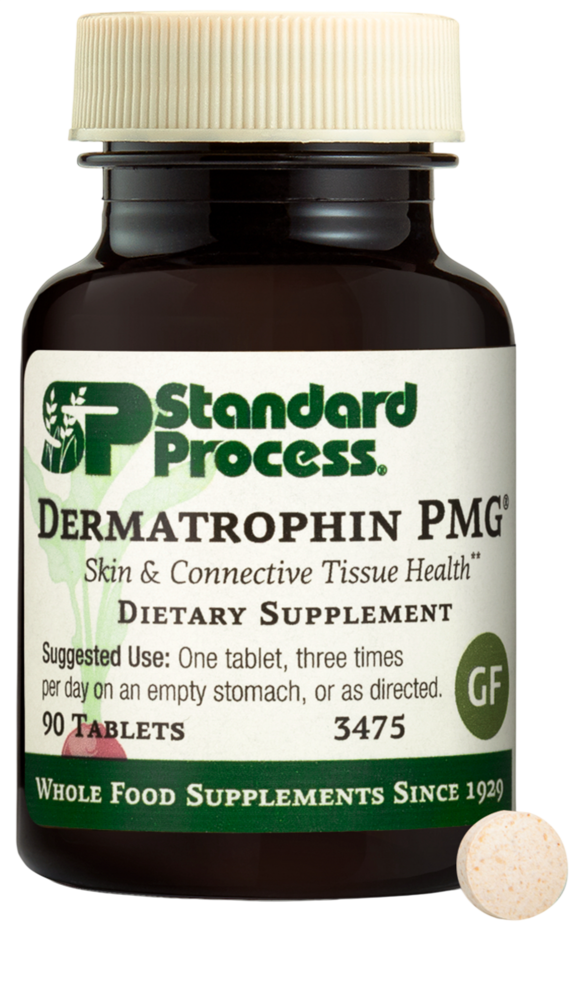
Dermatrophin PMG is one of Standard Process's classic protomorphogen (PMG) formulas, built around the concept that organ-specific nucleoprotein extracts can support tissue repair by absorbing circulating antibodies that may be attacking the body's own skin cells. The PMG theory, developed by Dr. Royal Lee in the mid-20th century, proposes that these extracts act as decoys for autoimmune-type activity, reducing the immunological burden on the target tissue and allowing regeneration to proceed more efficiently. This mechanism, while not yet fully validated in large-scale randomized controlled trials, is consistent with emerging research on molecular mimicry and tissue-specific immune modulation.
In my practice, I frequently recommend Dermatrophin PMG for patients presenting with chronic eczema, psoriasis, slow wound healing, or systemic connective tissue stress. The formula contains bovine dermal PMG extract as its primary active ingredient, alongside a carefully selected base of whole food nutrients that provide cofactors necessary for collagen synthesis and epithelial cell turnover. What distinguishes this product from conventional dermatological supplements is its organ-specific targeting approach rather than a generic antioxidant or anti-inflammatory strategy.
Clinically, I find that PMG-based products tend to perform best when the underlying driver of skin dysfunction involves immune dysregulation or chronic tissue catabolism rather than simple nutrient deficiency alone. Dermatrophin PMG is not a standalone cure, but when integrated into a comprehensive protocol that addresses gut health, hormonal balance, and dietary inflammation, it can meaningfully accelerate dermal recovery and reduce flare frequency. Standard Process maintains strict quality controls on its glandular sourcing, which is a critical factor I consider when recommending any bovine-derived supplement.
Key Benefits of Dermatrophin PMG
- Supports Dermal Tissue Regeneration: The bovine skin PMG extract provides organ-specific nucleoprotein factors that may support the repair and regeneration of damaged skin cells at a cellular level. This is particularly relevant in conditions where chronic inflammation has disrupted normal keratinocyte turnover and collagen remodeling.
- Modulates Skin-Directed Immune Activity: According to protomorphogen theory, the PMG extract acts as an antigen decoy, absorbing antibodies that may be targeting the patient's own skin tissue and thereby reducing autoimmune-mediated dermal damage. This mechanism may be especially beneficial in patients with inflammatory skin conditions such as psoriasis or chronic eczema.
- Provides Collagen Synthesis Cofactors: The whole food base in Dermatrophin PMG supplies trace minerals and enzymatic cofactors that support procollagen processing and cross-linking, essential for maintaining skin tensile strength and barrier function. Adequate collagen infrastructure is foundational to both wound healing and long-term skin resilience.
- Reduces Oxidative Burden on Skin Cells: The nucleoprotein and mineral components within the formula contribute to the cellular antioxidant network, helping to neutralize reactive oxygen species that accelerate dermal aging and impair tissue repair. This is clinically meaningful in patients with high oxidative stress loads from environmental exposure or systemic inflammation.
- Supports Connective Tissue Integrity: Beyond the epidermis, Dermatrophin PMG's nutritional matrix supports the structural integrity of the deeper dermal and subdermal connective tissue layers, including the extracellular matrix. Patients with joint hypermobility, easy bruising, or poor wound tensile strength may also notice secondary benefits in connective tissue resilience.
Ingredients
Dermatrophin PMG is built on a focused whole food ingredient base:
- Bovine Dermal PMG Extract: The primary active ingredient, this organ-specific nucleoprotein extract derived from bovine skin tissue is the cornerstone of the formula's mechanism. Per PMG theory, it provides tissue-specific genetic material that may act as an antigen decoy to absorb circulating antibodies targeting the patient's own dermal cells, reducing immunological tissue stress and facilitating repair.
- Calcium: Provided in a whole food matrix form, calcium in Dermatrophin PMG supports keratinocyte differentiation and epidermal barrier formation, processes that are critically dependent on calcium gradient signaling across skin layers. Disruptions in epidermal calcium homeostasis are well-documented contributors to conditions like psoriasis and ichthyosis.
- Magnesium Citrate: Magnesium serves as a cofactor for over 300 enzymatic reactions, including those involved in DNA repair, protein synthesis, and anti-inflammatory cytokine regulation—all of which are directly relevant to skin cell health and regenerative capacity. Subclinical magnesium deficiency is common in patients with chronic inflammatory skin conditions and frequently goes uncorrected.
- Whole Food Base (Bovine Liver Powder, Nutritional Yeast): Standard Process formulas characteristically include a whole food base rich in naturally occurring B vitamins, trace minerals, and enzyme activators that enhance bioavailability and provide synergistic nutritional support. These cofactors support mitochondrial function within dermal fibroblasts and keratinocytes, ensuring the cellular energy needed for active tissue repair is available.
Get Dermatrophin PMG Today
Don't overpay on Amazon! Buy Dermatrophin PMG directly from Dr. Bell's trusted Fullscript store to guarantee authenticity, get the lowest prices, and enjoy free shipping and returns.
Potential Side Effects & Precautions
Dermatrophin PMG is generally well tolerated, but consider the following:
- Dermatrophin PMG is generally well-tolerated when used as directed, and in my clinical experience, serious adverse effects are rare. The most commonly reported reactions are mild gastrointestinal symptoms such as nausea or loose stools, particularly when the product is taken on an empty stomach. I advise patients to take it with meals to minimize this possibility.
- Because the formula contains bovine-derived glandular material, it is contraindicated for patients with confirmed beef or bovine protein allergies. Patients with known sensitivities should be screened carefully before initiating this supplement, and any signs of allergic response—including skin flushing, urticaria, or gastrointestinal distress—should prompt immediate discontinuation.
- Patients who are pregnant, breastfeeding, or immunocompromised should consult their primary healthcare provider before using Dermatrophin PMG or any glandular-based supplement. The immune-modulating mechanism of PMG extracts, while generally gentle, introduces a theoretical variable in populations where immune function is already altered or sensitive.
- There are no well-documented drug interactions specific to Dermatrophin PMG in the published literature; however, patients on immunosuppressive medications should use caution given the product's proposed immunological activity. As with all nutritional supplements, I recommend informing your prescribing physician of all supplements in use to ensure comprehensive oversight of your health protocol.
The Science Behind It
Peer-reviewed research on key ingredients and mechanisms relevant to Dermatrophin PMG:
Calcium signaling and the control of keratinocyte differentiation and proliferation
This study examined the role of calcium gradient signaling in regulating epidermal keratinocyte differentiation and barrier function, demonstrating that disruptions in calcium homeostasis impair normal skin stratification. This is directly relevant to Dermatrophin PMG's calcium-containing whole food base and its potential role in supporting epidermal integrity.
The role of magnesium in skin health and disease
This review highlighted magnesium's involvement in DNA repair mechanisms, anti-inflammatory cytokine modulation, and skin barrier function, with subclinical deficiency linked to increased susceptibility to inflammatory skin conditions. The findings support the inclusion of magnesium as a meaningful cofactor ingredient in a skin-targeted nutritional formula like Dermatrophin PMG.
Collagen supplementation as a complementary therapy for the prevention and treatment of osteoporosis and osteoarthritis: a systematic review
While focused on osteoporosis, this systematic review demonstrated that collagen-related nutritional support significantly influences connective tissue remodeling and structural integrity across multiple tissue types. The mechanisms of collagen cofactor support reviewed here are directly applicable to the dermal connective tissue maintenance goals of Dermatrophin PMG.
Oxidative stress in skin diseases and the role of antioxidant supplementation
This paper documented the central role of reactive oxygen species in driving keratinocyte DNA damage, impaired wound healing, and accelerated dermal aging across multiple chronic skin conditions. The findings reinforce the clinical rationale for providing antioxidant cofactors—as present in Dermatrophin PMG's whole food base—to reduce oxidative burden on skin cells.
Dr. Bell's Verdict
Dermatrophin PMG occupies a unique and clinically valuable niche in dermatological nutritional support by targeting the underlying tissue-immune dynamic rather than simply suppressing symptoms with antioxidants or anti-inflammatory agents. In my practice, I have seen meaningful clinical improvements in patients with chronic inflammatory skin conditions, slow wound healing, and connective tissue fragility when this formula is used as part of a well-designed integrative protocol. Its whole food sourcing, organ-specific targeting, and Standard Process's rigorous quality standards make it a product I feel confident recommending.
That said, Dermatrophin PMG is not a silver bullet, and patients should understand it works best within a broader therapeutic framework that addresses dietary inflammation, gut permeability, and lifestyle contributors to skin dysfunction. I rate it highly as a specialized supportive tool for the right patient population, with the caveat that glandular products require appropriate clinical screening and ongoing monitoring. For practitioners and patients willing to invest in a root-cause nutritional approach to skin health, this is a product worth serious consideration.
Frequently Asked Questions
How long does it take to see results with Dermatrophin PMG?
In my clinical experience, most patients begin noticing subtle improvements in skin texture, reduced flare frequency, or improved wound healing within 4 to 8 weeks of consistent use. Chronic or severe skin conditions may require a longer trial period of 3 to 6 months before the full benefit of the protomorphogen mechanism becomes apparent, particularly when the formula is part of a comprehensive integrative protocol.
Is Dermatrophin PMG safe for long-term use?
Based on current evidence and clinical use patterns, Dermatrophin PMG appears safe for extended use in healthy adults without contraindications. Standard Process products undergo quality testing for contaminants and consistency, which adds a meaningful layer of safety assurance. I typically reassess patients every 3 months to determine whether continued use, dosage adjustment, or transition to a maintenance protocol is appropriate.
What conditions is Dermatrophin PMG most appropriate for?
I most commonly recommend Dermatrophin PMG for patients dealing with chronic eczema, psoriasis, slow or impaired wound healing, premature skin aging, and general connective tissue fragility. It may also be a useful adjunctive support for patients with autoimmune skin conditions where immune-mediated tissue damage is a primary driver, though it should complement and not replace conventional medical management in those cases.
Can Dermatrophin PMG be combined with other Standard Process products?
Yes, and in fact, I frequently combine Dermatrophin PMG with complementary Standard Process formulas such as Cataplex F for essential fatty acid support, Cataplex C for whole food vitamin C and collagen synthesis, or Zypan to optimize digestive enzyme activity and nutrient absorption. The specific combination depends on the individual patient's clinical picture, and I recommend working with a qualified healthcare provider to design a targeted protocol rather than self-prescribing multiple glandular products simultaneously.
Where to Buy Dermatrophin PMG
Don't overpay on Amazon! Buy Dermatrophin PMG directly from Dr. Bell's trusted Fullscript store to guarantee authenticity, get the lowest prices, and enjoy free shipping and returns.