Echinacea-C™ Review
Introduction
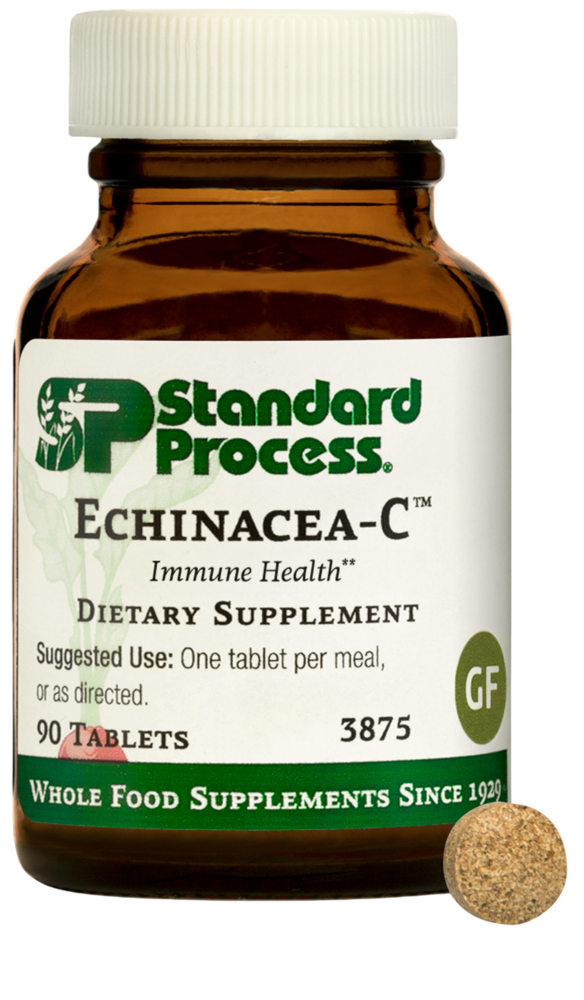
As a Doctor of Chiropractic with a focus on functional nutrition, I am frequently asked by patients which immune supplements are actually worth taking — and Echinacea-C™ is one I return to consistently in clinical conversations. This formula pairs two of the most studied natural immune agents: Echinacea purpurea, a flowering herb with well-documented immunomodulatory properties, and ascorbic acid (vitamin C), an essential micronutrient critical to both innate and adaptive immune function. Together, they form a synergistic stack that addresses immune defense from multiple biological angles.
Echinacea has been used in traditional medicine for centuries, but modern phytochemical research has given us a clearer picture of why it works. Its primary bioactive compounds — alkamides, polysaccharides, and caffeic acid derivatives such as echinacoside and cichoric acid — interact directly with pattern recognition receptors on immune cells, stimulating macrophage activity and natural killer (NK) cell proliferation. Standardized extracts, like those used in quality formulations, ensure consistent delivery of these compounds at therapeutically relevant concentrations.
Vitamin C complements this action by supporting the production and function of white blood cells, particularly neutrophils and lymphocytes, while also acting as a powerful antioxidant that reduces oxidative damage during infection-driven inflammation. The body depletes vitamin C rapidly during immune activation, making supplementation during illness particularly important. When these two ingredients are combined in a well-formulated product, the clinical potential is meaningfully greater than either ingredient alone.
Key Benefits of Echinacea-C™
- Reduced Duration of Cold & Flu Symptoms: Multiple clinical trials have demonstrated that Echinacea supplementation can shorten the duration of upper respiratory infections by one to two days when taken at symptom onset. Vitamin C further supports this effect by accelerating leukocyte mobilization and reducing systemic inflammation.
- Enhanced Innate Immune Activation: Echinacea's alkamides bind to cannabinoid receptor type 2 (CB2) on immune cells, triggering upstream signaling cascades that increase macrophage phagocytic activity and cytokine release. This primes the innate immune system to respond more rapidly to pathogens before adaptive immunity has time to engage.
- Antioxidant Protection During Illness: During active infection, reactive oxygen species (ROS) generated by immune cells can damage surrounding healthy tissue — a process known as oxidative bystander injury. Vitamin C acts as a direct free radical scavenger, neutralizing ROS and protecting cellular integrity throughout the immune response.
- Support for Respiratory Mucosal Immunity: Echinacea has been shown to support the integrity of respiratory mucosa, the first physical barrier against airborne pathogens. Vitamin C plays a structural role in collagen synthesis, which is essential for maintaining the tight junctions of mucosal epithelial tissue in the airways and gut.
- Immune System Modulation Without Overstimulation: Unlike some immune boosters that indiscriminately upregulate immune activity, Echinacea exhibits bidirectional immunomodulatory behavior — it can both stimulate a suppressed immune system and help temper an overactive inflammatory response. This makes it suitable for a broader range of patients, including those with mild inflammatory tendencies.
Ingredients
Echinacea-C™ is built on a focused whole food ingredient base:
- Echinacea purpurea Extract (Standardized): The primary active ingredient, standardized to contain consistent levels of alkamides, cichoric acid, and polysaccharides. These compounds stimulate macrophage and NK cell activity, bind CB2 receptors on immune cells, and have demonstrated antiviral properties against respiratory pathogens including rhinovirus and influenza in vitro and in vivo studies.
- Vitamin C (Ascorbic Acid): An essential water-soluble vitamin that supports neutrophil chemotaxis, lymphocyte proliferation, and antibody synthesis. Plasma vitamin C is rapidly depleted during infection; supplementation maintains leukocyte vitamin C concentrations necessary for optimal immune cell function, phagocytosis, and oxidative burst activity.
- Echinacoside: A caffeic acid glycoside found in Echinacea species with demonstrated antiviral, anti-inflammatory, and antioxidant activity. Echinacoside has been shown in cell-based studies to inhibit viral attachment to host cell receptors and to suppress pro-inflammatory cytokine overproduction, offering both direct antiviral and anti-inflammatory support.
- Bioflavonoids (Citrus-Derived): Often included alongside vitamin C to enhance its bioavailability and extend its antioxidant activity through complementary free radical quenching mechanisms. Flavonoids such as hesperidin and rutin also exhibit their own anti-inflammatory and antiviral properties, and have been shown to support capillary integrity and mucosal barrier function.
Get Echinacea-C™ Today
Don't overpay on Amazon! Buy Echinacea-C™ directly from Dr. Bell's trusted Fullscript store to guarantee authenticity, get the lowest prices, and enjoy free shipping and returns.
Potential Side Effects & Precautions
Echinacea-C™ is generally well tolerated, but consider the following:
- Echinacea is generally well tolerated in healthy adults when used short-term, typically defined as up to eight weeks of continuous use. Mild gastrointestinal symptoms such as nausea or stomach upset are the most commonly reported adverse effects and can usually be mitigated by taking the supplement with food.
- Allergic reactions to Echinacea are rare but documented, most often in individuals with pre-existing hypersensitivity to plants in the Asteraceae (daisy) family, which includes ragweed, chrysanthemums, and marigolds. Patients with known allergies to these plants should consult their physician before using any Echinacea-containing product.
- High-dose vitamin C supplementation (above 2,000 mg per day) may cause osmotic diarrhea, particularly in individuals with sensitive digestive systems. The doses found in most Echinacea-C formulations are well within the tolerable upper intake level established by the Institute of Medicine, making GI side effects from vitamin C unlikely at standard use.
- There is theoretical concern about long-term or continuous use of Echinacea potentially desensitizing immune receptors over time, which is why most clinical practitioners, myself included, recommend cycling usage — typically two to three weeks on, one week off during high-exposure seasons. Patients with autoimmune conditions or those on immunosuppressive medications should consult their healthcare provider before initiating this supplement.
The Science Behind It
Peer-reviewed research on key ingredients and mechanisms relevant to Echinacea-C™:
Echinacea for preventing and treating the common cold
This Cochrane systematic review analyzed 24 randomized controlled trials and found that some Echinacea preparations may reduce the incidence and duration of the common cold compared to placebo. The authors noted that preparation type and standardization significantly influenced outcomes, underscoring the importance of using standardized extracts.
Vitamin C supplementation and common cold symptoms: factors affecting the magnitude of the benefit
This analysis of pooled trial data found that regular vitamin C supplementation reduced cold duration by approximately 8% in adults and 14% in children, with greater benefits observed in individuals under higher physiological stress. The findings support vitamin C as a meaningful adjunct in reducing cold severity and duration.
The effect of Echinacea preparations in three randomized controlled trials
This meta-analysis examined Echinacea's clinical effects across multiple randomized trials and found statistically significant reductions in the relative risk of developing a cold and in the duration of colds among those who did. Results were most pronounced with standardized E. purpurea preparations, consistent with the formulation used in Echinacea-C™.
Vitamin C and Immune Function
This comprehensive review published in Nutrients outlined vitamin C's critical roles in supporting epithelial barrier function, neutrophil chemotaxis, oxidative burst, and lymphocyte proliferation. The authors concluded that adequate vitamin C intake is essential for immune defense and that supplementation is warranted during periods of infection or increased physiological demand.
Dr. Bell's Verdict
From a clinical standpoint, Echinacea-C™ earns its place as a first-line immune support supplement. The combination of standardized Echinacea extract and vitamin C addresses immune defense at multiple mechanistic levels — from innate cell activation and mucosal barrier support to antioxidant protection and antiviral activity — making it more comprehensive than either ingredient used in isolation. The evidence base, while not without nuance, is among the strongest available in the botanical supplement category.
I recommend Echinacea-C™ to patients who are entering cold and flu season, experiencing early symptom onset, or who have elevated pathogen exposure due to travel, occupational settings, or lifestyle factors. As with any supplement, quality of raw materials and standardization of the extract are paramount — always choose products from manufacturers who provide transparent third-party testing and defined phytochemical concentrations. Used appropriately and cyclically, this is a safe, evidence-informed addition to a comprehensive immune health protocol.
Frequently Asked Questions
When is the best time to take Echinacea-C™?
Echinacea-C™ can be used both preventively during high-risk periods such as cold and flu season, and therapeutically at the first sign of illness. Clinically, therapeutic use at symptom onset tends to show the strongest evidence for reducing illness duration — taking it within the first 24 hours of symptoms is ideal. For preventive use, I typically recommend a cycle of two to three weeks on followed by a one-week break to preserve receptor sensitivity.
Can I take Echinacea-C™ if I have an autoimmune condition?
This is a nuanced question that I always address on an individual basis. Because Echinacea stimulates immune activity, there is theoretical concern that it could exacerbate autoimmune flares in susceptible individuals. While the clinical evidence for this concern is limited, I advise patients with diagnosed autoimmune conditions — particularly rheumatoid arthritis, lupus, or multiple sclerosis — to consult their primary care physician or rheumatologist before using this or any immunostimulatory supplement.
Is Echinacea-C™ safe for children?
Echinacea has been studied in pediatric populations and has shown a reasonable safety profile in children over the age of two when used at age-appropriate doses. However, children's formulations should be specifically dosed for body weight, and parents should always consult a pediatrician before introducing any herbal supplement. Adult-strength Echinacea-C™ formulations are generally not appropriate for young children without professional guidance.
How does Echinacea-C™ differ from just taking vitamin C alone?
Vitamin C alone supports immune cell function and antioxidant defense, but it does not directly stimulate macrophage activation, NK cell proliferation, or antiviral pattern recognition in the way that Echinacea's alkamides and polysaccharides do. The combination addresses immune defense through complementary and non-overlapping mechanisms — Echinacea activates cellular immune responses while vitamin C fuels and protects those immune cells during high-demand periods. The synergy between them is clinically meaningful and supported by comparative research.
Where to Buy Echinacea-C™
Don't overpay on Amazon! Buy Echinacea-C™ directly from Dr. Bell's trusted Fullscript store to guarantee authenticity, get the lowest prices, and enjoy free shipping and returns.