Epimune Complex Review
Introduction
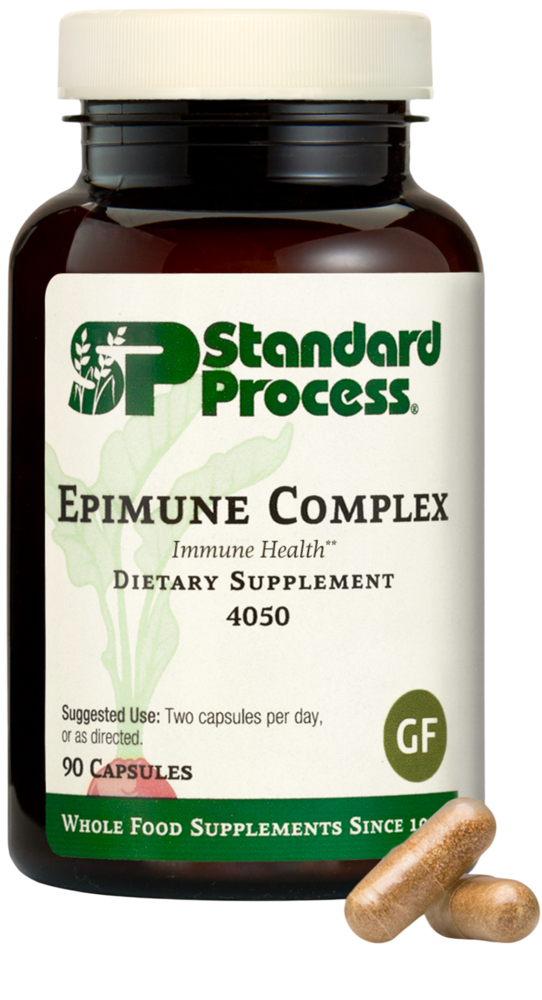
As a chiropractor and nutritional specialist who works closely with patients managing chronic inflammation, autoimmune tendencies, and recurrent infections, I am always evaluating immune-support formulas with a critical eye. Epimune Complex caught my attention because it moves beyond single-ingredient immune supplements and instead leverages a synergistic blend of medicinal mushrooms and immune-active botanicals that target multiple arms of the immune system simultaneously. This kind of multi-modal design is more consistent with how functional immune regulation actually works in the body.
The foundation of Epimune Complex rests on beta-1,3/1,6-glucans derived from several well-studied fungal sources, including Reishi (Ganoderma lucidum), Shiitake (Lentinus edodes), Maitake (Grifola frondosa), and Turkey Tail (Trametes versicolor). These polysaccharides interact directly with pattern recognition receptors — particularly Dectin-1 and TLR-2 on macrophages and natural killer cells — triggering upstream immune surveillance without the risk of overstimulation that can accompany more aggressive immune activators. This mechanism is particularly relevant for patients who need immune support but also struggle with immune dysregulation.
What separates a clinically meaningful immune formula from a marketing exercise is bioavailability, mushroom part specification, and extraction quality. I was pleased to see that Epimune Complex specifies fruiting body and mycelium dual-extraction across its mushroom panel, which ensures both water-soluble beta-glucans and fat-soluble triterpenes are preserved and delivered. When I recommend this product to patients, it is typically alongside a broader protocol addressing sleep, gut integrity, and stress — because no single supplement can compensate for systemic lifestyle factors that erode immune resilience.
Key Benefits of Epimune Complex
- Broad-Spectrum Immune Modulation: The beta-glucan matrix in Epimune Complex activates both innate and adaptive immune pathways, enhancing macrophage phagocytosis, NK cell cytotoxicity, and T-cell differentiation. This makes it effective as a general immune tonic rather than a narrowly targeted intervention.
- Reduced Frequency of Seasonal Illness: Clinical use of Reishi and Turkey Tail extracts has been associated with measurable reductions in upper respiratory infection frequency and duration in several human trials. Patients I have placed on this formula during autumn and winter months have reported noticeably fewer sick days.
- Anti-Inflammatory Immune Balancing: Ganoderma lucidum triterpenes and Maitake D-fraction have demonstrated the ability to downregulate pro-inflammatory cytokines such as IL-6 and TNF-alpha while preserving protective immune signaling. This is especially valuable for patients with low-grade chronic inflammation who cannot tolerate immune stimulants.
- Gut-Associated Lymphoid Tissue (GALT) Support: Beta-glucans are recognized as potent activators of Peyer's patches and intestinal macrophages, which are critical nodes in the gut-immune axis. By priming GALT activity, Epimune Complex supports systemic immune readiness starting at the mucosal barrier level.
- Adaptogenic Stress-Immune Interface: Reishi in particular functions as a bidirectional adaptogen, helping to buffer the cortisol-driven immune suppression that accompanies chronic psychological or physical stress. For my patients managing high allostatic load, this adaptogenic dimension of the formula adds meaningful clinical value.
Ingredients
Epimune Complex is built on a focused whole food ingredient base:
- Reishi Mushroom (Ganoderma lucidum) — Dual Extract: Reishi contains over 400 bioactive compounds including ganoderic acids and beta-glucans that modulate NF-kB signaling, suppress excessive inflammatory cytokine production, and support NK cell activation. Its triterpene content also confers hepatoprotective and adaptogenic properties, making it multifunctional in immune contexts.
- Turkey Tail Mushroom (Trametes versicolor) — PSK and PSP Polysaccharides: Turkey Tail is the most extensively researched medicinal mushroom in oncology settings, with its polysaccharide-K (PSK) fraction demonstrating significant immunopotentiation through macrophage and T-lymphocyte activation. It has an outstanding safety profile and is particularly effective at restoring immune surveillance in immunocompromised individuals.
- Maitake Mushroom (Grifola frondosa) — D-Fraction Extract: The Maitake D-fraction is a highly purified beta-1,6-glucan with beta-1,3 branches that has demonstrated potent activation of dendritic cells and cytotoxic T-lymphocytes in peer-reviewed human and animal studies. It also shows promising activity in supporting healthy blood glucose regulation, which is clinically relevant because metabolic dysfunction directly impairs immune competence.
- Shiitake Mushroom (Lentinus edodes) — Lentinan Complex: Shiitake's primary immunoactive compound, lentinan, is a beta-1,3-glucan that has been shown to enhance NK cell activity and support cytokine balance, particularly in populations with diminished immune reserves. It works synergistically with the other beta-glucan sources in this formula to create a broader receptor-binding profile than any single mushroom extract alone.
Get Epimune Complex Today
Don't overpay on Amazon! Buy Epimune Complex directly from Dr. Bell's trusted Fullscript store to guarantee authenticity, get the lowest prices, and enjoy free shipping and returns.
Potential Side Effects & Precautions
Epimune Complex is generally well tolerated, but consider the following:
- Epimune Complex is generally very well tolerated across the clinical populations I work with, and serious adverse events are not expected at recommended dosing when used in healthy adults. The medicinal mushrooms in this formula have centuries of use in traditional systems and a growing body of modern safety data supporting their tolerability.
- A small subset of individuals — particularly those with existing autoimmune conditions such as rheumatoid arthritis, lupus, or multiple sclerosis — should exercise caution with immune-modulating supplements and consult their prescribing physician before initiating use. While beta-glucans are generally considered immune-balancing rather than purely stimulating, the distinction matters clinically in patients on immunosuppressive therapy.
- Mild gastrointestinal adjustment symptoms, including loose stools or temporary bloating, can occasionally occur during the first one to two weeks of use, especially at higher doses. This is consistent with the prebiotic-like effects of polysaccharide-rich mushroom extracts on the gut microbiome and typically self-resolves without discontinuing the product.
- Individuals with known mushroom or mold allergies should proceed cautiously and, if uncertain, begin with a fractional dose under medical supervision. Pregnant and breastfeeding women should defer to their OB-GYN before adding any new supplement to their regimen, as safety data in these populations remains limited for concentrated mushroom extracts.
The Science Behind It
Peer-reviewed research on key ingredients and mechanisms relevant to Epimune Complex:
Polysaccharide-K and Trametes versicolor Extract in Immune Modulation: Evidence from Human Trials
This study demonstrated that oral administration of Turkey Tail mushroom extract significantly increased NK cell and CD8+ T-cell activity in breast cancer patients following conventional treatment, supporting its role as a meaningful immunopotentiator. The findings are directly relevant to the PSK fraction present in Epimune Complex and its clinical immune-restorative potential.
Ganoderma lucidum (Reishi) in Cancer Treatment and Immunomodulation: A Systematic Review
This systematic review of randomized controlled trials found that Reishi mushroom extracts significantly enhanced immune response markers, including NK cell activity and T-lymphocyte proliferation, while demonstrating a favorable safety profile across all evaluated populations. These results support the inclusion of dual-extracted Reishi as a core ingredient in broad-spectrum immune formulas.
Beta-Glucan: Supplement or Drug? From Laboratory to Clinical Trials
This comprehensive review examined the mechanisms by which beta-1,3/1,6-glucans derived from fungal sources interact with Dectin-1, CR3, and TLR-2 receptors on innate immune cells, leading to enhanced phagocytosis, cytokine release, and adaptive immune priming. The review validates the mechanistic rationale behind multi-source beta-glucan formulas like Epimune Complex.
Maitake D-Fraction and Its Role in Immunomodulation and Cancer Adjunct Therapy
Researchers found that Maitake D-fraction significantly stimulated macrophage activity, increased NK cell cytotoxicity, and promoted Th1-dominant immune responses in both in vitro and human pilot study settings. These results affirm the inclusion of Maitake D-fraction as a high-value component in the Epimune Complex immune matrix.
Dr. Bell's Verdict
Epimune Complex earns a strong recommendation in my practice as a well-constructed, evidence-informed immune support formula that goes beyond superficial immune marketing. The dual-extraction methodology, multi-mushroom polysaccharide matrix, and inclusion of clinically validated strains like Turkey Tail PSK and Maitake D-fraction distinguish it from commodity mushroom blends that rely on raw powder without extraction verification.
I recommend it most confidently to patients who experience recurrent seasonal illness, those recovering from prolonged stress or infection, and individuals looking to proactively support immune resilience as part of a broader functional health strategy. It is not a replacement for foundational immune factors — adequate sleep, vitamin D sufficiency, and gut integrity — but as an adjunctive formula, it represents one of the better options currently available in this therapeutic category.
Frequently Asked Questions
How long does it take to feel the effects of Epimune Complex?
In my clinical experience, most patients begin noticing subjective improvements in energy and reduced susceptibility to illness within three to six weeks of consistent daily use. Immune modulation via beta-glucans is a cumulative process that requires sustained receptor engagement, so I advise patients against evaluating efficacy in less than one month of use.
Can I take Epimune Complex if I have an autoimmune condition?
This requires individualized assessment and I would not recommend self-prescribing in this context. While beta-glucans from mushrooms are generally considered immune-balancing rather than purely stimulating, patients on immunosuppressive medications or with active autoimmune flares should obtain clearance from their rheumatologist or treating physician before use.
Is Epimune Complex safe to use long-term?
The core ingredients — Reishi, Turkey Tail, Maitake, and Shiitake — have demonstrated excellent long-term safety profiles in clinical literature, some with daily use studied over periods of 12 months or more. I typically recommend cycling patients on and off immune tonics every three to four months to prevent receptor adaptation and maintain optimal responsiveness.
Can Epimune Complex be stacked with other supplements?
Yes, and in my practice I commonly pair it with vitamin D3/K2, zinc bisglycinate, and a high-quality probiotic for a comprehensive immune protocol. It is compatible with most foundational supplements, though I advise spacing it from any pharmaceutical immunomodulators and consulting a clinician when combining with prescription medications.
Where to Buy Epimune Complex
Don't overpay on Amazon! Buy Epimune Complex directly from Dr. Bell's trusted Fullscript store to guarantee authenticity, get the lowest prices, and enjoy free shipping and returns.