Ferrofood Review
Introduction
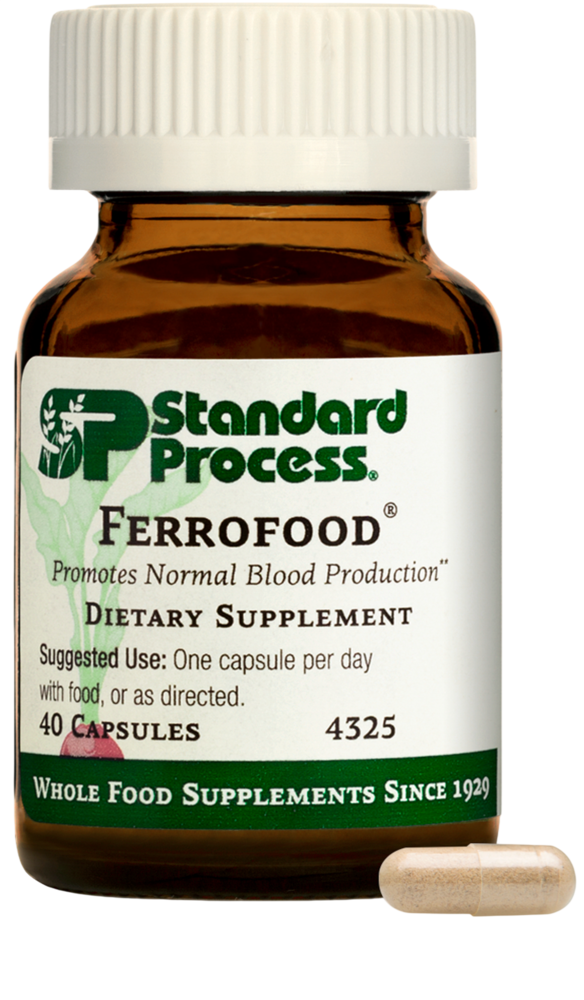
Ferrofood is a whole-food iron supplement manufactured by Standard Process, a company with a long-standing reputation in the functional nutrition space dating back to 1929. Unlike conventional iron supplements that rely on isolated ferrous sulfate or ferrous gluconate, Ferrofood delivers iron within a matrix of whole-food concentrates, enzymatic cofactors, and synergistic micronutrients that mirror how iron is presented in nature. This food-state approach is central to its clinical value and distinguishes it from the majority of iron products on the market.
From a physiological standpoint, iron deficiency remains one of the most prevalent nutritional deficiencies worldwide, affecting red blood cell synthesis, mitochondrial energy production, thyroid hormone metabolism, and neurotransmitter synthesis. Adequate iron status is essential not just for preventing anemia but for sustaining cognitive performance, immune competence, and musculoskeletal endurance. Ferrofood addresses these needs through a multi-ingredient, cofactor-rich formula that supports iron absorption, transport, and utilization across multiple organ systems.
In my clinical practice, I recommend Ferrofood most frequently to patients presenting with fatigue, pallor, low ferritin, compromised immune resilience, or suboptimal athletic recovery. It is particularly well-suited for individuals who have experienced the gastrointestinal distress—constipation, nausea, or dark stools—commonly associated with high-dose isolated iron supplementation. The whole-food delivery system in Ferrofood tends to be far better tolerated while still delivering measurable improvements in iron markers over a six-to-twelve-week course of supplementation.
Key Benefits of Ferrofood
- Supports Healthy Red Blood Cell Production: Ferrofood provides the foundational raw materials—iron, vitamin B12, and liver concentrate—needed for erythropoiesis and hemoglobin synthesis. This makes it particularly effective for patients with iron-deficiency anemia or those recovering from blood loss.
- Enhances Iron Bioavailability: The inclusion of ascorbic acid (vitamin C) significantly enhances non-heme iron absorption by reducing ferric iron (Fe³⁺) to the more readily absorbed ferrous form (Fe²⁺) in the duodenum. Delivering iron within a whole-food matrix further improves absorption by providing natural transport proteins and enzymatic cofactors.
- Supports Mitochondrial Energy Production: Iron is an essential component of cytochrome proteins within the mitochondrial electron transport chain, meaning that suboptimal iron status directly impairs cellular ATP generation. Ferrofood helps restore this metabolic capacity, which clinically translates to improved stamina, reduced fatigue, and better exercise tolerance.
- Promotes Cognitive Function and Neurological Health: Iron is a required cofactor for the synthesis of dopamine, serotonin, and norepinephrine, and iron insufficiency is strongly associated with cognitive fog, poor concentration, and mood dysregulation. By restoring adequate iron status, Ferrofood supports neurotransmitter balance and mental clarity.
- Gentle on the Gastrointestinal Tract: One of the most clinically significant advantages of Ferrofood over standard iron salts is its superior GI tolerability, which I attribute to its whole-food delivery matrix and moderate elemental iron dose. Patients who have previously discontinued iron supplementation due to constipation or nausea frequently tolerate Ferrofood without these complaints.
Ingredients
Ferrofood is built on a focused whole food ingredient base:
- Whole Liver Concentrate (Bovine): A concentrated source of heme iron, vitamin B12, folate, and intrinsic factor cofactors that collectively support erythropoiesis and oxygen-carrying capacity. Heme iron from animal liver is absorbed at rates of 15–35%, significantly higher than non-heme iron sources, making it a clinically superior form for repleting iron stores efficiently.
- Ascorbic Acid (Vitamin C): Functions as a potent reducing agent in the gut lumen, converting ferric iron to the absorbable ferrous form and chelating iron to prevent inhibitory complex formation with phytates and polyphenols. Clinical studies consistently show that co-administration of vitamin C with iron increases non-heme iron absorption by 2- to 4-fold.
- Copper (from Whole Food Sources): Copper is an obligate cofactor for ceruloplasmin, the ferroxidase enzyme responsible for oxidizing ferrous iron so that it can bind to transferrin for systemic transport. Without adequate copper, absorbed iron becomes metabolically stranded and cannot be mobilized to erythroid precursor cells, making copper an often-overlooked but essential partner nutrient in iron metabolism.
- Nutritional Yeast: Provides a whole-food source of B-complex vitamins, including folate and B6, which are synergistic cofactors in heme biosynthesis and red blood cell maturation. Nutritional yeast also contributes naturally occurring minerals and amino acids that support the broader metabolic environment needed for optimal iron utilization.
Get Ferrofood Today
Don't overpay on Amazon! Buy Ferrofood directly from Dr. Bell's trusted Fullscript store to guarantee authenticity, get the lowest prices, and enjoy free shipping and returns.
Potential Side Effects & Precautions
Ferrofood is generally well tolerated, but consider the following:
- Ferrofood is generally very well tolerated, but as with any iron-containing supplement, mild gastrointestinal effects such as nausea, bloating, or loose stools may occasionally occur, particularly if taken on an empty stomach. I advise patients to take Ferrofood with a small meal to minimize any digestive discomfort during the initial weeks of use.
- Some individuals may notice a slight darkening of stools, which is a benign and expected consequence of increased iron passage through the gastrointestinal tract and is not indicative of bleeding or pathology. However, if dark tarry stools are accompanied by abdominal pain or dizziness, patients should consult their physician promptly to rule out gastrointestinal bleeding.
- Iron supplementation of any kind is contraindicated in individuals with hemochromatosis, hemosiderosis, polycythemia, or other iron-overload conditions. I always recommend obtaining baseline ferritin, serum iron, and TIBC panels before initiating Ferrofood to confirm that iron deficiency—rather than an iron transport or inflammatory issue—is the underlying cause of low hemoglobin.
- Because Ferrofood contains bovine liver concentrate, it is not appropriate for vegetarians, vegans, or individuals with known beef allergies. Additionally, iron supplementation can reduce the absorption of certain medications including levothyroxine, tetracycline antibiotics, and fluoroquinolones, so I counsel patients to separate Ferrofood dosing from these drugs by at least two to four hours.
The Science Behind It
Peer-reviewed research on key ingredients and mechanisms relevant to Ferrofood:
Ascorbic acid prevents the dose-dependent inhibitory effects of polyphenols and phytates on nonheme-iron absorption
This study demonstrated that ascorbic acid effectively counteracts the inhibitory effects of dietary polyphenols and phytates on non-heme iron absorption, with even modest doses of vitamin C producing significant improvements in iron uptake. This is directly relevant to Ferrofood's formulation strategy of co-delivering vitamin C alongside its iron complex.
Ceruloplasmin and iron homeostasis: a clinical perspective
This review examined the critical role of ceruloplasmin, the copper-dependent ferroxidase enzyme, in mobilizing iron from storage tissues and enabling its loading onto transferrin for systemic delivery. The findings underscore why Ferrofood's inclusion of copper alongside iron is biochemically essential rather than merely supplementary.
Iron deficiency and cognitive functions
This paper reviewed evidence linking iron deficiency—even in the absence of overt anemia—to impairments in attention, memory, and executive function across multiple age groups. The mechanistic basis involves iron's role as a cofactor for dopaminergic and serotonergic neurotransmitter synthesis, supporting Ferrofood's relevance beyond simple anemia correction.
Heme iron absorption: mechanisms and regulation
This study outlined the distinct absorptive pathway for heme iron, which enters enterocytes via the heme carrier protein 1 independent of the divalent metal transporter 1 used by non-heme iron, resulting in significantly higher and less variable absorption rates. This mechanistic distinction validates the clinical rationale for including bovine liver concentrate as a heme iron source in Ferrofood.
Dr. Bell's Verdict
After years of recommending iron supplements across a wide spectrum of clinical presentations, I consider Ferrofood to be one of the most intelligently formulated whole-food iron complexes available in the professional supplement market. Its combination of heme iron from liver concentrate, absorption-enhancing vitamin C, copper for iron mobilization, and B-vitamin cofactors from nutritional yeast reflects a sophisticated understanding of iron biochemistry that goes well beyond simply delivering elemental iron milligrams.
I recommend Ferrofood with confidence to patients experiencing iron-deficiency anemia, chronic fatigue with confirmed low ferritin, postpartum iron depletion, or heavy menstrual blood loss—provided that appropriate lab work has been obtained to confirm the clinical indication. It earns a strong 4.7 out of 5 in my assessment, with the minor deduction reflecting its unsuitability for plant-based patients and the need for proper lab-guided dosing to ensure it is the right intervention for the right patient.
Frequently Asked Questions
How is Ferrofood different from standard over-the-counter iron supplements?
Standard iron supplements typically use isolated iron salts such as ferrous sulfate or ferrous fumarate, which deliver high elemental iron doses but are poorly absorbed and frequently cause gastrointestinal side effects. Ferrofood delivers iron within a whole-food matrix that includes heme iron from liver concentrate, vitamin C for enhanced absorption, and copper for proper iron transport—making it more bioavailable, more physiologically complete, and considerably gentler on the digestive system.
How long does it typically take to see results with Ferrofood?
In my clinical experience, most patients begin noticing subjective improvements in energy and mental clarity within three to four weeks of consistent use, though meaningful changes in objective lab markers such as ferritin and hemoglobin typically require six to twelve weeks. I recommend retesting iron panels at the eight-to-twelve-week mark to assess response and adjust dosing accordingly.
Can Ferrofood be taken alongside other Standard Process supplements?
Yes, Ferrofood integrates well within a broader Standard Process protocol and is frequently paired with supplements like Catalyn for foundational micronutrient support or Cyruta-Plus for cardiovascular and tissue integrity support. I do advise spacing iron supplementation away from calcium-rich supplements by at least two hours, as calcium competes with iron at intestinal absorption sites.
Is Ferrofood safe during pregnancy?
Iron demands increase substantially during pregnancy, and whole-food iron sources like Ferrofood are generally preferable to high-dose isolated iron salts from a tolerability standpoint. However, any supplementation during pregnancy should be supervised by a qualified healthcare provider who can monitor iron status through regular lab testing and confirm that the dosage is appropriate for the individual patient's needs.
Where to Buy Ferrofood
Don't overpay on Amazon! Buy Ferrofood directly from Dr. Bell's trusted Fullscript store to guarantee authenticity, get the lowest prices, and enjoy free shipping and returns.