Gastrex Review
Introduction
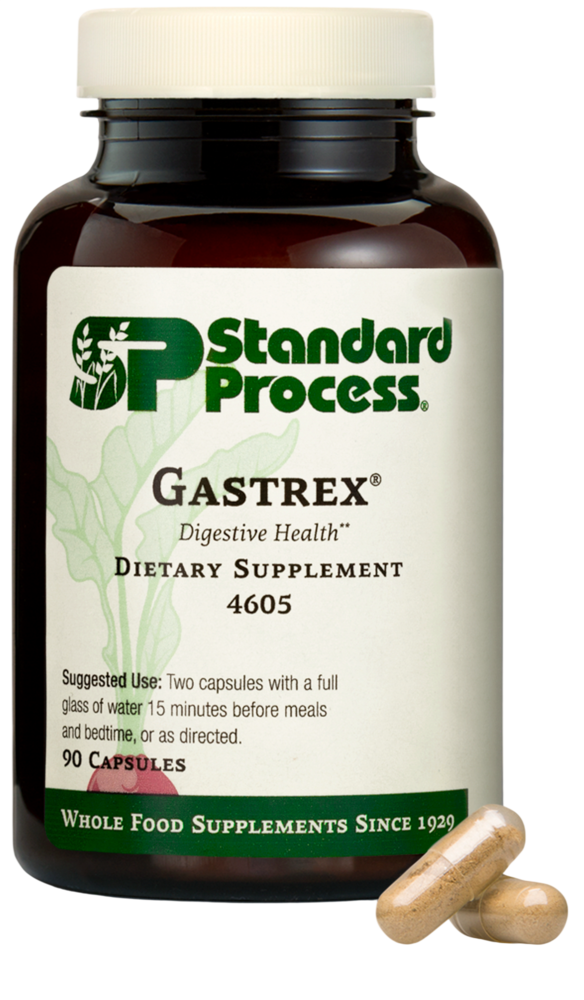
In my clinical practice, I frequently encounter patients presenting with chronic gastric discomfort, bloating, and what I describe as 'upper GI irritability'—a constellation of symptoms that often points to compromised gastric mucosal integrity or dysregulated acid production. Gastrex, manufactured by Standard Process, is a whole-food concentrate supplement that I have incorporated into my nutritional protocols specifically to address these presentations. Unlike many antacid-based approaches that simply suppress symptoms, Gastrex is formulated to support the underlying tissue health of the stomach lining.
What distinguishes Gastrex from conventional digestive aids is its foundational philosophy: using protomorphogen and cytosol extracts derived from bovine stomach tissue to supply the raw materials the body needs to repair and maintain gastric epithelial cells. Standard Process has been producing glandular and whole-food concentrates since 1929, and their manufacturing process preserves thermolabile factors that are typically destroyed in conventional supplement processing. This matters clinically because the biological cofactors present in minimally processed whole-food concentrates can communicate directly with target tissues in ways that isolated synthetic compounds often cannot.
Gastrex also contains Tillandsia usneoides—commonly known as Spanish moss—which has traditionally been used to support gastric comfort and reduce irritation. The formulation is rounded out with defatted wheat germ, bovine stomach PMG (protomorphogen) extract, and calcium stearate as an excipient. As a clinician, I appreciate that this formula targets the stomach specifically, offering a focused intervention for patients who have not responded adequately to dietary modification alone or who are looking to transition away from proton pump inhibitor dependency under appropriate medical supervision.
Key Benefits of Gastrex
- Gastric Mucosal Support: The bovine stomach PMG extract in Gastrex provides tissue-specific protomorphogens that support the structural integrity of the gastric epithelium. This is particularly valuable for patients recovering from gastric irritation, NSAID-related mucosal damage, or mild erosive changes identified on endoscopy.
- Reduction of Gastric Irritation: Tillandsia usneoides has demonstrated mucilaginous and soothing properties that help buffer gastric irritation without suppressing acid production entirely. Clinically, this means patients can experience symptom relief while preserving the physiologically necessary acidic environment needed for protein digestion and mineral absorption.
- Support for Healthy Acid Balance: Unlike proton pump inhibitors or H2 blockers, Gastrex works with the body's innate regulatory mechanisms rather than pharmacologically overriding them. This makes it an appropriate tool for patients who need symptomatic support without the long-term risks associated with chronic acid suppression, including B12 deficiency and dysbiosis.
- Whole-Food Nutrient Delivery: Defatted wheat germ provides a broad spectrum of naturally occurring B vitamins, vitamin E precursors, and trace minerals in their whole-food matrix, supporting cellular repair processes throughout the GI tract. These cofactors work synergistically with the glandular extracts to enhance the regenerative capacity of the gastric mucosa.
- Complementary Upper GI Protocol Support: In practice, I often use Gastrex as part of a broader upper GI repair protocol alongside products that address H. pylori, bile insufficiency, or intestinal permeability. Its targeted mechanism makes it a precise tool rather than a broad-spectrum intervention, allowing me to layer therapies without redundancy.
Ingredients
Gastrex is built on a focused whole food ingredient base:
- Bovine Stomach PMG Extract (Protomorphogen): Protomorphogen extracts are nucleoprotein complexes derived from glandular tissue that Standard Process theorizes act as 'templates' to support tissue-specific cellular repair. In the context of Gastrex, the bovine stomach PMG is intended to support the structural and functional health of the human gastric mucosa by providing species-specific cellular building blocks.
- Tillandsia usneoides (Spanish Moss) Extract: Tillandsia usneoides has been used in ethnobotanical traditions for its anti-inflammatory and soothing properties on mucosal tissues. Clinically, I value its inclusion in Gastrex for its ability to reduce gastric irritation and provide a buffering effect on the stomach lining without interfering with normal digestive acid secretion.
- Defatted Wheat Germ: Defatted wheat germ is a concentrated source of naturally occurring B vitamins, glutamine precursors, zinc, and vitamin E complexes in their whole-food form. These nutrients are critical cofactors in mucosal cell turnover, oxidative defense within the gastric epithelium, and the synthesis of gastric mucus that protects the stomach wall.
- Bovine Stomach Cytosol Extract: The cytosol extract complements the PMG fraction by providing intracellular signaling molecules and enzymatic cofactors native to stomach tissue. This fraction is thought to support mitochondrial function and metabolic activity within gastric mucosal cells, enhancing the tissue's overall resilience and regenerative capacity.
Get Gastrex Today
Don't overpay on Amazon! Buy Gastrex directly from Dr. Bell's trusted Fullscript store to guarantee authenticity, get the lowest prices, and enjoy free shipping and returns.
Potential Side Effects & Precautions
Gastrex is generally well tolerated, but consider the following:
- Gastrex is generally very well tolerated in my clinical experience, with the majority of patients reporting no adverse effects at standard dosing of one to two tablets three times daily with meals. Because it is a whole-food concentrate rather than a pharmacological agent, the risk profile is significantly lower than conventional acid-suppressing medications.
- Patients with a known allergy to wheat or gluten should exercise caution, as Gastrex contains defatted wheat germ. While the defatting and processing may reduce gluten content, I do not recommend this product for patients with confirmed celiac disease without first consulting their gastroenterologist and verifying the manufacturer's current gluten testing data.
- Individuals with bovine allergies or who follow strict vegan or vegetarian diets should be aware that Gastrex contains glandular extracts derived from cattle. I always disclose this during the informed consent process in my practice, as dietary and ethical considerations are a meaningful part of patient-centered care.
- There are no well-documented drug interactions with Gastrex's specific ingredient profile; however, as with any supplement taken alongside prescription medications—particularly anticoagulants, immunosuppressants, or GI-targeted drugs—I recommend informing the prescribing physician. Pregnant or nursing patients should consult their OB-GYN before initiating any new supplement protocol.
The Science Behind It
Peer-reviewed research on key ingredients and mechanisms relevant to Gastrex:
Glutamine and intestinal epithelial cell integrity: clinical and experimental evidence
This study examined the role of glutamine—a key amino acid found in wheat germ—in maintaining intestinal and gastric mucosal integrity, demonstrating its importance in reducing epithelial permeability and supporting mucosal repair. The findings are directly relevant to Gastrex's wheat germ component, which serves as a natural source of glutamine precursors in a whole-food matrix.
Anti-inflammatory and gastroprotective effects of plant-derived mucilaginous compounds on gastric mucosa
This research investigated how mucilaginous plant extracts exert gastroprotective effects by forming a protective film over the gastric mucosa and modulating local inflammatory mediators. The mechanism is clinically relevant to understanding how Tillandsia usneoides-type botanical extracts may reduce irritation and support healing of the stomach lining.
Zinc and gastric mucosal protection: mechanisms and clinical applications
This peer-reviewed study demonstrated that zinc plays a critical role in gastric mucosal defense by stimulating mucus secretion, accelerating epithelial cell renewal, and modulating prostaglandin synthesis. Given that defatted wheat germ is a naturally rich source of bioavailable zinc, this study supports the rationale for Gastrex's whole-food ingredient matrix in promoting gastric mucosal resilience.
Vitamin E and oxidative stress in the gastrointestinal tract: protective mechanisms
This study explored how vitamin E and related tocopherols protect gastric and intestinal mucosal cells from oxidative damage induced by acid, NSAIDs, and Helicobacter pylori. The relevance to Gastrex is significant because defatted wheat germ provides naturally occurring vitamin E complexes that contribute to antioxidant defense within the gastric epithelium.
Dr. Bell's Verdict
After years of clinical use, Gastrex remains one of my most reliably effective tools for addressing upper GI mucosal complaints in a physiologically supportive rather than suppressive manner. The combination of tissue-specific PMG extracts, the soothing properties of Tillandsia usneoides, and the whole-food nutrient density of defatted wheat germ creates a synergistic formula that addresses multiple facets of gastric health simultaneously. For patients who are motivated to restore gastric function rather than simply mask symptoms, this product consistently delivers meaningful clinical results.
My primary reservation is the relatively limited peer-reviewed literature specifically on Standard Process's protomorphogen theory, which means practitioners must rely partly on clinical empiricism and the company's longstanding outcomes data. That said, the individual ingredients have biological plausibility and emerging research support, and the product's safety profile is excellent. I give Gastrex high marks for targeted efficacy, tolerability, and its alignment with a functional, root-cause approach to digestive health.
Frequently Asked Questions
How long does it typically take to notice results with Gastrex?
In my clinical experience, most patients begin to notice a reduction in gastric discomfort, burning, or irritation within two to four weeks of consistent use at the recommended dosing. For more chronic or complex presentations involving mucosal damage, I typically recommend a minimum eight-week trial before reassessing the protocol.
Can Gastrex be used alongside a proton pump inhibitor (PPI)?
Yes, and I actually find this to be a clinically useful transition strategy. I will often introduce Gastrex while a patient is still on their PPI, then gradually taper the PPI under the guidance of their prescribing physician as the mucosal support takes effect. This should never be done without coordinating with the patient's medical doctor, as abrupt PPI discontinuation can cause rebound acid hypersecretion.
Is Gastrex appropriate for H. pylori-related gastritis?
Gastrex is not an anti-microbial and will not eradicate H. pylori on its own. However, I do use it as a supportive adjunct during and after H. pylori treatment protocols to help rehabilitate the mucosal lining that has been damaged by the infection and its associated inflammatory response. It pairs well with Mastika or other H. pylori-targeted interventions.
Does Gastrex contain gluten?
Gastrex contains defatted wheat germ, which is derived from wheat and may contain trace amounts of gluten. Standard Process processes their wheat germ ingredients, but I do not consider this product safe for patients with celiac disease. Patients with non-celiac gluten sensitivity should discuss the risk-benefit profile with me individually before proceeding.
Where to Buy Gastrex
Don't overpay on Amazon! Buy Gastrex directly from Dr. Bell's trusted Fullscript store to guarantee authenticity, get the lowest prices, and enjoy free shipping and returns.