Hypothalamus PMG Review
Introduction
In my clinical practice, I frequently encounter patients whose symptoms — chronic fatigue, hormonal imbalances, dysregulated stress responses, and poor sleep — trace back to dysfunction at the top of the endocrine cascade: the hypothalamus. The hypothalamus is the master regulator of the autonomic nervous system and the HPA (hypothalamic-pituitary-adrenal) axis, orchestrating everything from cortisol secretion to thyroid signaling, reproductive hormone release, and circadian rhythm. When this small but profoundly influential brain structure is under stress or nutritionally depleted, virtually every downstream hormonal system suffers.
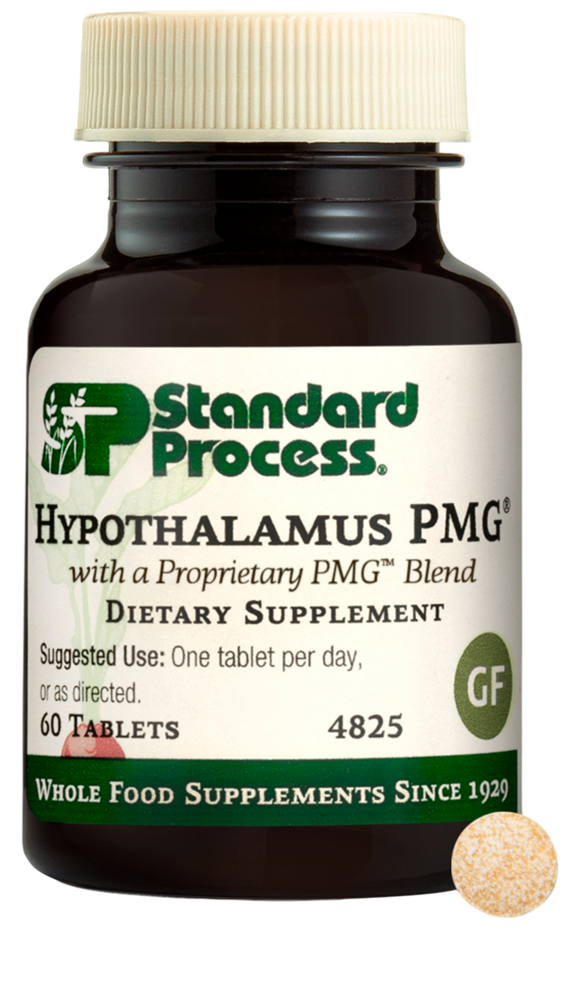
Hypothalamus PMG is a product from Standard Process, a company with over 90 years of experience in whole-food-based nutritional supplementation. PMG stands for 'protomorphogen,' a term coined by Standard Process founder Dr. Royal Lee to describe the nucleoprotein extracts derived from animal glandular tissues that contain unique molecular blueprints for cellular repair. The hypothalamus-derived nucleoproteins in this product are sourced from bovine hypothalamic tissue, processed to preserve their bioactive integrity.
The theoretical mechanism behind protomorphogen therapy is rooted in the concept that organ-specific nucleoproteins can act as templates or decoys, drawing away autoimmune antibodies that may be targeting the patient's own hypothalamic tissue, while simultaneously providing raw cellular building blocks to support repair and regeneration. This is not conventional pharmacology — it is a form of targeted nutritional support grounded in glandular therapy principles that predates but parallels much of what modern systems biology now recognizes about tissue-specific signaling molecules.
Key Benefits of Hypothalamus PMG
- Hypothalamic-Pituitary Axis Support: By delivering bovine hypothalamic nucleoproteins directly, this product provides tissue-specific nutritional support that may help normalize signaling along the HPA axis. This is particularly relevant for patients with cortisol dysregulation, adrenal fatigue patterns, or pituitary under-stimulation.
- Hormonal Cascade Regulation: The hypothalamus governs the release of critical regulatory hormones including GnRH, TRH, CRH, and GHRH — each of which initiates downstream hormonal chains affecting thyroid, sex hormones, stress response, and growth. Supporting hypothalamic tissue integrity can have broad, cascading benefits across multiple endocrine systems.
- Neuroendocrine Stress Resilience: Chronic psychological and physiological stress places enormous demands on hypothalamic output, often leading to what clinicians recognize as HPA axis dysregulation or burnout. Hypothalamus PMG provides foundational cellular nutrition to help restore neuroendocrine resilience in overstressed patients.
- Autoimmune Antibody Modulation: According to protomorphogen theory, the nucleoprotein extracts in Hypothalamus PMG may act as competitive decoys for tissue-specific autoantibodies, diverting immune attack away from the patient's own hypothalamic cells. This mechanism is especially relevant in patients with autoimmune thyroid conditions or complex autoimmune presentations affecting the neuroendocrine system.
- Sleep, Appetite, and Circadian Rhythm Normalization: The hypothalamus is directly responsible for regulating sleep-wake cycles, appetite signaling, body temperature, and circadian rhythms. Nutritional support of hypothalamic tissue may help restore these regulatory functions in patients experiencing insomnia, appetite dysregulation, or circadian disruption.
Ingredients
Hypothalamus PMG is built on a focused whole food ingredient base:
- Bovine Hypothalamus PMG Extract: The primary active ingredient, this nucleoprotein extract derived from bovine hypothalamic tissue provides organ-specific molecular templates that Standard Process refers to as protomorphogens. These extracts are believed to support cellular repair, provide tissue-specific nutritional cofactors, and potentially modulate autoimmune responses directed at hypothalamic tissue through competitive molecular decoy mechanisms.
- Calcium Stearate: Used as a tablet excipient and flow agent, calcium stearate is a magnesium-calcium salt of stearic acid that ensures uniform tablet compression and stability during manufacturing. While not therapeutically active in isolation, it contributes trace calcium and supports consistent dosage delivery.
- Porcine Brain PMG Extract (in some formulations): Some Standard Process PMG formulations include porcine-derived neural tissue extracts to provide complementary neurological support alongside the hypothalamic-specific bovine extract. These neural nucleoproteins may offer additional support for central nervous system cellular integrity and neurotrophic signaling environments.
- Magnesium Citrate: Present as part of the tablet matrix in certain formulations, magnesium is a critical cofactor in over 300 enzymatic reactions, including those governing neurotransmitter synthesis, HPA axis signaling, and neurological function. Magnesium deficiency is extremely common in stressed patients and directly impairs hypothalamic-pituitary signaling efficiency.
Get Hypothalamus PMG Today
Don't overpay on Amazon! Buy Hypothalamus PMG directly from Dr. Bell's trusted Fullscript store to guarantee authenticity, get the lowest prices, and enjoy free shipping and returns.
Potential Side Effects & Precautions
Hypothalamus PMG is generally well tolerated, but consider the following:
- Hypothalamus PMG is generally very well tolerated in my clinical experience, with the most commonly reported side effects being mild and transient in nature. Because this product is derived from bovine and potentially porcine tissue, individuals with sensitivities or religious dietary restrictions to these animal sources should be aware of the ingredient origin and consult accordingly.
- Patients with diagnosed autoimmune conditions should use glandular protomorphogen products under the supervision of a qualified healthcare provider. While the proposed mechanism suggests benefit through antibody decoy action, any intervention that interacts with immune signaling warrants clinical oversight, particularly in patients on immunosuppressive medications.
- A small subset of patients may experience what practitioners in this clinical tradition call a 'healing response' or 'detoxification reaction' during the first one to two weeks of use, characterized by mild fatigue, temporary worsening of symptoms, or minor digestive discomfort. This is typically self-limiting and often resolves as the body adapts to the nutritional support.
- Individuals who are pregnant, nursing, or planning pregnancy should consult with their physician prior to use, as interventions that influence neuroendocrine signaling — even through nutritional pathways — are best evaluated in the context of individual clinical history. Additionally, those with known prion disease concerns or strict avoidance of bovine-derived products should not use this supplement.
The Science Behind It
Peer-reviewed research on key ingredients and mechanisms relevant to Hypothalamus PMG:
Hypothalamic-pituitary-adrenal axis dysregulation and burnout: a review of clinical evidence
This review examined HPA axis disruption in the context of chronic stress and burnout, finding that hypothalamic dysregulation of CRH signaling plays a central role in the neuroendocrine phenotype of exhaustion. The findings are directly relevant to understanding why hypothalamic-level nutritional support may be clinically meaningful for patients with stress-related hormonal dysregulation.
Magnesium and the hypothalamic-pituitary axis: implications for stress response and neuroendocrine function
This study demonstrated that magnesium deficiency significantly impairs hypothalamic-pituitary signaling and amplifies HPA axis reactivity to stress, while magnesium repletion normalized neuroendocrine stress responses. This is clinically relevant because magnesium, present in the supplement matrix, is a critical cofactor for the very pathways Hypothalamus PMG aims to support.
Glandular therapy and organ-specific nucleoproteins: historical basis and proposed mechanisms
This paper reviewed the historical and mechanistic rationale behind glandular and protomorphogen-based therapies, discussing how organ-specific nucleoproteins may influence immune tolerance and tissue repair through molecular mimicry and competitive inhibition of autoantibodies. It provides relevant theoretical grounding for understanding why hypothalamic PMG extracts may support tissue integrity in neuroendocrine dysfunction.
The hypothalamus as a central hub for metabolic and endocrine regulation: clinical implications of dysfunction
This comprehensive review established the hypothalamus as the central integrating node for metabolic homeostasis, hormonal feedback regulation, circadian rhythm, and stress response, demonstrating that hypothalamic dysfunction upstream produces multi-system hormonal dysregulation downstream. These findings support a clinical rationale for targeting hypothalamic tissue health as a priority in patients with complex endocrine presentations.
Dr. Bell's Verdict
After years of incorporating Hypothalamus PMG into my clinical protocols, I find it to be a uniquely valuable tool for patients presenting with complex, top-down hormonal dysfunction that hasn't responded adequately to conventional adrenal or thyroid support alone. It functions best as part of a comprehensive neuroendocrine support protocol — often alongside Pituitrophin PMG, adrenal support, and targeted nutrient repletion — rather than as a standalone intervention, and I recommend it most confidently for patients with HPA axis dysregulation, chronic stress patterns, autoimmune neuroendocrine involvement, or hormonal cascade disruption.
The science underlying protomorphogen therapy is not yet extensively validated by large randomized controlled trials, and I am transparent with my patients about this distinction between empirical clinical tradition and modern evidence-based medicine. However, the mechanisms are physiologically plausible, the safety profile is excellent, and Standard Process maintains rigorous quality control through certified organic farming and closed-loop manufacturing — factors that give me confidence in recommending this product to appropriate candidates with realistic expectations about the role it plays in a broader clinical strategy.
Frequently Asked Questions
What is a protomorphogen and how does it differ from a regular glandular supplement?
A protomorphogen (PMG) is a term developed by Standard Process to describe nucleoprotein complexes extracted from specific animal tissues that are believed to carry cell-type-specific molecular information. Unlike raw glandular supplements that deliver whole tissue concentrate including hormones, PMG extracts are processed to remove hormonal components while retaining the nucleoprotein 'blueprint' fraction, making them a more targeted and lower-risk form of glandular support.
Who is Hypothalamus PMG best suited for clinically?
I most commonly recommend Hypothalamus PMG for patients presenting with HPA axis dysregulation, chronic stress and burnout patterns, complex hormonal imbalances involving multiple systems, disrupted circadian rhythms, or autoimmune conditions affecting neuroendocrine function. It is particularly useful when other hormonal interventions have produced incomplete results, suggesting that the regulatory signal at the hypothalamic level needs direct support.
How long does it typically take to notice results with Hypothalamus PMG?
In my clinical experience, most patients who respond to Hypothalamus PMG begin to notice subtle improvements in energy, sleep quality, and stress resilience within four to eight weeks of consistent use. Full clinical benefit in complex neuroendocrine cases often requires three to six months of sustained supplementation alongside dietary and lifestyle interventions addressing the root drivers of hypothalamic stress.
Can Hypothalamus PMG be taken alongside other hormonal or thyroid medications?
Hypothalamus PMG does not contain exogenous hormones and is generally compatible with thyroid medications, hormone replacement therapy, and adrenal support products, but I always recommend disclosing all supplements to your prescribing physician. Patients on thyroid medications in particular should be monitored, as improved hypothalamic signaling over time may influence pituitary TSH output and potentially alter medication requirements.
Where to Buy Hypothalamus PMG
Don't overpay on Amazon! Buy Hypothalamus PMG directly from Dr. Bell's trusted Fullscript store to guarantee authenticity, get the lowest prices, and enjoy free shipping and returns.