Iodomere Review
Introduction
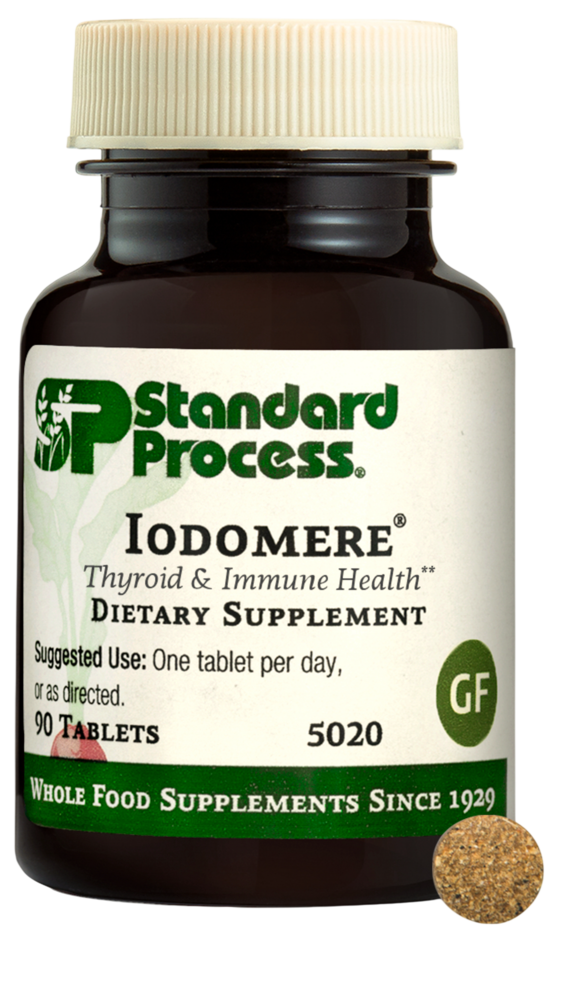
As a chiropractor with a deep focus on nutritional and endocrine health, I frequently encounter patients whose fatigue, weight struggles, and cognitive sluggishness trace back to subclinical iodine deficiency—a condition that remains underappreciated in conventional practice. Iodomere, produced by Standard Process, is a whole-food-based iodine supplement that has been part of the functional nutrition landscape for decades, and it deserves a thorough, evidence-informed evaluation for clinicians and patients alike.
Iodine is an essential trace mineral that the human body cannot synthesize on its own, making dietary and supplemental intake critical for maintaining thyroid hormone production, specifically thyroxine (T4) and triiodothyronine (T3). What distinguishes Iodomere from generic potassium iodide tablets is its inclusion of whole food and glandular concentrates, which Standard Process argues provide synergistic cofactors that improve bioavailability and tissue-specific utilization.
In this review, I will break down Iodomere's ingredient profile, its proposed mechanisms of action, the clinical evidence supporting iodine supplementation, and the real-world considerations every patient and practitioner should weigh before incorporating it into a protocol. My goal is to give you an honest, clinically grounded assessment rather than a promotional overview.
Key Benefits of Iodomere
- Thyroid Hormone Synthesis Support: Iodine is the rate-limiting substrate for T3 and T4 production in the thyroid gland, and Iodomere delivers it alongside whole food matrix components that support the entire biosynthetic pathway. Patients with low-normal iodine status often report improvements in energy, body temperature regulation, and metabolic rate when supplementing appropriately.
- Metabolic Rate and Weight Management: Adequate thyroid hormone output—dependent on sufficient iodine—directly governs basal metabolic rate, thermogenesis, and lipid metabolism. Correcting iodine insufficiency can help restore metabolic efficiency in patients experiencing unexplained weight gain or cold intolerance.
- Cognitive Clarity and Neurological Function: Thyroid hormones are essential for neuronal myelination and neurotransmitter regulation, meaning iodine deficiency can manifest as brain fog, poor concentration, and mood disturbances. Restoring adequate iodine levels through a measured supplement like Iodomere may support clearer thinking and improved neurological signaling.
- Breast and Reproductive Tissue Health: Iodine receptors are found in breast, ovarian, and uterine tissue, and research has linked iodine deficiency to fibrocystic breast changes and reproductive irregularities. Iodomere's conservative dosing makes it a clinically reasonable option for women seeking iodine support without the risks associated with pharmacological doses.
- Immune and Antioxidant Defense: Iodine exhibits direct antimicrobial and antioxidant activity at the cellular level, and thyroid hormones broadly modulate immune surveillance. Ensuring adequate iodine status helps maintain both innate immune defenses and the body's capacity to neutralize reactive oxygen species.
Ingredients
Iodomere is built on a focused whole food ingredient base:
- Potassium Iodide: The primary active form of iodine in Iodomere, potassium iodide is a stable, well-absorbed inorganic iodide salt that directly supplies the iodine substrate required for thyroid peroxidase-mediated synthesis of T3 and T4. At the conservative doses found in Iodomere, it is appropriate for maintenance and mild deficiency correction without triggering the Wolff-Chaikoff suppression effect seen with high-dose iodine loading.
- Thyroid Glandular Concentrate (Bovine): Standard Process includes desiccated bovine thyroid tissue as a whole glandular concentrate, which provides naturally occurring thyroid-specific peptides, enzymes, and trace cofactors intended to support thyroid cell receptor activity. While the glandular itself does not provide pharmacologically significant T3/T4 in Iodomere's context, it is used in the Standard Process philosophy to deliver organ-specific signaling compounds.
- Bovine Liver Powder: Liver concentrate supplies heme iron, B12, folate, and copper—all cofactors critical for thyroid hormone metabolism and the deiodinase enzyme systems that convert T4 to the active T3. This whole food ingredient reflects Standard Process's broader strategy of synergistic cofactor delivery rather than isolated nutrient supplementation.
- Carrot (Root) Powder and Alfalfa (Aerial Parts) Juice Powder: These whole food plant concentrates contribute natural carotenoids, vitamin C precursors, trace minerals, and phytonutrients that serve as antioxidant support within the thyroid and systemic tissues. They represent the whole food matrix philosophy central to Standard Process formulations, aiming to deliver iodine within a broader nutritional context.
Get Iodomere Today
Don't overpay on Amazon! Buy Iodomere directly from Dr. Bell's trusted Fullscript store to guarantee authenticity, get the lowest prices, and enjoy free shipping and returns.
Potential Side Effects & Precautions
Iodomere is generally well tolerated, but consider the following:
- At the doses provided in Iodomere, iodine-related adverse effects are uncommon in individuals with normal thyroid architecture, but patients with pre-existing autoimmune thyroid conditions such as Hashimoto's thyroiditis should exercise particular caution. Increasing iodine intake in the setting of autoimmune thyroid disease can, in some individuals, transiently accelerate autoimmune activity and worsen thyroid peroxidase antibody titers, so baseline labs are essential before initiating any iodine protocol.
- Mild gastrointestinal discomfort, including nausea or a metallic taste, can occur with iodide supplementation, particularly when taken on an empty stomach. I routinely advise patients to take Iodomere with food to minimize these transient GI effects.
- The bovine glandular components, while generally well-tolerated, are not appropriate for patients following vegan or vegetarian diets, or for those with documented sensitivity to bovine-derived products. Clinicians should always screen for dietary restrictions and ethical concerns before recommending glandular-based formulas.
- Because Iodomere contains iodine, it should not be combined with other iodine supplements, high-iodine seaweed products, or amiodarone without direct physician oversight, as cumulative iodine excess can paradoxically suppress thyroid function via the Wolff-Chaikoff effect. Pregnant and breastfeeding women should consult their OB or midwife before use, as iodine requirements and tolerable upper limits shift significantly during these periods.
The Science Behind It
Peer-reviewed research on key ingredients and mechanisms relevant to Iodomere:
Iodine deficiency in developed countries and its impact on thyroid function
This study documented persistent iodine insufficiency in populations previously considered iodine-replete, highlighting the continued relevance of iodine supplementation for thyroid hormone synthesis support. The findings reinforce the clinical rationale for conservative iodine supplementation in adults with low dietary iodine intake.
Iodine and thyroid hormones: the role of selenium and the deiodinase enzymes
This review examined the interplay between iodine availability and the selenoenzyme deiodinases responsible for converting T4 to the active T3 form, underscoring that iodine sufficiency is a prerequisite for optimal peripheral thyroid hormone activation. It supports the clinical strategy of addressing iodine status as a foundational step in managing functional hypothyroid symptoms.
Iodine and mammary gland health: evidence from animal and human studies
This paper reviewed the evidence for iodine's role in breast tissue physiology, demonstrating that iodine deficiency is associated with increased susceptibility to fibrocystic changes and dysplastic cellular alterations in mammary tissue. The findings provide biological context for the use of iodine supplementation in women with breast tissue iodine insufficiency.
Thyroid hormones and the immune system: mechanisms of immunomodulation
This research outlined the mechanisms by which thyroid hormones modulate both innate and adaptive immune function, demonstrating that adequate thyroid hormone output—dependent on sufficient iodine—is necessary for normal lymphocyte activity and inflammatory regulation. These findings provide mechanistic support for optimizing iodine status as part of a comprehensive immune health strategy.
Dr. Bell's Verdict
Iodomere occupies a clinically sensible middle ground in the iodine supplement market—it provides a meaningful but conservative dose of potassium iodide within a whole food and glandular matrix that aligns with Standard Process's foundational nutritional philosophy. For patients with confirmed or strongly suspected iodine insufficiency, particularly those experiencing the classic triad of fatigue, cold sensitivity, and cognitive dulling, Iodomere represents a reasonable first-line supplemental intervention when dietary iodine optimization alone is insufficient.
My primary recommendation is that Iodomere be used under clinical guidance with baseline and follow-up thyroid panels, including TSH, free T3, free T4, and thyroid antibodies, to ensure that supplementation is appropriate for the individual's thyroid status. It is not a high-dose iodine loading protocol and should not be treated as one; rather, it is best understood as a conservative, whole-food-integrated iodine maintenance supplement that earns its place in a well-constructed thyroid support protocol.
Frequently Asked Questions
Who is the ideal candidate for Iodomere?
Iodomere is best suited for patients with documented or clinically suspected iodine insufficiency who are seeking a conservative, whole food-based supplemental source rather than pharmacological doses. It is particularly useful for individuals with mild hypothyroid symptoms, poor dietary iodine intake (e.g., avoiding iodized salt and seafood), or those requiring general thyroid nutritional support as part of a broader functional protocol.
Can I take Iodomere if I have Hashimoto's thyroiditis?
This requires individualized clinical judgment. Some patients with Hashimoto's are iodine-deficient and may benefit from careful, low-dose iodine repletion, while others experience a worsening of autoimmune activity with any increase in iodine intake. I strongly advise getting thyroid peroxidase and thyroglobulin antibody levels checked before initiating Iodomere, and only proceeding under the supervision of a knowledgeable practitioner.
How long does it take to notice results with Iodomere?
Thyroid-related improvements from iodine repletion are generally gradual, with most patients reporting subtle improvements in energy and cognitive clarity within four to eight weeks of consistent use. Measurable changes in thyroid lab values may take eight to twelve weeks, which is why I recommend scheduling a follow-up lab panel at approximately three months after starting the supplement.
Does Iodomere replace thyroid medication?
No—Iodomere is a nutritional supplement, not a thyroid hormone replacement therapy, and it should never be used as a substitute for prescribed thyroid medications such as levothyroxine or desiccated thyroid. Its role is to support the body's own hormone synthesis capacity by providing the essential mineral substrate, not to supply exogenous thyroid hormone directly.
Where to Buy Iodomere
Don't overpay on Amazon! Buy Iodomere directly from Dr. Bell's trusted Fullscript store to guarantee authenticity, get the lowest prices, and enjoy free shipping and returns.