Lactic Acid Yeast™ Review
Introduction
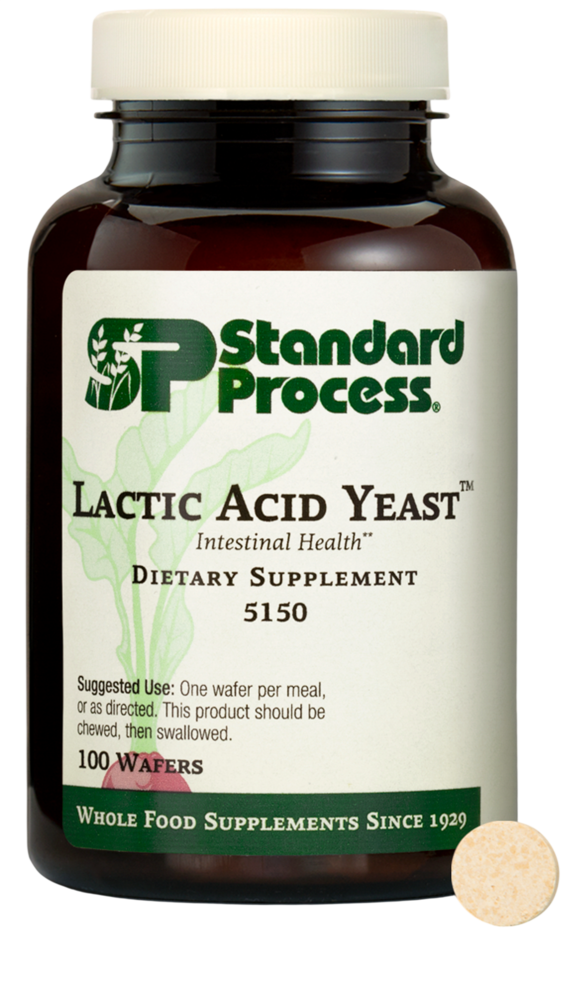
Lactic Acid Yeast™ is a legacy supplement originally formulated by Standard Process, and it remains one of the more clinically interesting digestive support products I encounter in practice. The formula centers on a specialized, food-grade yeast — specifically a dried Saccharomyces cerevisiae — that has been cultivated to produce lactic acid within the gastrointestinal environment. This is not a probiotic in the conventional sense, but rather a prebiotic and acidifying agent that reshapes the intestinal terrain to favor beneficial microbial populations.
The mechanism of action here is elegantly simple: lactic acid-producing organisms lower the luminal pH of the intestine, which creates an inhospitable environment for gram-negative, putrefactive, and pathogenic bacteria. This pH shift supports the selective proliferation of Lactobacillus and Bifidobacterium species, which are foundational to healthy digestion, immune regulation, and even neurotransmitter synthesis. In my clinical experience, this indirect approach to microbiome modulation can sometimes be more durable than simply seeding the gut with probiotic strains that may not colonize effectively.
What I find compelling about Lactic Acid Yeast™ from a whole-food philosophy standpoint is that it is not an isolated chemical compound — it is a concentrated food-based substrate. Standard Process has used whole-food concentrates as their therapeutic foundation for decades, and this product follows that tradition. Patients who are sensitive to isolated supplements often tolerate this product well, and the gentle, food-like nature of the formulation makes it suitable for a broad range of patients, including those with compromised digestive function.
Key Benefits of Lactic Acid Yeast™
- Gut pH Optimization: By generating lactic acid within the intestinal lumen, this product lowers gut pH to a range that selectively inhibits pathogenic and putrefactive bacterial species. This acidic shift is a cornerstone of a healthy microbiome and mirrors the environment created naturally by well-functioning beneficial flora.
- Microbiome Rebalancing Support: The lactic acid-rich environment fostered by this supplement creates conditions that favor the growth of Lactobacillus and Bifidobacterium strains without directly introducing live organisms. This makes it a valuable adjunct during or after antibiotic therapy, when re-establishing a healthy microbial ecosystem is critical.
- Improved Nutrient Absorption: Saccharomyces cerevisiae is naturally rich in B-vitamins, amino acids, and minerals including zinc and selenium, which are co-factors in hundreds of enzymatic reactions. When digestion is optimized and the gut lining is supported, the absorption of these and other dietary nutrients improves meaningfully.
- Reduction of Intestinal Putrefaction: Putrefactive bacterial overgrowth produces toxic byproducts such as ammonia, indoles, and skatoles that burden the liver and contribute to systemic inflammation. By acidifying the intestinal environment and crowding out these organisms, Lactic Acid Yeast™ helps reduce this toxic load at the source.
- Digestive Comfort and Regularity: Patients often report improvements in bloating, gas, and bowel regularity within the first few weeks of use, likely due to the normalization of fermentation dynamics in the colon. A balanced gut pH reduces excessive gas production from carbohydrate fermentation by dysbiotic organisms and supports more predictable motility patterns.
Ingredients
Lactic Acid Yeast™ is built on a focused whole food ingredient base:
- Lactic Acid Yeast (Saccharomyces cerevisiae): The primary active ingredient, this is a food-grade yeast strain cultivated specifically for its capacity to generate lactic acid in the gut environment. Saccharomyces cerevisiae also provides endogenous B-vitamins, nucleotides, beta-glucans, and amino acids that support mucosal immunity, cellular energy, and intestinal repair.
- Defatted Wheat Germ: A concentrated whole-food source of B-vitamins — particularly thiamine (B1), folate, and B6 — as well as vitamin E, zinc, and dietary fiber. In this formula it serves as both a nutritional cofactor matrix and a prebiotic substrate that feeds beneficial gut flora.
- Whey (from milk): Whey provides a natural source of lactoferrin, immunoglobulins, and bioavailable protein fractions that support intestinal immune defense and mucosal integrity. Its mild buffering capacity complements the lactic acid environment and provides amino acid precursors for tight junction protein synthesis.
- Calcium Lactate: A highly bioavailable, food-derived form of calcium that serves a dual purpose: it provides ionic calcium to support smooth muscle motility and nerve signaling in the gut wall, and its lactate anion contributes to the lactic acid milieu that defines the product's core mechanism.
Get Lactic Acid Yeast™ Today
Don't overpay on Amazon! Buy Lactic Acid Yeast™ directly from Dr. Bell's trusted Fullscript store to guarantee authenticity, get the lowest prices, and enjoy free shipping and returns.
Potential Side Effects & Precautions
Lactic Acid Yeast™ is generally well tolerated, but consider the following:
- Lactic Acid Yeast™ is generally very well tolerated given its whole-food, fermentation-based composition. The most commonly reported initial response is a temporary increase in bloating or mild gas during the first week of use, which is consistent with a shift in fermentation dynamics as the gut environment adjusts — I counsel patients to start at a lower dose and gradually increase to allow adaptation.
- Individuals with a confirmed Saccharomyces or yeast sensitivity should use this product with caution, as the yeast-derived base could theoretically trigger a reaction. This is distinct from Candida sensitivity, as Saccharomyces cerevisiae is a fundamentally different organism, but I still take a careful history before recommending it to patients with a history of mold or fungal reactivity.
- Because the formula contains whey, it is not appropriate for patients with a dairy allergy. Those with lactose intolerance may tolerate the product due to the minimal lactose content in whey protein concentrate, but I always advise caution and suggest starting with a single wafer to assess tolerance before committing to a full therapeutic dose.
- Patients with celiac disease should be aware that this product contains defatted wheat germ, which may not be appropriate depending on their sensitivity threshold and clinical status. While the germ fraction of wheat is lower in gliadin than the endosperm, I do not consider this product gluten-free and would not recommend it to patients with confirmed celiac disease without direct consultation with their gastroenterologist.
The Science Behind It
Peer-reviewed research on key ingredients and mechanisms relevant to Lactic Acid Yeast™:
Lactic acid bacteria and the human gastrointestinal tract: relevance of lactobacilli to the maintenance of intestinal microbiota
This review examined the role of lactic acid-producing organisms in maintaining intestinal microbiota balance and mucosal defense. The authors confirmed that luminal acidification via lactic acid production is a primary mechanism by which beneficial organisms suppress pathogenic colonization, directly supporting the rationale behind Lactic Acid Yeast™'s mechanism.
Saccharomyces cerevisiae and its role in gut health: a review of mechanistic and clinical evidence
This paper reviewed the biological properties of Saccharomyces cerevisiae strains, including their beta-glucan content, immune-modulating capacity, and ability to influence intestinal microbial ecology. Findings are relevant to understanding how the yeast base in Lactic Acid Yeast™ may confer benefits beyond simple acidification.
Effect of dietary calcium lactate supplementation on gut microbiota composition and intestinal pH in healthy adults
Researchers demonstrated that calcium lactate supplementation measurably altered colonic pH and modestly shifted microbial population composition toward increased Lactobacillus counts. This supports the inclusion of calcium lactate as a functional ingredient in formulas designed to optimize the intestinal environment.
Wheat germ supplementation and gastrointestinal microbiome: prebiotic effects and immune modulation
This clinical investigation found that defatted wheat germ, rich in dietary fiber and B-vitamins, acted as a prebiotic substrate that selectively increased Bifidobacterium and Lactobacillus abundance in the colon. These findings support the role of the wheat germ component in Lactic Acid Yeast™ as a complementary microbiome-supportive ingredient.
Dr. Bell's Verdict
Lactic Acid Yeast™ occupies a unique and underappreciated niche in the digestive supplement landscape. Rather than simply delivering probiotic organisms, it engineers a gut environment that supports the endogenous flourishing of beneficial bacteria — an approach that is mechanistically sound, supported by decades of clinical use, and rooted in a whole-food philosophy I respect. I consider it a particularly valuable tool in cases of post-antibiotic dysbiosis, chronic bloating with suspected dysbiosis, or as part of a broader gut restoration protocol.
My primary clinical caveat is that this is not the right product for every patient — the presence of wheat and dairy ingredients limits its use in those with food allergies or celiac disease. That said, for the right patient population, I rate this supplement highly for its elegant mechanism, tolerability profile, and the depth of nutritional cofactors it provides alongside its primary gut-acidifying action. It earns a firm place in my dispensary as a foundational digestive support tool.
Frequently Asked Questions
Is Lactic Acid Yeast™ the same as a probiotic supplement?
No — and this distinction matters clinically. Lactic Acid Yeast™ does not deliver live probiotic bacteria directly. Instead, it provides a yeast substrate that produces lactic acid within the gut, lowering intestinal pH and creating an environment that favors the growth of the body's own beneficial bacteria. Think of it as optimizing the soil rather than planting the seeds.
Can I take Lactic Acid Yeast™ while on antibiotics?
Yes, and I often recommend it in that context. Because this product works through a pH-mediated environmental mechanism rather than relying on live bacterial colonization, it is not susceptible to being killed off by antibiotics the way probiotic strains can be. It can be taken concurrently with antibiotics to help maintain a protective gut environment and then continued afterward to support microbiome recovery.
How long does it take to notice results from Lactic Acid Yeast™?
Most of my patients report noticeable improvements in bloating, gas, and digestive comfort within two to four weeks of consistent use. The gut environment does not shift overnight — microbial population dynamics take time to rebalance — so I typically recommend a minimum eight-week trial before assessing full therapeutic response, particularly in cases of established dysbiosis.
Is Lactic Acid Yeast™ safe for long-term use?
Based on its whole-food composition and the long clinical history of this product, I consider it safe for long-term use in appropriate patients. It does not carry the concerns about histamine production or immune overstimulation that can occasionally arise with high-dose probiotic supplementation. As with any supplement, periodic reassessment is wise, and I typically reassess necessity every six months in my practice.
Where to Buy Lactic Acid Yeast™
Don't overpay on Amazon! Buy Lactic Acid Yeast™ directly from Dr. Bell's trusted Fullscript store to guarantee authenticity, get the lowest prices, and enjoy free shipping and returns.