Ligaplex I Review
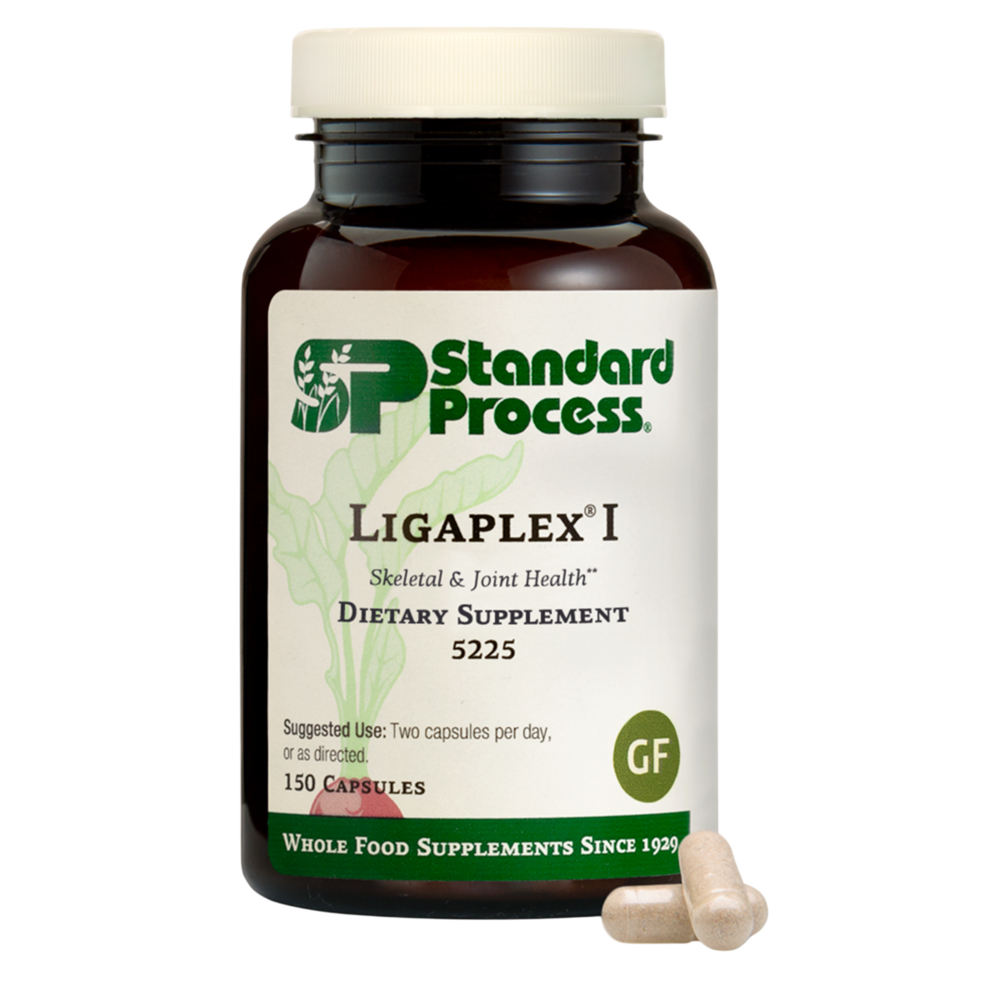
Introduction
In my clinical practice, one of the most underappreciated challenges in musculoskeletal care is supporting the biochemical environment that allows ligaments and tendons to heal properly. Ligaplex I, manufactured by Standard Process, is a whole-food-based formulation I have relied on for years to address this gap. It is specifically designed for the acute phase of connective tissue injury, providing nutritional cofactors that the body urgently needs when tissue damage has occurred.
What distinguishes Ligaplex I from generic joint supplements is its reliance on concentrated glandular and organ tissue extracts alongside targeted micronutrients. Standard Process has built their formulas around the idea that whole-food complexes deliver nutrients in their natural enzymatic context, which may enhance bioavailability and clinical efficacy compared to isolated synthetic compounds. The formula includes bovine orchic extract, veal bone extract, and PMG extracts, which provide peptides and growth factors theorized to support tissue-specific repair mechanisms.
From a biochemical standpoint, the ingredients in Ligaplex I converge on two primary processes: collagen biosynthesis and antioxidant protection of healing tissue. Vitamin C is essential for hydroxylation of proline and lysine residues in procollagen, a rate-limiting step in mature collagen fiber formation. Manganese serves as a critical cofactor for manganese superoxide dismutase and glycosaminoglycan synthesis, both of which are central to the structural integrity of ligamentous and cartilaginous tissue.
Key Benefits of Ligaplex I
- Accelerated Connective Tissue Repair: The combination of vitamin C, manganese, and whole-food glandular concentrates provides the essential cofactors for collagen cross-linking and extracellular matrix remodeling. This makes Ligaplex I particularly useful during the acute and sub-acute phases of ligament or tendon injuries.
- Collagen Synthesis Support: Vitamin C in its whole-food form acts as an indispensable cofactor for prolyl and lysyl hydroxylase enzymes, which are responsible for stabilizing the triple-helix structure of collagen. Without adequate vitamin C, collagen fibers remain structurally weak and prone to re-injury.
- Antioxidant Protection of Injured Tissue: Acute injuries generate significant oxidative stress at the site of damage, which can impair fibroblast activity and delay healing. Manganese, as a cofactor for mitochondrial superoxide dismutase, and the whole-food vitamin C complex help neutralize reactive oxygen species in healing connective tissue.
- Musculoskeletal Calcium and Mineral Delivery: The veal bone extract in Ligaplex I delivers bioavailable calcium alongside naturally occurring phosphorus, magnesium, and trace minerals in a food-matrix context. This supports bone and periosteal tissue repair that often accompanies ligamentous injuries at joint margins.
- Glandular and PMG-Based Tissue Specificity: Standard Process's protomorphogen (PMG) extracts are theorized to deliver organ-specific nucleoprotein peptides that may support cell-mediated repair in corresponding tissue types. While the mechanistic science remains an area of ongoing discussion, clinical use of glandular tissue concentrates for organ-specific support has a long empirical history in functional medicine.
Ingredients
Ligaplex I is built on a focused whole food ingredient base:
- Vitamin C (from Whole Food Sources): Delivered via calcium lactate and whole-food concentrates rather than ascorbic acid alone, this form of vitamin C is accompanied by bioflavonoids and enzyme cofactors that support its role as a critical electron donor in collagen hydroxylation reactions, directly enabling the structural maturation of type I and type III collagen fibers essential in ligaments and tendons.
- Manganese (Manganese Glycerophosphate): Manganese is an essential trace mineral that functions as a cofactor for manganese superoxide dismutase (MnSOD), a primary mitochondrial antioxidant enzyme, and for glycosyltransferases involved in glycosaminoglycan synthesis; adequate manganese status is directly linked to the production of proteoglycans that give connective tissue its viscoelastic properties.
- Veal Bone Extract (PMG Extract): Standard Process's protomorphogen extracts from veal bone provide nucleoprotein-mineral complexes theorized to supply tissue-specific peptide signals and bioavailable minerals including calcium and phosphorus, supporting periosteal and connective tissue repair particularly in joints where ligamentous attachment to bone is involved.
- Bovine Orchic Extract: A glandular tissue concentrate derived from bovine testes, orchic extract is used in functional medicine to provide steroidogenic precursors, growth peptides, and organ-specific nucleoproteins that may support anabolic tissue repair processes in musculoskeletal injuries, particularly in male patients recovering from acute soft tissue damage.
- Calcium Lactate: Calcium lactate is a highly bioavailable organic calcium salt that does not require high gastric acid output for absorption, making it suitable for a broad patient population; it contributes to bone mineral density support and plays a role in fibroblast signaling cascades relevant to collagen production and wound healing.
- Riboflavin (Vitamin B2): Riboflavin serves as a precursor to FAD and FMN coenzymes that participate in mitochondrial electron transport and oxidative metabolism; in the context of connective tissue healing, riboflavin supports the energy-intensive biosynthetic processes that fibroblasts rely on during active tissue remodeling.
Get Ligaplex I Today
Don't overpay on Amazon! Buy Ligaplex I directly from Dr. Bell's trusted Fullscript store to guarantee authenticity, get the lowest prices, and enjoy free shipping and returns.
Potential Side Effects & Precautions
Ligaplex I is generally well tolerated, but consider the following:
- In my clinical experience, Ligaplex I is generally well-tolerated when taken as directed, with the most commonly reported side effects being mild gastrointestinal discomfort such as nausea or loose stool, particularly when taken on an empty stomach. I routinely advise patients to take this supplement with food to minimize any digestive sensitivity.
- Patients with known sensitivities to bovine or veal-derived products should be informed of the glandular and bone extract content, as these ingredients are derived from animal sources. While allergic reactions are uncommon, clinicians should screen for relevant dietary restrictions or ethical considerations before recommending this product.
- Because Ligaplex I contains calcium and manganese, patients taking medications that interact with these minerals — such as certain antibiotics (tetracyclines, fluoroquinolones) or thyroid medications — should be counseled to separate dosing by at least two hours. Excess manganese intake over prolonged periods is also worth monitoring in patients with compromised liver function, as manganese is primarily excreted via bile.
- This product is not intended for long-term chronic use without clinical supervision. Standard Process distinguishes between Ligaplex I (for acute injury) and Ligaplex II (for chronic connective tissue support), and transitioning between the two at appropriate phases of recovery is part of a responsible clinical protocol. Pregnant or nursing patients should consult their physician before use given the glandular tissue content.
The Science Behind It
Peer-reviewed research on key ingredients and mechanisms relevant to Ligaplex I:
Vitamin C and Collagen Biosynthesis: The Role of Ascorbic Acid in Prolyl Hydroxylase Activity
This review confirms the essential role of ascorbic acid as an electron donor for prolyl-4-hydroxylase and lysyl hydroxylase enzymes, which are rate-limiting in the post-translational modification of procollagen. Deficiency in vitamin C results in structurally unstable collagen, directly supporting its inclusion in connective tissue repair formulas like Ligaplex I.
Manganese Superoxide Dismutase in the Mitochondria: Its Role in Connective Tissue and Oxidative Stress
This study examines manganese's critical function as the metal cofactor for mitochondrial superoxide dismutase, demonstrating its importance in neutralizing reactive oxygen species generated during cellular repair processes. The findings are directly relevant to the role of manganese in protecting fibroblasts and connective tissue cells during acute injury recovery.
Glycosaminoglycan Synthesis and the Role of Trace Minerals Including Manganese in Proteoglycan Production
This research highlights manganese as a necessary cofactor for glycosyltransferase enzymes responsible for assembling glycosaminoglycan chains in cartilage and ligamentous proteoglycans. Adequate manganese status was associated with improved structural integrity of the extracellular matrix, supporting the therapeutic rationale for its inclusion in connective tissue supplements.
Calcium Bioavailability from Organic Calcium Salts Compared to Calcium Carbonate in Human Subjects
This study demonstrated that organic calcium salts, including calcium lactate, exhibit favorable absorption profiles particularly in individuals with lower gastric acid output compared to calcium carbonate. This supports the use of calcium lactate in Ligaplex I as a more universally bioavailable calcium source for supporting bone and periosteal tissue healing.
Dr. Bell's Verdict
Ligaplex I earns a strong recommendation in my practice as a targeted, acute-phase connective tissue support formula that addresses the specific biochemical demands of ligament and tendon healing with a whole-food nutritional philosophy. The synergy between vitamin C, manganese, calcium, and glandular concentrates reflects a clinically coherent strategy for supporting collagen biosynthesis, antioxidant defense, and tissue-specific repair simultaneously.
While the evidence base for some of Standard Process's proprietary PMG and glandular concepts remains less robust than mainstream pharmaceutical standards, the individual ingredient mechanisms are well-supported in the peer-reviewed literature, and my clinical outcomes with this product in post-injury and post-surgical patients have been consistently positive. I consider Ligaplex I an important tool in any musculoskeletal-focused integrative practice, best used as part of a broader rehabilitation and nutritional protocol.
Frequently Asked Questions
What is the difference between Ligaplex I and Ligaplex II?
Ligaplex I is formulated for the acute phase of connective tissue injury — the first several weeks following a sprain, strain, or surgery — when the body requires rapid nutritional support for collagen synthesis and inflammation management. Ligaplex II is designed for the chronic phase, supporting long-term tissue maintenance and remodeling in patients with degenerative joint conditions or ongoing connective tissue laxity. I typically transition patients from Ligaplex I to Ligaplex II after the first four to six weeks of recovery.
How long should I take Ligaplex I?
In my clinical protocols, I generally recommend Ligaplex I for a period of four to eight weeks following an acute connective tissue injury, depending on the severity of the injury and the patient's healing response. It is not intended as an indefinite supplement, and I reassess its necessity at each follow-up visit based on clinical progress and symptom resolution.
Can Ligaplex I help with post-surgical recovery?
Yes, this is one of my most common applications for Ligaplex I. Following orthopedic procedures involving ligament repair, reconstruction, or joint capsule work, the body has an elevated demand for collagen precursors and antioxidant support. Ligaplex I provides several of those key cofactors in a bioavailable whole-food form, and I frequently incorporate it alongside physical therapy in post-operative nutritional protocols.
Is Ligaplex I appropriate for vegetarians or vegans?
No, Ligaplex I is not suitable for vegetarians or vegans. It contains bovine orchic extract and veal bone PMG extract, which are animal-derived glandular tissue concentrates. Patients following plant-based diets should discuss alternative connective tissue support options with their clinician, such as vitamin C with bioflavonoids, plant-based silica, and glycine supplementation.
Where to Buy Ligaplex I
Don't overpay on Amazon! Buy Ligaplex I directly from Dr. Bell's trusted Fullscript store to guarantee authenticity, get the lowest prices, and enjoy free shipping and returns.