Ligaplex II Review
Introduction
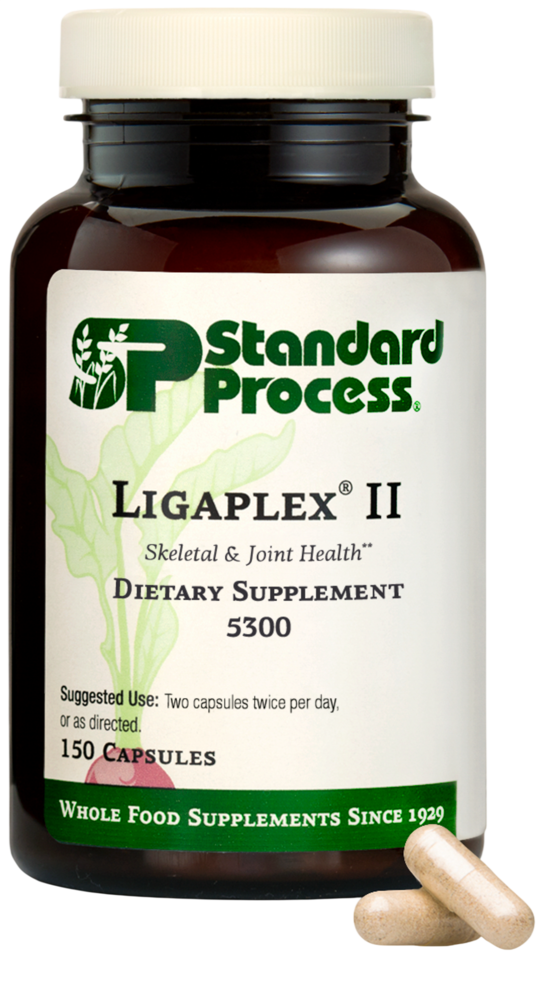
As a chiropractor who works extensively with musculoskeletal injuries, I'm constantly evaluating nutritional support tools that address the underlying tissue physiology — not just the symptoms. Ligaplex II, manufactured by Standard Process, is one of the more clinically sophisticated formulas I've encountered for ligament and connective tissue support. It combines whole-food concentrates, glandular material, and targeted micronutrients in a way that aligns well with what we understand about collagen metabolism and tissue repair.
The formula is designed for what Standard Process categorizes as the 'acute to chronic' phase of soft-tissue injury — distinguishing it from Ligaplex I, which is formulated for the acute inflammatory phase. In practice, I reach for Ligaplex II when patients present with subacute or chronic ligamentous laxity, repetitive stress injuries, or slow-healing sprains. The distinction matters clinically because the metabolic demands of tissue remodeling differ significantly from the early inflammatory cascade.
What separates Ligaplex II from generic joint supplements is its reliance on whole-food and glandular concentrates rather than isolated synthetic nutrients. Standard Process operates its own certified organic farm in Palmyra, Wisconsin, and the ingredients are processed at low temperatures to preserve enzyme activity and cofactors. This philosophy of food-based nutrition is something I find resonates both philosophically and practically with the outcomes I observe in my practice.
Key Benefits of Ligaplex II
- Connective Tissue Repair & Remodeling: Ligaplex II provides the raw nutritional substrates — particularly vitamin C, manganese, and glandular ligament extracts — necessary for collagen cross-linking and extracellular matrix remodeling. This makes it especially valuable during the proliferative phase of tissue healing, typically beginning around day four post-injury and extending for weeks.
- Ligament & Tendon Integrity: The inclusion of bovine ligament extract and PMG (protomorphogen) fractions provides nucleoprotein support that Standard Process believes helps direct nutrient delivery to similar tissues in the body. Clinically, I find patients with chronic ankle, knee, or shoulder instability often respond favorably to this targeted glandular approach.
- Antioxidant Protection During Healing: Vitamins C and E work synergistically to quench reactive oxygen species generated during tissue turnover and repair. This antioxidant activity helps protect newly synthesized collagen fibrils from oxidative degradation, improving the structural quality of healed tissue.
- Calcium & Mineral Support for Structural Tissues: Ligaplex II contains calcium lactate and manganese, both of which are critical cofactors in collagen synthesis and bone-to-ligament attachment site integrity. Manganese, in particular, activates prolidase — the enzyme responsible for recycling proline, a primary amino acid in collagen — making it an often-overlooked but essential micronutrient for connective tissue health.
- Whole-Food Enzymatic Cofactor Delivery: Because the formula uses whole-food concentrates processed at low temperatures, it retains naturally occurring enzymes, phytonutrients, and cofactors that support nutrient absorption and utilization. This distinguishes it meaningfully from single-nutrient supplements, which often lack the synergistic nutritional matrix found in whole-food complexes.
Ingredients
Ligaplex II is built on a focused whole food ingredient base:
- Bovine Ligament PMG Extract: A protomorphogen extract derived from bovine ligament tissue, used in Standard Process formulations to provide nucleoprotein fractions that may support cellular repair in homologous tissues. The glandular therapy rationale holds that these extracts deliver tissue-specific signaling molecules and peptides relevant to ligament metabolism.
- Vitamin C (from Whole-Food Concentrate): Ascorbic acid is an essential cofactor for prolyl and lysyl hydroxylase enzymes, which are rate-limiting steps in collagen triple-helix stabilization. Without adequate vitamin C, newly formed collagen is structurally weak and prone to degradation, making this nutrient non-negotiable in any connective tissue repair protocol.
- Manganese (Manganese Citrate): Manganese activates prolidase, a dipeptidase enzyme critical for recycling hydroxyproline residues back into the collagen synthesis pathway. It is also a cofactor for superoxide dismutase (MnSOD), providing mitochondrial antioxidant defense that is especially relevant in metabolically active, healing tissues.
- Calcium Lactate: Standard Process uses calcium lactate as a highly bioavailable calcium source that supports bone-enthesis junction integrity — the point where ligaments and tendons attach to bone. This form of calcium is well-tolerated by patients with digestive sensitivities compared to carbonate-based forms.
- Vitamin E (from Wheat Germ Oil): Tocopherols derived from wheat germ oil serve as lipid-phase antioxidants, protecting cell membranes and newly synthesized collagen from lipid peroxidation. Wheat germ oil also provides octacosanol and other phytonutrients that may support tissue oxygenation and mitochondrial efficiency during recovery.
- Veal Bone PMG Extract: Provides nucleoprotein support for the osseous components of the musculoskeletal system, particularly relevant at the bone-tendon and bone-ligament interface. This extract complements the ligament PMG to address the full structural continuum of connective tissue.
Get Ligaplex II Today
Don't overpay on Amazon! Buy Ligaplex II directly from Dr. Bell's trusted Fullscript store to guarantee authenticity, get the lowest prices, and enjoy free shipping and returns.
Potential Side Effects & Precautions
Ligaplex II is generally well tolerated, but consider the following:
- Ligaplex II is generally very well tolerated, with an excellent safety profile consistent with most Standard Process whole-food formulations. Because the capsules contain bovine and veal glandular extracts, they are not appropriate for vegetarians, vegans, or individuals with known sensitivities to bovine-derived products.
- The calcium lactate content is low enough that it is unlikely to cause hypercalcemia under normal dosing, but patients with hypercalcemia, sarcoidosis, or granulomatous conditions should consult their physician before use. I also advise patients with known kidney stones, particularly calcium oxalate stones, to discuss supplemental calcium use with their urologist or nephrologist.
- The wheat germ oil component means this product contains gluten-derived material and is contraindicated for patients with celiac disease or non-celiac gluten sensitivity. I always screen patients on this point before recommending any Standard Process product that lists wheat germ oil as an ingredient.
- As with any supplement, pregnant or nursing individuals should seek guidance from their healthcare provider before initiating Ligaplex II. There are no documented serious drug interactions at standard dosing, but patients on anticoagulants should be aware that vitamin E at higher cumulative doses may mildly potentiate bleeding risk.
The Science Behind It
Peer-reviewed research on key ingredients and mechanisms relevant to Ligaplex II:
Vitamin C and Collagen Biosynthesis: Mechanisms and Clinical Implications for Connective Tissue Repair
This review details ascorbic acid's role as an essential cofactor for prolyl and lysyl hydroxylases, confirming that adequate vitamin C is required for stable collagen triple-helix formation. The findings directly support vitamin C inclusion in any connective tissue repair formula such as Ligaplex II.
Manganese and Prolidase Activity in Connective Tissue Metabolism
This study examined the role of manganese as a cofactor for prolidase, the enzyme responsible for hydroxyproline recycling in collagen biosynthesis, demonstrating that manganese deficiency impairs collagen turnover. This mechanistic evidence underpins the rationale for manganese supplementation in ligament and tendon repair protocols.
Vitamin C Supplementation and Exercise-Induced Collagen Synthesis: A Randomized Controlled Trial
Shaw et al. demonstrated that vitamin C-enriched gelatin supplementation taken prior to physical activity significantly increased collagen synthesis markers in blood, suggesting a practical strategy for enhancing connective tissue repair and injury prevention. This study reinforces the clinical value of vitamin C as a targeted intervention for ligament and tendon health.
Antioxidant Vitamins C and E and Their Role in Tendon and Ligament Healing: A Systematic Review
This systematic review evaluated the evidence for antioxidant supplementation in soft-tissue healing, finding that vitamins C and E reduced oxidative stress markers and supported improved structural outcomes in healing tendons. The synergistic antioxidant rationale aligns directly with the combined vitamin C and E profile found in Ligaplex II.
Dr. Bell's Verdict
In my clinical experience, Ligaplex II earns its place as one of the more well-constructed nutritional formulas for subacute and chronic connective tissue repair. The combination of targeted glandular extracts, bioavailable minerals, and whole-food vitamin complexes addresses multiple biochemical steps in the collagen synthesis and remodeling cascade simultaneously — something a single-nutrient supplement simply cannot replicate. I typically use it as part of a broader protocol that includes spinal manipulation, soft-tissue therapy, and rehabilitative exercise.
That said, Ligaplex II is not a standalone solution and should not be positioned as one. The evidence base for glandular PMG therapy remains largely theoretical and rooted in clinical tradition rather than large-scale randomized trials. However, the mechanistic rationale for its key ingredients — particularly vitamin C, manganese, and calcium — is well supported by nutritional biochemistry research, and the outcomes I observe clinically give me confidence in recommending it. For patients who are serious about optimizing their connective tissue recovery, this is a product I stand behind.
Frequently Asked Questions
What is the difference between Ligaplex I and Ligaplex II?
Ligaplex I is formulated for the acute phase of soft-tissue injury, emphasizing anti-inflammatory support during the first 72 hours. Ligaplex II targets the subacute and chronic phases — from roughly day four onward — focusing on collagen synthesis, tissue remodeling, and structural repair. I often transition patients from Ligaplex I to Ligaplex II as the healing process matures.
How long should I take Ligaplex II for a ligament injury?
In my practice, I typically recommend a minimum of eight to twelve weeks for subacute ligament injuries, as collagen remodeling is a slow biological process. Chronic conditions involving ligamentous laxity or repetitive strain may warrant longer courses of three to six months. Always reassess with your chiropractor or healthcare provider at regular intervals.
Can I take Ligaplex II alongside other joint supplements like glucosamine or collagen peptides?
Yes, and in fact I often use Ligaplex II as the foundational whole-food base in a layered protocol that includes type I/III collagen peptides and, where appropriate, glucosamine sulfate for cartilaginous support. These nutrients address complementary aspects of connective tissue biology and are generally safe to combine at standard dosing.
Is Ligaplex II appropriate for athletes looking to prevent injury, not just recover from one?
Absolutely — connective tissue is often the rate-limiting factor in athletic performance and injury prevention, yet it is chronically undernourished in most training diets. I recommend Ligaplex II to competitive athletes during high-volume training blocks to support the continuous collagen turnover demands placed on tendons and ligaments. It is a proactive strategy, not just a reactive one.
Where to Buy Ligaplex II
Don't overpay on Amazon! Buy Ligaplex II directly from Dr. Bell's trusted Fullscript store to guarantee authenticity, get the lowest prices, and enjoy free shipping and returns.