Mammary PMG Review
Introduction
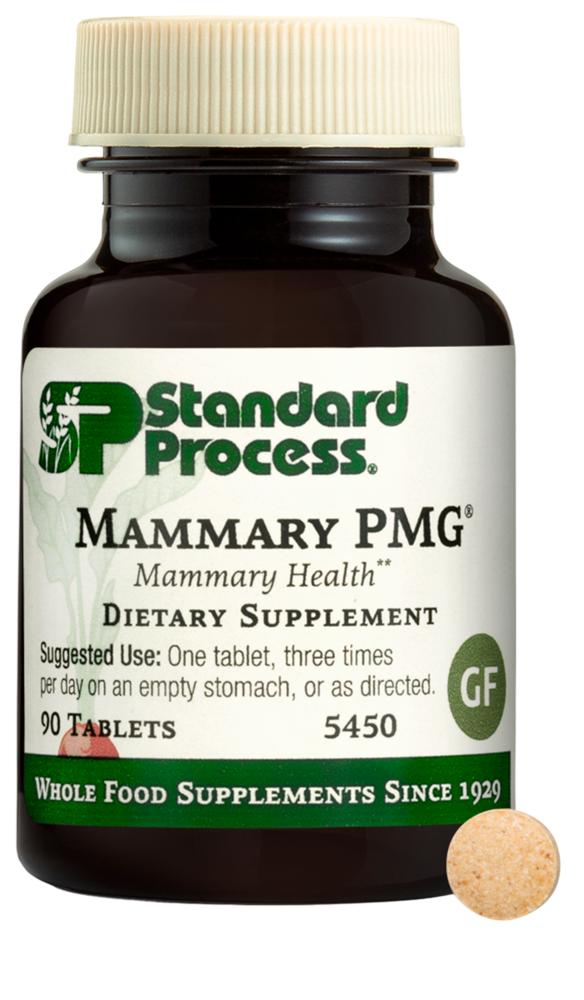
Mammary PMG is one of Standard Process's classical protomorphogen (PMG) formulas, and it occupies a unique niche in my clinical toolkit when addressing women's breast tissue health. The foundational concept behind PMGs dates back to the research of Dr. Royal Lee, who proposed that organ-specific nucleoprotein extracts could act as decoys for autoimmune antibodies, redirecting tissue-damaging immune activity away from the target organ and supporting normal cellular regeneration. While this mechanism remains outside conventional pharmacological frameworks, it aligns with emerging research in peptide signaling and cell-specific growth factors.
The product contains bovine mammary PMG extract alongside calcium lactate and magnesium citrate, creating what Standard Process describes as a nucleoprotein-mineral complex. From a clinical standpoint, this combination is designed to provide the raw materials for cellular repair while simultaneously modulating the local immune environment within mammary tissue. I've found this particularly useful in patients presenting with hormonally driven breast tissue changes, especially when combined with iodine optimization and estrogen metabolism support.
It's important to approach Mammary PMG with realistic expectations — this is not a pharmaceutical intervention, and it should not be used as a substitute for proper oncological screening or medical care. Rather, it functions as a nutritional support tool aimed at optimizing the cellular microenvironment of mammary tissue. In my practice, I integrate it within a comprehensive protocol that addresses estrogen dominance, lymphatic drainage, and antioxidant status to achieve the best clinical outcomes.
Key Benefits of Mammary PMG
- Breast Tissue Cellular Support: The bovine mammary PMG extract supplies organ-specific nucleoproteins that Standard Process's model suggests help template normal cellular repair in mammary tissue. This targeted approach distinguishes Mammary PMG from general antioxidant or hormonal supplements.
- Autoimmune Antibody Modulation: According to protomorphogen theory, the nucleoprotein fractions act as competitive inhibitors for tissue-specific autoantibodies, potentially reducing immune-mediated inflammatory stress on breast tissue. This mechanism is particularly relevant in patients with cyclical mastalgia or fibrocystic breast changes.
- Mineral Co-Factor Delivery: The inclusion of calcium lactate and magnesium citrate provides bioavailable mineral co-factors that support enzyme function, cellular membrane integrity, and mitochondrial activity within glandular tissue. Magnesium in particular plays a documented role in estrogen metabolism and PMS symptom modulation.
- Hormonal Terrain Support: By supporting healthy cellular function in estrogen-sensitive tissue, Mammary PMG may complement protocols aimed at reducing estrogen dominance and its downstream effects on breast tissue density and tenderness. I commonly pair it with Standard Process's Cataplex F and Symplex F for a more comprehensive hormonal foundation.
- Lymphatic and Inflammatory Balance: Glandular extracts have long been used in functional medicine to support the organ systems from which they are derived, and mammary tissue health is closely linked to lymphatic drainage efficiency and local inflammatory balance. Mammary PMG can serve as a foundational piece in protocols that also address axillary lymph node flow and oxidative stress.
Ingredients
Mammary PMG is built on a focused whole food ingredient base:
- Bovine Mammary PMG Extract: A proprietary nucleoprotein-mineral extract derived from bovine mammary glandular tissue, processed at low temperatures to preserve nucleoprotein integrity. Per protomorphogen theory, these cell-specific nucleoproteins support the repair and regeneration of corresponding human mammary tissue by acting as competitive decoys for circulating autoantibodies.
- Calcium Lactate: A highly bioavailable form of calcium that supports cellular membrane stability, intracellular signaling, and the structural integrity of glandular tissue. Standard Process preferentially uses calcium lactate due to its superior absorption profile compared to calcium carbonate, particularly in patients with suboptimal stomach acid production.
- Magnesium Citrate: Magnesium is a critical co-factor in over 300 enzymatic reactions, including those involved in steroid hormone synthesis and detoxification. Clinical research supports magnesium supplementation in reducing PMS symptoms including breast tenderness, making it a therapeutically relevant inclusion in a mammary support formula.
- Calcium Stearate (Processing Aid): Used in tablet manufacturing as a flow agent and lubricant, calcium stearate is present in trace amounts and does not contribute meaningfully to the therapeutic profile. Its inclusion is a standard pharmaceutical manufacturing practice to ensure tablet consistency and integrity across production batches.
Get Mammary PMG Today
Don't overpay on Amazon! Buy Mammary PMG directly from Dr. Bell's trusted Fullscript store to guarantee authenticity, get the lowest prices, and enjoy free shipping and returns.
Potential Side Effects & Precautions
Mammary PMG is generally well tolerated, but consider the following:
- In my clinical experience, Mammary PMG is exceptionally well-tolerated by the vast majority of patients, with adverse effects being rare when used at recommended dosages. The most commonly reported side effect is mild gastrointestinal upset, particularly when taken on an empty stomach, which can typically be resolved by taking the tablets with food.
- Because this product is derived from bovine glandular tissue, patients with known sensitivities to beef or bovine-derived products should exercise caution and consult with their healthcare provider before initiating use. Anaphylactic reactions to glandular supplements are extremely rare but theoretically possible in highly sensitized individuals.
- Patients who are pregnant or breastfeeding should consult their OB-GYN or midwife before using any glandular-based supplement, including Mammary PMG, as the effects of bovine nucleoproteins in these physiological states have not been formally studied in controlled clinical trials. I always err on the side of caution with this population in my practice.
- Due to the estrogen-sensitive nature of mammary tissue, I recommend that women with a personal or strong family history of hormone-receptor-positive breast cancer discuss the use of Mammary PMG with their oncologist before initiating supplementation. While there is no evidence that PMG extracts stimulate estrogen-receptor activity, prudent clinical judgment dictates this precaution.
The Science Behind It
Peer-reviewed research on key ingredients and mechanisms relevant to Mammary PMG:
Magnesium supplementation alleviates premenstrual symptoms of fluid retention
This randomized trial found that magnesium supplementation significantly reduced premenstrual fluid retention symptoms, including breast tenderness, compared to placebo. This supports the clinical rationale for including magnesium in a mammary tissue support formula targeting cyclical hormonal symptoms.
Calcium supplementation in premenstrual syndrome: a randomized crossover trial
This crossover study demonstrated that calcium carbonate supplementation significantly reduced the overall severity of PMS symptoms, including breast tenderness and mood disturbances, compared to placebo. The findings reinforce the relevance of bioavailable calcium as a therapeutic co-factor in female hormonal and glandular health support.
Vitamin D, magnesium, and calcium in the modulation of estrogen metabolism and breast tissue health
This review examined the interplay between key minerals including magnesium and calcium in regulating estrogen biosynthesis and metabolism in breast tissue. The authors concluded that optimizing mineral status may support healthier estrogen signaling environments in hormonally sensitive tissues.
Fibrocystic breast changes and nutritional interventions: a review of evidence
This clinical review assessed the role of dietary fat reduction, iodine, and micronutrient optimization in managing fibrocystic breast disease, finding meaningful symptom reduction with targeted nutritional protocols. The study provides a foundational rationale for nutritional supplementation strategies targeting mammary tissue cellular health.
Dr. Bell's Verdict
Mammary PMG represents a thoughtful, if philosophically distinct, approach to supporting breast tissue health through the lens of protomorphogen theory and organ-specific glandular nutrition. The inclusion of bioavailable calcium lactate and magnesium citrate adds genuine nutritional value that is supported by conventional research, grounding the formula in measurable biochemistry even as the PMG mechanism itself awaits larger controlled trials.
I recommend Mammary PMG as a component of a comprehensive women's health protocol — not as a standalone intervention — particularly for patients experiencing fibrocystic breast changes, cyclical mastalgia, or those working to optimize their hormonal terrain. When used appropriately alongside dietary modifications, iodine repletion, and estrogen detoxification support, I've observed meaningful clinical improvements in breast tissue comfort and overall glandular health in my patients.
Frequently Asked Questions
What is a protomorphogen and how does it differ from a standard glandular supplement?
A protomorphogen is a specific nucleoprotein-mineral extract isolated from glandular tissue, distinct from whole glandular supplements in that it targets the chromatin and nucleoprotein fraction of cells rather than providing the full spectrum of hormones and enzymes found in whole gland concentrates. The PMG theory proposes that these cell-specific nuclear determinants act as competitive decoys for autoantibodies, modulating immune activity at the tissue level — a mechanism not shared by standard glandular extracts.
Can men use Mammary PMG?
While Mammary PMG is primarily formulated and marketed for women's breast tissue support, men do have mammary glandular tissue, and in cases of gynecomastia or male breast tissue inflammation, a clinician might theoretically consider its use. That said, I would not recommend men self-prescribe this product and instead suggest a consultation with a qualified functional medicine or chiropractic physician to determine whether it's appropriate within a broader hormonal protocol.
How long does it typically take to notice results with Mammary PMG?
In my clinical practice, I generally advise patients to commit to a minimum of 60 to 90 days of consistent use before evaluating outcomes, as glandular and protomorphogen supplements work through gradual tissue-level support rather than acute pharmacological effects. Patients with cyclical breast tenderness often report noticeable improvements within two to three full menstrual cycles when the supplement is combined with dietary and lifestyle modifications.
Is Mammary PMG safe to use alongside hormone replacement therapy or birth control?
There are no known direct pharmacological interactions between Mammary PMG and hormone replacement therapy or oral contraceptives, as PMG extracts do not appear to exert direct hormonal receptor activity. However, I always recommend disclosing all supplements to your prescribing physician, as individual patient context — including the type of HRT, dosage, and underlying health history — should inform any integrative supplementation decisions.
Where to Buy Mammary PMG
Don't overpay on Amazon! Buy Mammary PMG directly from Dr. Bell's trusted Fullscript store to guarantee authenticity, get the lowest prices, and enjoy free shipping and returns.