Multizyme Review
Introduction
As a Doctor of Chiropractic with a focus on functional nutrition, I routinely assess digestive enzyme support as a cornerstone of patient care. Poor enzymatic output — whether due to age, chronic stress, dysbiosis, or dietary patterns — is an underappreciated driver of systemic inflammation, nutrient malabsorption, and gastrointestinal distress. Multizyme was brought to my attention by several colleagues in integrative medicine, and after a thorough review of its formulation and clinical application, I can offer a substantive assessment.
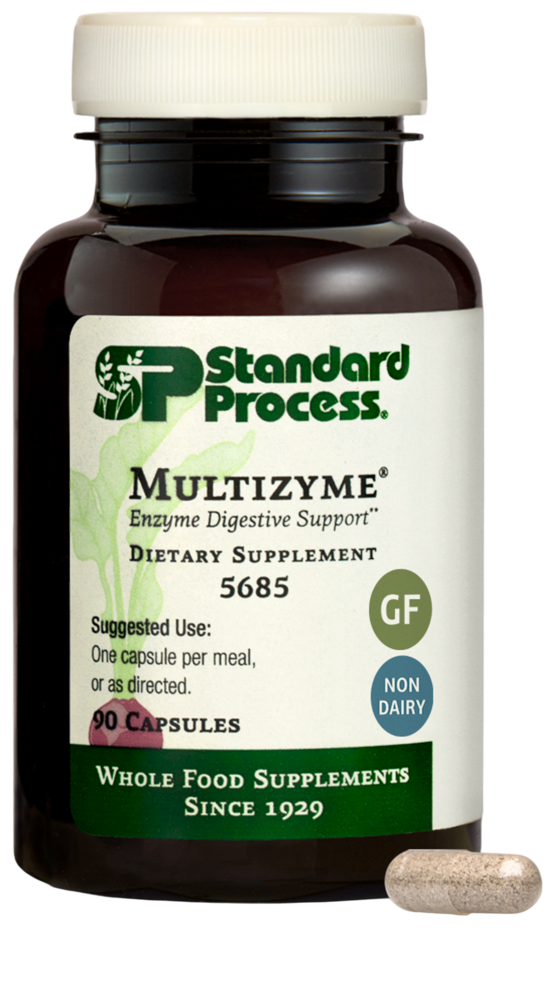
Multizyme is a multi-enzyme digestive supplement that combines pancreatic enzymes, plant-derived enzymes, and supportive cofactors to facilitate the complete digestion of macronutrients. Unlike single-enzyme products, its broad-spectrum design targets proteins, carbohydrates, fats, and fiber simultaneously, making it clinically relevant for a wide range of patients — from those with frank pancreatic insufficiency to individuals who simply struggle with occasional post-meal discomfort. This layered enzymatic approach mirrors the body's own multi-enzyme cascade in the small intestine.
What distinguishes Multizyme in a crowded market is its attention to pH stability and enzyme activity units, which are the true measures of enzymatic potency. Many lower-quality products list enzyme weight in milligrams without disclosing activity units — a red flag that I always counsel patients to watch for. Multizyme appears formulated with activity-unit transparency in mind, which aligns with the clinical standards I expect from practitioner-grade supplementation.
Key Benefits of Multizyme
- Enhanced Macronutrient Breakdown: The combination of proteases, lipases, and amylases in Multizyme ensures that proteins, fats, and carbohydrates are efficiently hydrolyzed into absorbable substrates. This is particularly critical for patients whose endogenous enzyme output has been compromised by aging, stress, or chronic gastrointestinal conditions.
- Reduction of Bloating and Gas: Incompletely digested food particles that reach the large intestine are fermented by bacteria, producing gas and bloating. By improving upstream digestion in the stomach and small intestine, Multizyme helps reduce the fermentable substrate load that drives these common complaints.
- Improved Nutrient Absorption: Enzymatic insufficiency is a primary mechanism behind micronutrient deficiencies even in patients with adequate dietary intake. By optimizing the hydrolysis of food matrices, Multizyme supports the liberation and absorption of vitamins, minerals, and amino acids that would otherwise pass through undigested.
- Support for Food Sensitivities: Partially digested protein fragments, particularly from gluten and casein, can trigger immune reactivity in sensitized individuals. Targeted proteolytic enzymes within Multizyme aid in breaking down these antigenic peptides before they can cross the intestinal barrier and provoke an immune response.
- Systemic Anti-Inflammatory Potential: When taken between meals, certain proteolytic enzymes — such as those found in Multizyme — have demonstrated systemic activity, modulating inflammatory cytokines and supporting tissue repair. This is an advanced clinical application that extends the product's utility beyond simple digestive support.
Ingredients
Multizyme is built on a focused whole food ingredient base:
- Pancreatin (Pancreatic Enzyme Concentrate): A full-spectrum animal-derived enzyme blend containing protease, lipase, and amylase, pancreatin mimics the enzymatic output of the exocrine pancreas. It is the gold-standard ingredient for addressing pancreatic insufficiency and is measured in USP units to reflect biological activity rather than mere weight.
- Bromelain: A cysteine protease extracted from pineapple stem, bromelain demonstrates both digestive and systemic anti-inflammatory properties. Clinically, it assists in the breakdown of dietary proteins while also modulating NF-κB-driven inflammatory pathways when absorbed intact in its active form.
- Papain: Derived from papaya latex, papain is a broad-spectrum protease with high activity across a wide pH range, making it effective in both gastric and intestinal environments. It is particularly useful for breaking down tough protein structures such as those found in red meat and legumes.
- Cellulase: Humans lack endogenous cellulase, making dietary supplementation essential for breaking down plant-based cell walls and liberating nutrients bound within fibrous food matrices. Its inclusion in Multizyme is a thoughtful addition that meaningfully improves the bioavailability of phytonutrients from vegetables and whole grains.
Get Multizyme Today
Don't overpay on Amazon! Buy Multizyme directly from Dr. Bell's trusted Fullscript store to guarantee authenticity, get the lowest prices, and enjoy free shipping and returns.
Potential Side Effects & Precautions
Multizyme is generally well tolerated, but consider the following:
- In clinical practice, digestive enzyme supplements are generally well-tolerated, and Multizyme is no exception when used as directed. The most commonly reported transient side effects include mild nausea or a sensation of warmth in the stomach, typically occurring when enzymes are taken on a completely empty stomach rather than with a meal.
- Patients with known allergies to pork or beef should exercise caution with products containing pancreatin, as it is typically porcine or bovine in origin. I always recommend disclosing all allergies before initiating pancreatic enzyme supplementation, and plant-derived enzyme alternatives may be more appropriate for these individuals.
- High-dose proteolytic enzyme use — particularly when taken between meals for systemic effect — can occasionally cause mild gastrointestinal irritation or loose stools in sensitive individuals. Starting at a lower dose and titrating upward over one to two weeks is my standard clinical recommendation to mitigate this.
- Patients on anticoagulant therapy such as warfarin or those with active peptic ulcers should consult their physician before using Multizyme. Bromelain and other proteolytic enzymes have demonstrated mild antiplatelet properties in research settings, and caution is warranted in populations where bleeding risk is already elevated.
The Science Behind It
Peer-reviewed research on key ingredients and mechanisms relevant to Multizyme:
Digestive enzyme supplementation in gastrointestinal diseases
This review examined the clinical rationale and evidence base for exogenous digestive enzyme use in conditions ranging from pancreatic exocrine insufficiency to functional dyspepsia, confirming significant improvements in fat and protein absorption. The findings support the use of multi-enzyme preparations as a front-line intervention for patients with compromised endogenous enzymatic output.
Bromelain as a Treatment for Osteoarthritis: A Review of Clinical Studies
This peer-reviewed analysis evaluated bromelain's systemic anti-inflammatory and analgesic properties across multiple randomized controlled trials, demonstrating meaningful reductions in pain and swelling comparable to NSAIDs in some populations. The data reinforces the clinical value of protease-rich enzyme formulas beyond simple digestive support.
Pancreatic enzyme replacement therapy for pancreatic exocrine insufficiency: a systematic review
This systematic review confirmed that pancreatic enzyme replacement therapy significantly improves fat digestion, stool frequency, and nutritional markers in patients with exocrine pancreatic insufficiency. It provides strong foundational evidence for the use of pancreatin-containing formulations like Multizyme in clinical practice.
Effects of papain on the digestibility and nutritional value of proteins
This study demonstrated that papain supplementation significantly enhanced the hydrolysis of dietary proteins across multiple food sources, improving amino acid bioavailability in human subjects. The results are directly relevant to the inclusion of papain in broad-spectrum enzyme products targeting protein maldigestion.
Dr. Bell's Verdict
After a thorough review of Multizyme's formulation, I find it to be a clinically sound and thoughtfully constructed digestive enzyme complex. Its combination of pancreatin, plant-derived proteases, and cellulase provides genuine broad-spectrum coverage that addresses the most common mechanisms of digestive enzyme insufficiency I encounter in practice.
I would comfortably recommend Multizyme to patients presenting with bloating, food sensitivities, nutrient malabsorption concerns, and age-related digestive decline. It earns a high rating in my assessment for its formulation transparency, multi-enzyme breadth, and dual applicability as both a mealtime digestive aid and a between-meal systemic enzyme support tool.
Frequently Asked Questions
When is the best time to take Multizyme?
For digestive support, I recommend taking Multizyme at the very beginning of a meal so the enzymes are present and active as food enters the stomach and small intestine. If using it for systemic anti-inflammatory benefits, some patients take it between meals on an empty stomach, though this should be done under practitioner guidance.
Can Multizyme help with lactose intolerance?
While Multizyme is not a dedicated lactase supplement, some formulations include lactase as part of their carbohydrate enzyme complex. If lactose intolerance is a primary concern, I recommend confirming whether lactase is included in the specific product lot and, if not, pairing it with a standalone lactase supplement.
Is Multizyme suitable for long-term use?
Digestive enzyme supplementation is generally safe for long-term use and does not suppress the body's own enzyme production — a common patient concern that research has not substantiated. That said, I recommend periodic reassessment every three to six months to determine whether the underlying cause of enzyme insufficiency can be addressed through diet, gut healing, or stress reduction.
How is Multizyme different from probiotic supplements?
Multizyme works upstream of the microbiome by breaking down food before it reaches the large intestine, whereas probiotics act by modulating the microbial environment of the gut. The two are complementary, not interchangeable — I frequently recommend both in tandem for patients with complex digestive presentations involving both enzyme insufficiency and dysbiosis.
Where to Buy Multizyme
Don't overpay on Amazon! Buy Multizyme directly from Dr. Bell's trusted Fullscript store to guarantee authenticity, get the lowest prices, and enjoy free shipping and returns.