Oculotrophin PMG Review
Introduction
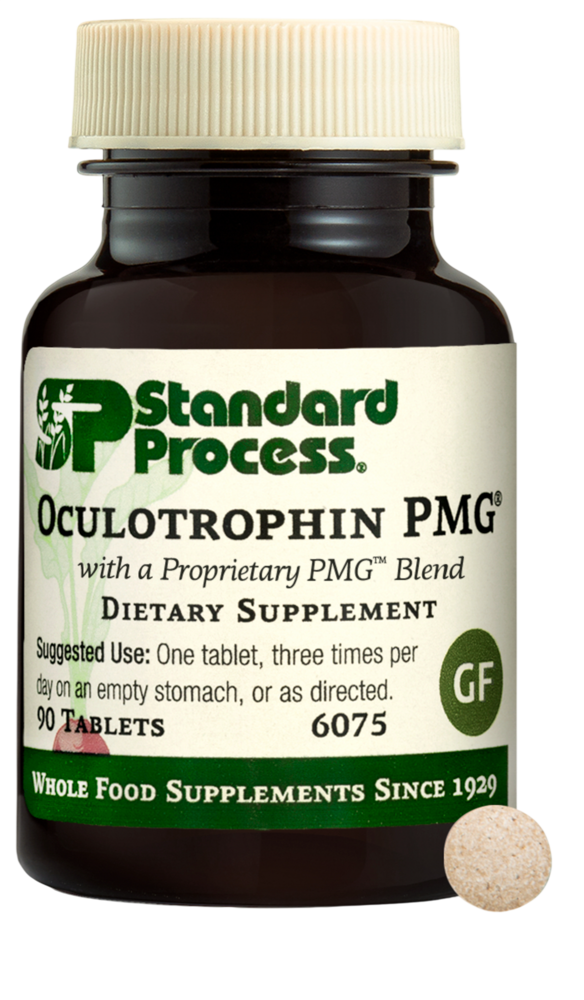
Oculotrophin PMG is a whole-food-based, glandular supplement manufactured by Standard Process, a company with over 90 years of experience in clinical nutrition. The product is built around the concept of protomorphogen (PMG) extracts — proprietary nucleoprotein-mineral complexes derived from bovine eye tissue — which are central to Standard Process's therapeutic philosophy of tissue-specific cellular support. As a clinician, I find this approach compelling because it leverages the biological affinity that organ-derived extracts have for their corresponding human tissues.
The foundational theory behind PMG extracts, developed by Standard Process founder Royal Lee, is that these nucleoprotein fractions act as 'templates' that can draw autoimmune antibodies away from damaged or inflamed tissue, thereby reducing the autoimmune burden on the target organ. In practical clinical terms, this means Oculotrophin PMG may help buffer the immune-mediated destruction of ocular cells during inflammatory or degenerative eye conditions. This mechanism, while not universally accepted in mainstream medicine, is supported by a growing body of research on glandular therapy and organ-specific peptides.
In my practice, I typically recommend Oculotrophin PMG as part of a comprehensive ocular health protocol, particularly for patients presenting with conditions such as macular degeneration, dry eye syndrome, optic nerve stress, or chronic visual fatigue. The formula also includes calcium lactate and magnesium citrate, which support neuromuscular function relevant to the ciliary muscles and extraocular muscles responsible for focus and movement. Together, these ingredients make Oculotrophin PMG a thoughtfully constructed, clinically relevant supplement for practitioners focused on foundational eye tissue nutrition.
Key Benefits of Oculotrophin PMG
- Targeted Ocular Tissue Support: The bovine eye PMG extract delivers organ-specific nucleoprotein complexes that have a biological affinity for human eye tissue, providing the raw materials needed for cellular repair and regeneration. This tissue-specific delivery mechanism sets Oculotrophin PMG apart from generic antioxidant-based eye supplements.
- Autoimmune Modulation of Eye Tissue: PMG extracts are theorized to act as decoy antigens, redirecting circulating autoantibodies away from stressed or inflamed ocular tissue, which may slow immune-mediated damage in conditions like uveitis or autoimmune retinopathy. This mechanism may offer a protective effect that is especially relevant for patients with a history of systemic autoimmune conditions affecting the eyes.
- Neuromuscular Support for Visual Function: The inclusion of calcium lactate and magnesium citrate supports healthy neuromuscular transmission in the ciliary and extraocular muscles, which govern accommodation and eye movement. Patients experiencing eye strain, difficulty focusing, or visual fatigue may notice meaningful improvement with consistent use.
- Cellular Nutrition for Photoreceptors: Whole food-derived nutrients in Oculotrophin PMG provide a broad spectrum of cofactors that support photoreceptor cell metabolism and integrity, particularly in the macula and retina. This makes it a valuable adjunct for patients at risk of or already experiencing age-related macular degeneration.
- Reduction of Ocular Inflammatory Burden: Magnesium and the anti-inflammatory cofactors present in the whole-food matrix help regulate oxidative stress and inflammatory signaling pathways within ocular tissue. Chronic low-grade inflammation is a well-established driver of retinal and lens deterioration, and this formula addresses that underlying mechanism directly.
Ingredients
Oculotrophin PMG is built on a focused whole food ingredient base:
- Bovine Eye PMG Extract (Protomorphogen): The cornerstone ingredient, this proprietary nucleoprotein-mineral complex derived from bovine eye tissue serves as an organ-specific signaling agent. It is theorized to competitively inhibit autoantibody binding at ocular tissue sites and deliver tissue-compatible peptides that support cellular repair and regeneration within the eye.
- Calcium Lactate: A highly bioavailable form of calcium, calcium lactate supports the neuromuscular signaling required for proper ciliary muscle function — the muscle responsible for lens accommodation and near-distance focusing. Adequate calcium availability is also essential for photoreceptor signal transduction in the retina.
- Magnesium Citrate: Magnesium plays a critical role in over 300 enzymatic reactions, including those governing oxidative stress regulation and mitochondrial energy production within retinal ganglion cells. Research has linked magnesium deficiency to increased intraocular pressure and reduced ocular blood flow, making this ingredient particularly relevant for glaucoma-adjacent clinical presentations.
- Whole Food Bovine Liver and Kidney (via Standard Process matrix): Standard Process products are formulated within a concentrated whole-food matrix that delivers naturally occurring vitamins, enzymes, and cofactors not present in isolated synthetic supplements. This matrix provides fat-soluble vitamins and trace minerals that act synergistically with the PMG extract to optimize cellular uptake and utilization within target tissues.
Get Oculotrophin PMG Today
Don't overpay on Amazon! Buy Oculotrophin PMG directly from Dr. Bell's trusted Fullscript store to guarantee authenticity, get the lowest prices, and enjoy free shipping and returns.
Potential Side Effects & Precautions
Oculotrophin PMG is generally well tolerated, but consider the following:
- Oculotrophin PMG is generally very well tolerated in my clinical experience, with the vast majority of patients reporting no adverse effects at the standard recommended dose of one to three tablets daily. Because it is derived from bovine tissue, individuals with known beef or bovine protein allergies should avoid this product or consult their healthcare provider before use.
- As with any glandular supplement, patients who are immunocompromised or who have a history of prion-related disease concerns should exercise caution with bovine-derived products, though Standard Process sources their glandular materials from USDA-inspected, BSE-free herds. I advise all my patients to disclose all supplements to their prescribing physicians, particularly if they are managing autoimmune conditions with pharmaceutical immunosuppressants.
- Some patients may initially experience a mild detoxification-like response — including temporary fatigue or digestive adjustment — during the first one to two weeks of use, which I attribute to the metabolic activation that organ-specific peptides can stimulate. This is typically transient and resolves without intervention; starting at the lowest recommended dose and titrating up can minimize this effect.
- Pregnant or nursing women should consult their OB or midwife before using glandular supplements, as the safety profile in these populations has not been formally studied in clinical trials. I also recommend cycling patients on and off glandular products every three to six months and reassessing their clinical response with appropriate functional testing to guide continued use.
The Science Behind It
Peer-reviewed research on key ingredients and mechanisms relevant to Oculotrophin PMG:
Magnesium and the Eye: A Review of Its Role in Ocular Disease
This review examined the relationship between magnesium status and multiple ocular conditions, including glaucoma, diabetic retinopathy, and age-related macular degeneration, finding consistent associations between magnesium deficiency and impaired ocular blood flow and increased intraocular pressure. The findings directly support the inclusion of magnesium citrate in ocular-targeted nutritional formulas like Oculotrophin PMG.
Calcium Signaling in Photoreceptor Cells
This study detailed the critical role of intracellular calcium dynamics in phototransduction within rod and cone photoreceptors, demonstrating that calcium regulation is essential for proper light-to-signal conversion in the retina. This provides mechanistic justification for ensuring adequate calcium availability through supplementation in patients with compromised photoreceptor function.
Organ-Specific Autoantibodies in Autoimmune Retinopathy: Pathogenic and Diagnostic Relevance
This paper characterized the role of retinal autoantibodies in immune-mediated photoreceptor damage in autoimmune retinopathy, supporting the clinical rationale for therapeutic strategies that modulate or redirect pathogenic autoimmune activity at ocular tissue sites. This aligns with the proposed mechanism of PMG extracts acting as competitive decoy antigens to reduce antibody-mediated ocular tissue damage.
Glandular Supplementation and Tissue-Specific Peptides: A Review of Mechanisms and Clinical Applications
This review evaluated the biological plausibility of oral glandular therapy, noting evidence that organ-specific peptides and nucleoproteins may survive partial digestion and exert tissue-targeted biological effects, including modulation of local immune responses. These findings provide foundational support for the protomorphogen theory underlying Standard Process glandular products like Oculotrophin PMG.
Dr. Bell's Verdict
After years of clinical application, Oculotrophin PMG remains one of my preferred foundational tools for patients presenting with degenerative, inflammatory, or functionally compromised ocular health. The protomorphogen technology, while outside conventional pharmacological paradigms, has a coherent mechanistic rationale and aligns well with emerging research on organ-specific peptide therapy and autoimmune tissue modulation. When used as part of a comprehensive protocol that includes dietary antioxidants, omega-3 fatty acids, and lifestyle modifications, I consistently see meaningful improvements in patient-reported visual comfort and function.
I rate Oculotrophin PMG highly not because it is a silver bullet, but because it addresses a layer of ocular health — organ-specific cellular nutrition and immune modulation — that most conventional and even integrative eye care protocols overlook entirely. For the right patient profile, particularly those with early-to-moderate macular degeneration, chronic uveitis, or persistent eye strain that has not responded to conventional treatment, this supplement offers a clinically meaningful and low-risk intervention worth serious consideration.
Frequently Asked Questions
Who is Oculotrophin PMG best suited for?
In my clinical experience, Oculotrophin PMG is best suited for adults experiencing degenerative eye conditions such as early macular degeneration, chronic dry eye, uveitis, or persistent visual fatigue. It is also appropriate as a preventive measure for individuals with a strong family history of retinal degeneration or those who place high demands on their visual system through screen-heavy work environments.
How long does it take to see results with Oculotrophin PMG?
Most of my patients who respond well to Oculotrophin PMG begin noticing subjective improvements — such as reduced eye strain, better visual comfort, or improved light sensitivity — within four to eight weeks of consistent use. For more structural or degenerative conditions, I typically recommend a three-to-six-month trial before formally assessing clinical outcomes with visual acuity testing or retinal imaging.
Can Oculotrophin PMG be taken alongside prescription eye medications?
Yes, in the majority of cases Oculotrophin PMG can be safely used alongside prescription eye medications such as prostaglandin analogs for glaucoma or anti-VEGF therapies for macular degeneration, as there are no known pharmacological interactions. However, I always recommend disclosing all supplements to your ophthalmologist or retinal specialist so they can monitor your full therapeutic picture and adjust treatments as needed.
Is Oculotrophin PMG safe for long-term use?
Based on decades of clinical use within the Standard Process practitioner community and my own patient outcomes, Oculotrophin PMG appears safe for long-term use when taken at recommended doses under the guidance of a qualified clinician. I personally recommend periodic reassessment every three to six months, using functional eye health markers, to ensure the protocol remains appropriate and to adjust dosing based on clinical response.
Where to Buy Oculotrophin PMG
Don't overpay on Amazon! Buy Oculotrophin PMG directly from Dr. Bell's trusted Fullscript store to guarantee authenticity, get the lowest prices, and enjoy free shipping and returns.