OPC Synergy Review
Introduction
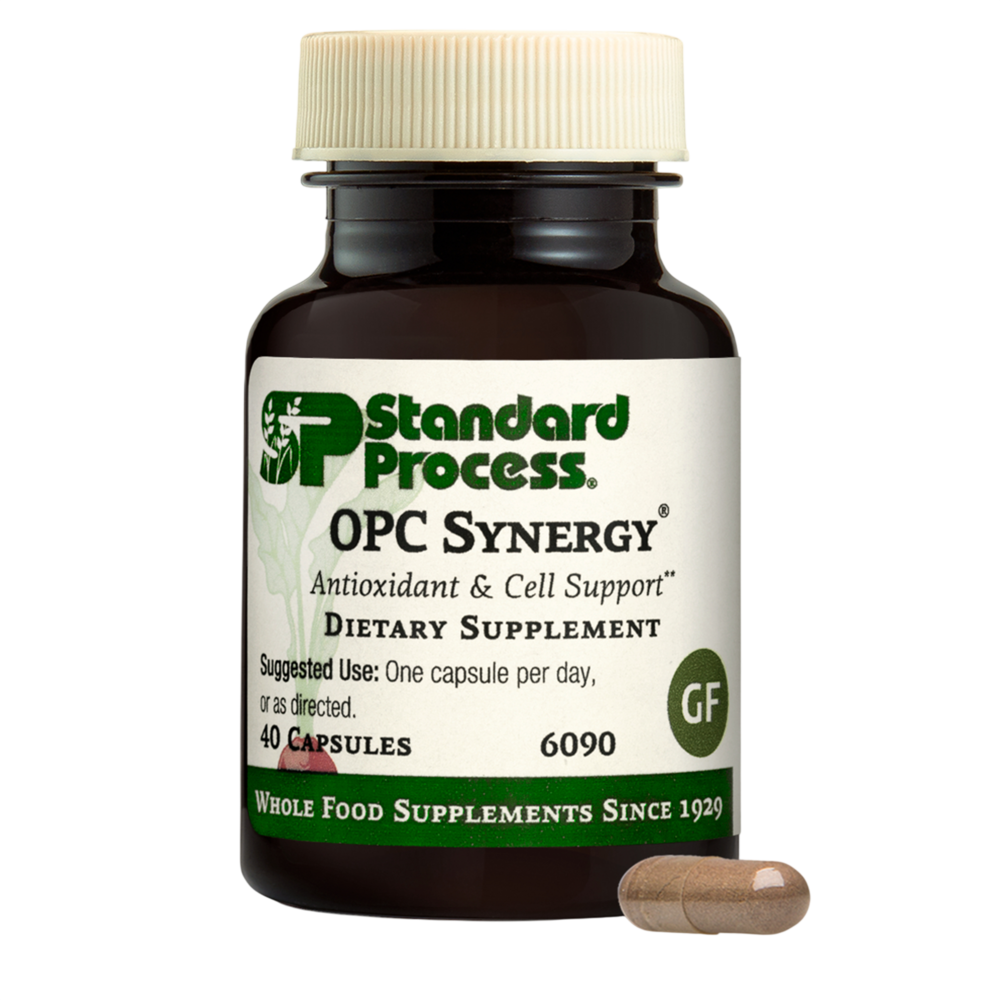
OPC Synergy is built around a class of bioflavonoids known as oligomeric proanthocyanidins — naturally occurring polyphenols found in grape seeds, pine bark, and select berry extracts. These compounds have attracted significant clinical interest because of their exceptional free-radical scavenging capacity, which by some measures exceeds that of vitamins C and E by a substantial margin. In my practice, I consider OPC-based formulas foundational for patients with high oxidative load, whether from environmental toxins, chronic disease, or metabolic dysfunction.
What distinguishes OPC Synergy from generic antioxidant blends is its synergistic design. Rather than relying on a single OPC source, the formula combines multiple proanthocyanidin-rich botanicals to cover a wider range of free radical species and tissue targets. This matters clinically because different tissues — vascular endothelium, collagen matrices, neural tissue — respond preferentially to specific polyphenol subtypes, and a multi-source approach maximizes systemic coverage.
From a mechanism standpoint, OPCs work through several overlapping pathways: direct radical neutralization, upregulation of endogenous antioxidant enzymes like superoxide dismutase and catalase, inhibition of pro-inflammatory cytokines such as NF-κB and COX-2, and cross-linking stabilization of collagen and elastin. This makes OPC Synergy more than a simple antioxidant — it functions as a vascular and connective tissue protectant with meaningful downstream effects on circulation, immune regulation, and tissue integrity.
Key Benefits of OPC Synergy
- Powerful Antioxidant Defense: OPCs from grape seed and pine bark exhibit an oxygen radical absorbance capacity (ORAC) value significantly higher than most isolated antioxidant nutrients, providing broad-spectrum neutralization of reactive oxygen species. This is particularly valuable for patients with chronic inflammation, high-stress lifestyles, or exposure to environmental pollutants.
- Vascular and Capillary Integrity: OPCs have a well-documented affinity for vascular endothelium, where they stabilize collagen and elastin, reduce capillary permeability, and support healthy blood pressure by promoting nitric oxide bioavailability. Clinically, I see meaningful improvement in patients with easy bruising, spider veins, or venous insufficiency within 6 to 8 weeks of consistent use.
- Anti-Inflammatory Modulation: Proanthocyanidins inhibit key inflammatory signaling pathways including NF-κB activation and arachidonic acid metabolism, reducing the downstream production of prostaglandins and pro-inflammatory cytokines. This makes OPC Synergy a useful adjunct for patients managing systemic inflammation, joint discomfort, or inflammatory cardiovascular risk factors.
- Immune System Regulation: The polyphenol constituents in OPC Synergy have demonstrated immunomodulatory effects, supporting appropriate immune activation while attenuating excessive or misdirected immune responses associated with allergies and autoimmune tendencies. Pine bark extract in particular has shown benefits in modulating histamine release and mast cell activity, making this formula relevant for allergy-prone patients.
- Collagen Synthesis and Skin Health: OPCs actively participate in collagen cross-linking and protect existing collagen from enzymatic degradation by inhibiting collagenase and elastase activity. Patients often report improvements in skin elasticity, wound healing, and overall skin tone, which reflects the formula's systemic connective tissue support beyond just cosmetic benefit.
Ingredients
OPC Synergy is built on a focused whole food ingredient base:
- Grape Seed Extract (Vitis vinifera): Standardized to a high percentage of oligomeric proanthocyanidins, grape seed extract is the cornerstone of this formula and one of the most extensively studied polyphenol sources for cardiovascular protection, endothelial function, and antioxidant enzyme upregulation. It preferentially accumulates in vascular tissues and has demonstrated blood pressure-lowering effects in clinical trials.
- Pine Bark Extract (Pinus maritima / Pycnogenol): Derived from the bark of the French maritime pine, this extract contains a unique blend of procyanidins, catechins, and phenolic acids that complement grape seed OPCs while offering additional benefits for platelet aggregation, nitric oxide synthesis, and inflammatory cytokine suppression. It is particularly well-studied for circulation, cognitive support, and allergy symptom reduction.
- Bilberry Extract (Vaccinium myrtillus): Rich in anthocyanins — a closely related class of flavonoids — bilberry extract extends the formula's antioxidant coverage to ocular vasculature, retinal integrity, and night vision acuity. Anthocyanins also demonstrate complementary anti-inflammatory and collagen-stabilizing properties that synergize with the proanthocyanidin components.
- Vitamin C (as Ascorbic Acid): Included at a meaningful dose to regenerate oxidized OPC molecules back to their active antioxidant form, creating a recycling synergy that extends the functional lifespan of the polyphenol compounds. Vitamin C also independently supports collagen hydroxylation and immune competence, making it a mechanistically logical co-factor in this formulation.
Get OPC Synergy Today
Don't overpay on Amazon! Buy OPC Synergy directly from Dr. Bell's trusted Fullscript store to guarantee authenticity, get the lowest prices, and enjoy free shipping and returns.
Potential Side Effects & Precautions
OPC Synergy is generally well tolerated, but consider the following:
- OPC Synergy is generally well-tolerated across most patient populations, with an excellent safety profile established across decades of clinical use and multiple human trials. The most commonly reported minor adverse effects include mild gastrointestinal discomfort — such as nausea or loose stools — particularly when taken on an empty stomach, which I advise against.
- Patients on anticoagulant or antiplatelet medications such as warfarin or clopidogrel should exercise caution and consult their prescribing physician before initiating OPC supplementation, as proanthocyanidins possess mild blood-thinning properties that could theoretically potentiate pharmaceutical anticoagulation. While clinically significant interactions are uncommon, monitoring is prudent in high-risk individuals.
- Individuals with known allergies to grapes, pine, or related botanical families should review the ingredient sourcing carefully and consider patch-testing or starting at a low dose with medical supervision. Cross-reactivity reactions, though rare, have been reported and warrant appropriate clinical vigilance.
- Pregnant and breastfeeding women should avoid OPC Synergy unless specifically directed by their healthcare provider, as sufficient safety data in these populations remains limited. Children and adolescents should likewise only use this product under professional supervision, as most clinical trials have been conducted in adult populations.
The Science Behind It
Peer-reviewed research on key ingredients and mechanisms relevant to OPC Synergy:
Grape seed extract lowers blood pressure in metabolic syndrome: a double-blind, placebo-controlled trial
This randomized controlled trial found that 300 mg/day of grape seed extract significantly reduced both systolic and diastolic blood pressure in subjects with metabolic syndrome over 16 weeks. The findings support OPC-rich grape seed extract as a clinically meaningful intervention for cardiovascular risk reduction, directly relevant to OPC Synergy's vascular support claims.
Pycnogenol supplementation in patients with mild cognitive impairment and oxidative stress markers
This study demonstrated that Pycnogenol (pine bark extract) supplementation significantly improved cognitive function and reduced oxidative stress biomarkers in older adults with mild cognitive impairment over eight weeks. The results highlight the multi-tissue antioxidant and neuroprotective benefits of pine bark OPCs, one of OPC Synergy's core ingredients.
Oligomeric proanthocyanidins from grape seeds inhibit NF-κB pathway and reduce inflammatory cytokine production
This in vitro and in vivo investigation confirmed that grape seed proanthocyanidins suppress NF-κB-mediated inflammatory gene expression and reduce circulating levels of TNF-α and IL-6 in a dose-dependent manner. These findings provide mechanistic validation for the anti-inflammatory applications of OPC-containing formulas like OPC Synergy.
Bilberry anthocyanins protect against oxidative stress and improve retinal vascular function
This study demonstrated that bilberry extract anthocyanins significantly reduced markers of oxidative damage in retinal tissue and improved microvascular blood flow parameters in subjects with early retinal dysfunction. These findings support the inclusion of bilberry in multi-OPC formulas intended to protect vascular and ocular tissue integrity.
Dr. Bell's Verdict
After reviewing the formulation, mechanisms, and available clinical literature, I consider OPC Synergy to be among the most well-constructed polyphenol supplements currently available. The multi-source OPC approach, reinforced by the inclusion of vitamin C as a synergistic co-factor, addresses oxidative stress and vascular dysfunction through several complementary pathways simultaneously — which aligns well with how chronic disease actually manifests in real patients.
I recommend this formula most confidently for patients presenting with cardiovascular risk factors, connective tissue fragility, chronic inflammatory conditions, or elevated oxidative stress markers on functional lab panels. At appropriate doses — typically one to two capsules daily with food — patients can expect meaningful antioxidant support within weeks, with cumulative vascular and anti-inflammatory benefits emerging over one to three months of consistent use.
Frequently Asked Questions
How long does it take to notice results from OPC Synergy?
Most patients begin noticing improvements in energy, skin quality, or reduced bruising within four to six weeks of consistent daily use. Deeper vascular and anti-inflammatory benefits — such as improved circulation or reduced joint discomfort — typically develop over two to three months, reflecting the time required for tissue-level polyphenol accumulation and collagen remodeling.
Can I take OPC Synergy alongside other antioxidant supplements?
Yes, OPC Synergy pairs well with other antioxidants such as vitamin E, CoQ10, alpha-lipoic acid, and resveratrol, as these compounds operate through complementary mechanisms and can mutually enhance each other's activity through antioxidant network recycling. I typically recommend building a layered antioxidant protocol tailored to each patient's specific oxidative stress burden and health goals.
Is OPC Synergy appropriate for managing seasonal allergies?
There is good mechanistic and some clinical evidence supporting OPC use — particularly pine bark extract — for reducing histamine release and attenuating allergic inflammatory responses. While it is not a replacement for pharmaceutical allergy management in severe cases, I have found it a useful adjunct for patients with mild to moderate seasonal allergies, especially when combined with other mast cell-stabilizing nutrients.
Does OPC Synergy need to be cycled, or can it be taken continuously?
Unlike some adaptogenic or hormone-modulating supplements, OPC Synergy does not require cycling and is appropriate for continuous long-term use based on available safety data. I typically reassess supplementation protocols every six months in practice, but there is no pharmacological reason to interrupt OPC supplementation in healthy adults using it for ongoing antioxidant and vascular maintenance.
Where to Buy OPC Synergy
Don't overpay on Amazon! Buy OPC Synergy directly from Dr. Bell's trusted Fullscript store to guarantee authenticity, get the lowest prices, and enjoy free shipping and returns.