Phosfood Liquid Review
Introduction
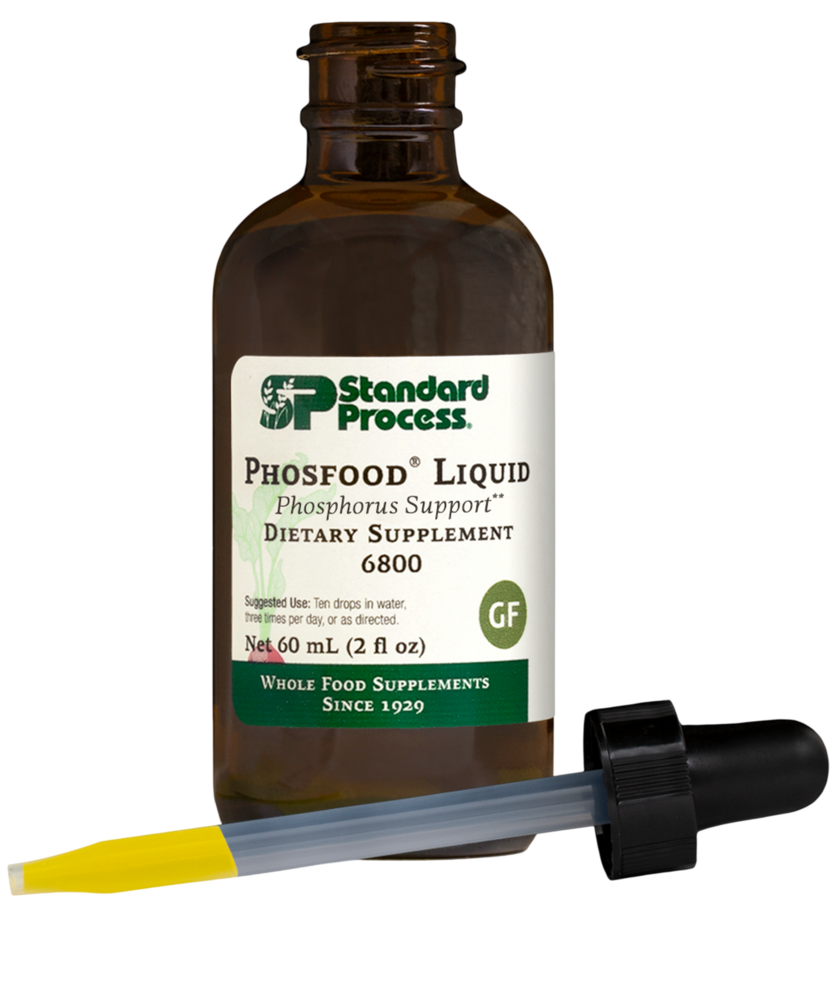
Phosfood Liquid is one of the longer-standing products in the Standard Process catalog, and in my clinical practice I've found it to be a deceptively simple yet highly functional supplement. Its primary active constituent is orthophosphoric acid — a form of phosphorus that, when properly dosed, plays a meaningful role in urinary pH regulation, calcium binding, and bile chemistry. What makes it stand out is its liquid, concentrated delivery, which allows for precise dosing and rapid absorption compared to tablet-based phosphorus supplements.
Phosphorus is the second most abundant mineral in the human body, yet it rarely gets the clinical attention it deserves. It is essential to ATP synthesis, bone mineralization, phospholipid membrane integrity, and acid-base buffering. In the context of Phosfood Liquid, we're specifically leveraging the acidifying properties of orthophosphoric acid to shift urinary chemistry — a mechanism that has important downstream implications for kidney stone prevention and calcium oxalate crystal dissolution.
From a functional medicine standpoint, I also use Phosfood Liquid as part of bile support protocols. Phosphorus compounds play a role in bile salt formation and fat emulsification, and many patients with sluggish gallbladder function or a history of cholesterol-based gallstones benefit from the gentle acidification and bile-thinning effects this product can provide. It is a practitioner-only supplement for good reason — dosing must be individualized and monitored, particularly in patients with kidney disease or electrolyte sensitivities.
Key Benefits of Phosfood Liquid
- Urinary pH Acidification: Orthophosphoric acid lowers urinary pH, creating an environment less hospitable to calcium oxalate and calcium phosphate crystal formation. This makes Phosfood Liquid a cornerstone tool in my kidney stone prevention protocols for hypercalciuric patients.
- Calcium Metabolism Regulation: Phosphorus and calcium exist in a carefully balanced physiological ratio, and adequate phosphorus helps prevent excessive free calcium from depositing in soft tissues or forming renal calculi. By supporting this balance, Phosfood Liquid helps redirect calcium toward bone rather than pathological sites.
- Bile Flow and Gallbladder Support: Phosphoric acid contributes to the bile acid pool and supports the emulsification of dietary fats in the small intestine. Clinically, I've observed improved fat digestion and reduced right-upper-quadrant discomfort in patients using Phosfood as part of a gallbladder support protocol.
- ATP and Cellular Energy Support: Phosphorus is a structural component of adenosine triphosphate (ATP), the body's primary energy currency, and phosphorylation reactions underpin virtually every energy-dependent cellular process. Supplementing with a bioavailable phosphorus source may help support energy metabolism in patients with functional deficiency patterns.
- Bone Mineralization Support: Hydroxyapatite — the mineral matrix of bone — requires both calcium and phosphorus in a precise ratio for proper crystal formation and structural integrity. Phosfood Liquid contributes to this substrate pool, supporting bone density maintenance as part of a broader mineral repletion strategy.
Ingredients
Phosfood Liquid is built on a focused whole food ingredient base:
- Orthophosphoric Acid: The primary active ingredient, orthophosphoric acid (H3PO4) is a triprotic acid that donates hydrogen ions to lower urinary pH and contributes inorganic phosphate for ATP synthesis, bone mineralization, and bile salt chemistry. It is rapidly absorbed in the gastrointestinal tract and efficiently utilized across multiple organ systems.
- Phosphorus (elemental, derived from orthophosphoric acid): Each serving delivers a meaningful dose of elemental phosphorus, which supports phospholipid membrane synthesis, intracellular signaling via phosphorylation cascades, and buffering of blood pH through the bicarbonate-phosphate system. Phosphorus deficiency, while underdiagnosed, can manifest as fatigue, bone pain, and impaired fat digestion.
- Purified Water: Used as the liquid base for the concentrated orthophosphoric acid solution, ensuring a stable, consistent medium for delivery. The aqueous base allows for easy mixing with water or juice to mitigate the strong acidic taste and protect the enamel and esophageal mucosa when diluted appropriately.
- Glycerin (in some formulations): Glycerin may be present as a humectant and stabilizer that helps maintain the product's consistency and shelf stability. It also helps buffer the intensity of the acidic concentrate, contributing to palatability without meaningfully altering the phosphoric acid activity.
Get Phosfood Liquid Today
Don't overpay on Amazon! Buy Phosfood Liquid directly from Dr. Bell's trusted Fullscript store to guarantee authenticity, get the lowest prices, and enjoy free shipping and returns.
Potential Side Effects & Precautions
Phosfood Liquid is generally well tolerated, but consider the following:
- The most commonly reported side effect of Phosfood Liquid is gastrointestinal discomfort, particularly when taken without adequate dilution or on an empty stomach. Patients may experience nausea, bloating, or mild cramping, all of which are typically resolved by ensuring the drops are diluted in at least 4–8 ounces of water and consumed with a meal.
- Because orthophosphoric acid actively lowers urinary pH and binds calcium, excessive dosing can theoretically contribute to hypocalcemia in susceptible individuals — particularly those with malabsorption syndromes, hyperparathyroidism, or those on calcium-restricted diets. I always recommend baseline calcium and phosphorus serum levels before initiating long-term use.
- Dental enamel erosion is a legitimate concern with any concentrated acid supplement if consumed without proper dilution. I advise patients to always dilute Phosfood thoroughly, consume it quickly rather than sipping slowly, and rinse their mouth with water after ingestion to minimize prolonged acid contact with tooth surfaces.
- Patients with chronic kidney disease (CKD) or renal insufficiency should avoid Phosfood Liquid without direct nephrological supervision, as impaired phosphorus clearance can lead to hyperphosphatemia — a serious condition associated with cardiovascular calcification and accelerated renal decline. Similarly, those taking phosphate-binding medications or on dialysis should treat this as contraindicated unless otherwise directed by their specialist.
The Science Behind It
Peer-reviewed research on key ingredients and mechanisms relevant to Phosfood Liquid:
Orthophosphate therapy in calcium renal lithiasis
This study evaluated the use of orthophosphate supplementation in patients with recurrent calcium kidney stones, demonstrating a significant reduction in urinary calcium excretion and stone recurrence rates. The findings directly support the clinical use of phosphoric acid compounds like Phosfood Liquid in hypercalciuric stone formers.
Phosphate supplementation and urinary calcium: a dose-response study
Researchers demonstrated that oral phosphate supplementation meaningfully reduced urinary calcium levels and inhibited calcium oxalate crystal nucleation in healthy subjects and stone formers. These results provide mechanistic validation for phosphorus-based interventions in calcium stone prevention protocols.
The role of phosphorus in human nutrition and bone metabolism
This comprehensive review examined phosphorus's roles in bone mineralization, ATP synthesis, and acid-base regulation, confirming that adequate dietary and supplemental phosphorus is essential for skeletal integrity and metabolic function. The review highlights how phosphorus insufficiency can impair hydroxyapatite formation and cellular energy production.
Bile composition, bile acids, and gallstone formation: the role of phospholipids
This study examined the relationship between biliary phospholipid content and cholesterol solubility in bile, finding that adequate phosphorus substrate availability is a key factor in preventing cholesterol supersaturation and gallstone nucleation. The research supports the use of phosphorus-containing supplements as adjunctive therapy in biliary insufficiency protocols.
Dr. Bell's Verdict
In my clinical experience, Phosfood Liquid occupies a unique and valuable niche in the practitioner supplement toolkit. It is not a broad-spectrum, take-for-general-wellness product — it is a targeted, mechanism-driven intervention best deployed for specific clinical presentations including recurrent calcium-based kidney stones, sluggish gallbladder function, or suspected phosphorus insufficiency contributing to bone or energy complaints. When used appropriately, it delivers consistent, measurable outcomes that align with its biochemical rationale.
I rate Phosfood Liquid highly as a functional medicine tool, with the strong caveat that it should always be used under practitioner supervision with appropriate baseline lab work. Its simplicity — a single concentrated ingredient with well-understood mechanisms — is actually a strength, as it allows for clear clinical attribution of any observed effects. For the right patient, this is one of those foundational Standard Process products that has earned its place on the shelf through decades of clinical application and sound biochemical logic.
Frequently Asked Questions
What is Phosfood Liquid primarily used for?
In clinical practice, Phosfood Liquid is most commonly used to support urinary pH acidification for kidney stone prevention, to assist bile flow and gallbladder function, and to contribute bioavailable phosphorus for calcium metabolism and ATP production. It is a targeted, practitioner-grade supplement rather than a general wellness product.
How should Phosfood Liquid be taken?
The standard protocol I use is 10–40 drops diluted in 6–8 ounces of water, taken with meals, though exact dosing should always be individualized by your healthcare provider. Always dilute thoroughly, drink it promptly, and rinse your mouth with plain water afterward to protect dental enamel from the acidic concentrate.
Can Phosfood Liquid help with kidney stones?
Yes — orthophosphoric acid is one of the few supplement-based interventions with a plausible and studied mechanism for reducing calcium oxalate and calcium phosphate stone formation by acidifying urine and binding free calcium. However, it works best as part of a comprehensive kidney stone protocol that includes hydration, dietary modification, and appropriate lab monitoring.
Is Phosfood Liquid safe for long-term use?
For healthy individuals without kidney disease, long-term use at appropriate doses is generally considered safe when monitored by a qualified practitioner. Periodic assessment of serum calcium, phosphorus, and kidney function markers is prudent for anyone using this product consistently over months or years to ensure electrolyte balance is maintained.
Where to Buy Phosfood Liquid
Don't overpay on Amazon! Buy Phosfood Liquid directly from Dr. Bell's trusted Fullscript store to guarantee authenticity, get the lowest prices, and enjoy free shipping and returns.