Thytrophin PMG Review
Introduction
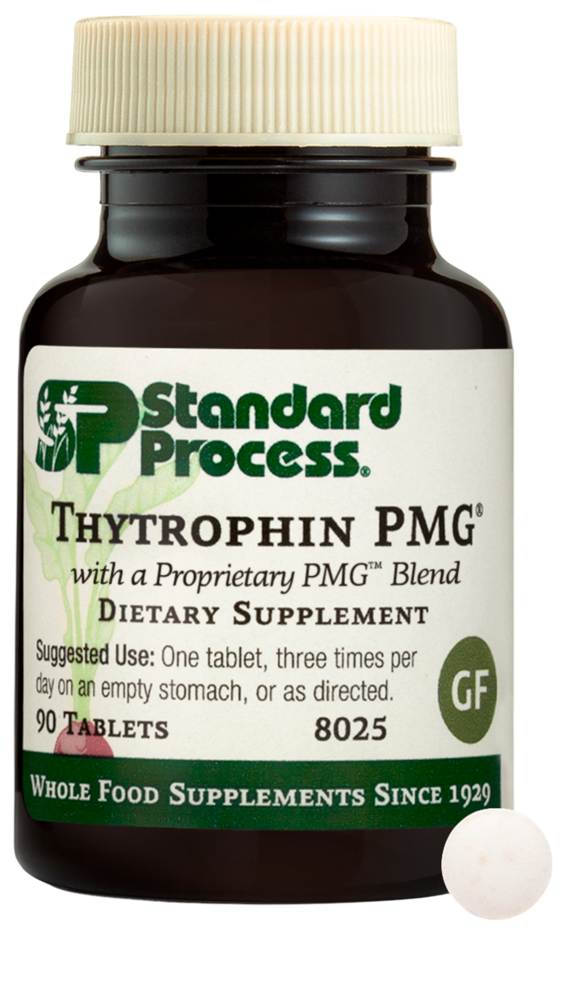
Thytrophin PMG is one of the more intriguing and clinically debated products in the Standard Process line, and in my practice I have used it selectively for patients presenting with elevated thyroid peroxidase (TPO) antibodies and thyroglobulin antibodies — the hallmark markers of Hashimoto's thyroiditis. The product is built around Royal Lee's protomorphogen (PMG) theory, which proposes that organ-specific nucleoprotein extracts can act as 'decoys' for circulating autoantibodies, drawing immune fire away from the patient's own thyroid tissue. While this mechanism is not yet universally accepted in mainstream endocrinology, the clinical outcomes I have observed over years of use have given me meaningful confidence in its targeted application.
The foundational ingredient — bovine thyroid PMG extract — is a cell-determinant fraction isolated from thyroid glandular tissue, processed to remove hormonal activity while retaining the nucleoprotein blueprint of the thyroid cell. This is a critical distinction: Thytrophin PMG is not a glandular hormone supplement like desiccated thyroid. It will not raise T3 or T4 levels, and it does not stimulate thyroid hormone production. Its proposed action is immunological rather than hormonal, making it a fundamentally different class of thyroid support.
In my clinical experience, Thytrophin PMG works best when integrated into a broader functional medicine approach that addresses gut permeability, iodine and selenium status, adrenal function, and inflammatory load. Patients with Hashimoto's rarely have a single root cause, and while Thytrophin PMG can be a meaningful piece of the puzzle, it is not a standalone solution. I typically use it for 3 to 6 month trials with periodic antibody retesting to objectively assess response.
Key Benefits of Thytrophin PMG
- Autoimmune Thyroid Antibody Modulation: The core proposed mechanism of Thytrophin PMG is that its bovine thyroid nucleoprotein extract circulates in the bloodstream and acts as a competitive antigen, attracting TPO and thyroglobulin antibodies away from the patient's own thyroid gland. Clinically, I have seen measurable reductions in TPO antibody titers in patients using this product consistently over 3 to 6 months alongside dietary interventions.
- Reduction of Thyroid Tissue Inflammation: By potentially diverting autoimmune attack from endogenous thyroid tissue, Thytrophin PMG may help reduce the chronic inflammatory burden within the thyroid gland itself, which over time contributes to fibrosis and functional decline. This is particularly relevant for Hashimoto's patients who show ultrasound-confirmed heterogeneous thyroid texture indicative of ongoing immune-mediated damage.
- Support for Thyroid Hormone Stability: While Thytrophin PMG does not directly supply thyroid hormones, reducing autoimmune destruction of follicular thyroid cells may contribute to more stable endogenous T3 and T4 production over time. Patients in my practice have reported more consistent energy levels and reduced symptom fluctuations after sustained use, which I attribute in part to preserved thyroid cell integrity.
- Nutritional Cofactor Support via Whole Food Matrix: Standard Process formulates Thytrophin PMG within a whole food concentrate matrix that provides naturally occurring trace minerals and cofactors important to thyroid cell metabolism. This includes naturally present magnesium, which plays a role in over 300 enzymatic reactions including those involved in thyroid hormone synthesis and peripheral conversion.
- Complement to Comprehensive Thyroid Protocols: Because Thytrophin PMG works through an immunological rather than hormonal pathway, it can be safely used alongside thyroid hormone replacement therapy (levothyroxine or desiccated thyroid) without risk of hormonal excess or interference. This makes it a versatile adjunct in both medicated and non-medicated thyroid patients pursuing a functional root-cause approach.
Ingredients
Thytrophin PMG is built on a focused whole food ingredient base:
- Bovine Thyroid PMG Extract: The primary active ingredient, this is a nucleoprotein extract derived from bovine thyroid tissue, processed to eliminate hormonal activity while preserving cell-determinant fractions. Per Royal Lee's protomorphogen theory, these nucleoproteins are thought to act as antigen decoys that competitively bind circulating autoantibodies, potentially reducing immune-mediated damage to the patient's own thyroid tissue.
- Magnesium Citrate: Included as a mineral cofactor, magnesium is essential for enzymatic function throughout the thyroid hormone synthesis pathway and supports healthy cellular energy metabolism in thyroid follicular cells. Magnesium deficiency is common in individuals with autoimmune thyroid disease, and its inclusion in this formula adds meaningful clinical value beyond the PMG fraction alone.
- Calcium Lactate: Standard Process frequently incorporates calcium lactate as a bioavailable calcium source within its whole food complexes, supporting cellular membrane integrity and intracellular signaling. Calcium also plays a secondary role in immune cell function and may contribute to the overall anti-inflammatory milieu the formula is designed to support.
- Whole Food Concentrate Matrix (Bovine Liver Powder, Nutritional Yeast): Standard Process products are distinguished by their whole food base, which in Thytrophin PMG provides naturally occurring B vitamins, trace minerals, and enzyme cofactors derived from bovine liver and Saccharomyces cerevisiae. These components support hepatic thyroid hormone conversion (T4 to T3), overall metabolic function, and provide a synergistic nutritional environment for the primary PMG action.
Get Thytrophin PMG Today
Don't overpay on Amazon! Buy Thytrophin PMG directly from Dr. Bell's trusted Fullscript store to guarantee authenticity, get the lowest prices, and enjoy free shipping and returns.
Potential Side Effects & Precautions
Thytrophin PMG is generally well tolerated, but consider the following:
- Thytrophin PMG is generally very well tolerated in clinical use, and in my years of prescribing it I have encountered very few adverse reactions. Because the bovine thyroid PMG extract is processed to remove active thyroid hormones, the risk of hyperthyroid-like side effects — palpitations, anxiety, heat intolerance — is negligible, which is a common concern patients raise when they hear the word 'thyroid glandular.'
- Individuals with confirmed beef or bovine protein allergies should exercise caution and consult their healthcare provider before initiating Thytrophin PMG, as the extract is derived from bovine thyroid tissue. While the processing removes hormonal fractions, residual bovine proteins remain and could theoretically trigger reactions in highly sensitive individuals.
- There is a theoretical consideration that in rare cases, introducing additional thyroid-specific antigens into the system could transiently stimulate immune activity before producing a tolerogenic or decoy effect. I counsel patients that some may notice a brief period of symptom fluctuation in the first two to four weeks, after which stabilization typically occurs — similar to what can be observed with other immunomodulatory approaches.
- Because Thytrophin PMG contains naturally occurring iodine in trace amounts from the glandular matrix, patients with iodine-sensitive autoimmune thyroid conditions should be monitored appropriately. I recommend baseline and follow-up TPO antibody testing at three and six months to objectively track whether the product is exerting a beneficial or neutral effect, adjusting the protocol accordingly.
The Science Behind It
Peer-reviewed research on key ingredients and mechanisms relevant to Thytrophin PMG:
Selenium Supplementation in Patients with Autoimmune Thyroiditis Decreases Thyroid Peroxidase Antibodies Concentrations
This landmark randomized controlled trial demonstrated that nutritional supplementation can meaningfully reduce TPO antibody titers in Hashimoto's thyroiditis patients, establishing the principle that targeted nutritional and adjunct interventions — the category in which Thytrophin PMG operates — can produce measurable immunological changes in autoimmune thyroid disease. The study supports the broader clinical rationale for using non-hormonal, adjunct strategies to modulate thyroid autoimmunity.
The Role of Iodine and Selenium in Autoimmune Thyroiditis
This review article examines how micronutrient status — particularly iodine and selenium — directly influences the severity of autoimmune thyroid disease and TPO antibody burden, providing mechanistic context for why whole food nutritional complexes like those in Thytrophin PMG may offer supportive clinical value. It reinforces the importance of the nutritional cofactor matrix in Thytrophin PMG beyond the PMG fraction itself.
Prevalence and Risk Factors of Thyroid Antibodies in Euthyroid Individuals
This epidemiological study highlights the high prevalence of subclinical thyroid autoimmunity in populations with normal thyroid hormone levels, underscoring the clinical importance of identifying and addressing elevated antibody titers before overt hypothyroidism develops — exactly the patient population for whom Thytrophin PMG is most appropriately indicated. The data support early, proactive intervention strategies in antibody-positive, euthyroid patients.
Magnesium Status and Thyroid Function: Associations in a Population-Based Study
This population-based study identified significant associations between magnesium status and thyroid function parameters, supporting the clinical rationale for including magnesium as a cofactor ingredient in thyroid-targeted formulas such as Thytrophin PMG. Given the high prevalence of suboptimal magnesium intake in modern populations, its inclusion in this formula adds practical nutritional value alongside the PMG-specific mechanism.
Dr. Bell's Verdict
Thytrophin PMG occupies a unique and clinically useful niche in functional thyroid support — one that addresses the autoimmune dimension of thyroid dysfunction rather than simply supplementing hormones or stimulating glandular output. For patients with Hashimoto's thyroiditis and elevated thyroid antibodies who are seeking root-cause strategies beyond medication management alone, this product represents a thoughtful, low-risk adjunct that I am comfortable recommending as part of a comprehensive protocol. The underlying protomorphogen theory, while not yet validated through large-scale randomized controlled trials, is supported by decades of empirical clinical use within the functional medicine and chiropractic communities, and the product's safety profile is excellent.
I rate Thytrophin PMG highly within its intended application — autoimmune thyroid modulation — while being transparent that it is not a universal thyroid supplement and will not benefit patients whose thyroid dysfunction is non-autoimmune in origin. Quality-minded practitioners using Standard Process products can trust in the company's rigorous sourcing and manufacturing standards, including their in-house farming operations for whole food ingredients. As with all clinical tools, objective monitoring through lab retesting remains essential, and I encourage all patients to work with a qualified healthcare provider who can interpret antibody trends and adapt the protocol as needed.
Frequently Asked Questions
Will Thytrophin PMG raise my thyroid hormone levels (T3/T4)?
No. Thytrophin PMG is not a thyroid hormone supplement and will not directly increase T3 or T4 levels. The bovine thyroid extract is processed specifically to remove hormonal activity, leaving only the nucleoprotein (PMG) fractions. Its proposed mechanism is immunological — acting as an antibody decoy — not hormonal stimulation. If you need thyroid hormone support, that is a separate clinical conversation involving labs and, potentially, prescription therapy.
Can I take Thytrophin PMG if I am already on levothyroxine or desiccated thyroid?
In my clinical experience, yes — Thytrophin PMG is generally safe to use alongside thyroid hormone replacement therapy because it does not affect hormone levels or compete with medications at receptor sites. However, you should always inform your prescribing physician before adding any supplement, and periodic thyroid lab monitoring is advisable to ensure your medication dose remains appropriately calibrated as your condition evolves.
How long does it take to see results with Thytrophin PMG?
I typically advise patients to commit to a minimum 3-month trial before drawing conclusions about efficacy, as immunological modulation is a slower process than symptomatic supplementation. Objective measurement through TPO and thyroglobulin antibody retesting at 3 and 6 months is the most reliable way to assess response. Some patients report symptomatic improvements — steadier energy, reduced brain fog — within 6 to 8 weeks, but antibody reduction often takes longer.
Is Thytrophin PMG appropriate for Graves' disease as well as Hashimoto's?
This is an important clinical distinction. While both Hashimoto's and Graves' disease are autoimmune thyroid conditions, they involve different antibody targets and immune mechanisms. Thytrophin PMG's proposed decoy action for TPO and thyroglobulin antibodies is most directly relevant to Hashimoto's. Graves' disease involves TSH receptor antibodies (TRAb), which is a different target. I would not use Thytrophin PMG as a primary intervention in active Graves' disease without very careful clinical oversight, and patients with Graves' should work closely with an endocrinologist.
Where to Buy Thytrophin PMG
Don't overpay on Amazon! Buy Thytrophin PMG directly from Dr. Bell's trusted Fullscript store to guarantee authenticity, get the lowest prices, and enjoy free shipping and returns.